THE ADVENTURE COLLECTIVE® · Independent discovery and booking for outdoor travel

Board a short boat ride from Jaffna to stand among floating sea pens and handle live sea cucumbers while local farmers explain aquaculture techniques. This 2–2.5 hour hands-on visit combines coastal culture, tea in a wooden sea hut, and intimate marine learning.
Board a short boat ride from Jaffna to stand among floating sea pens and handle live sea cucumbers while local farmers explain aquaculture techniques. This 2–2.5 hour hands-on visit combines coastal culture, tea in a wooden sea hut, and intimate marine learning.
You step off a low wooden boat and the ocean breathes up around you—shallow turquoise stretching to a rim of distant reef, the sea daring you to lean closer. The farm’s floating pens rock gently; nets and bamboo poles form a simple geometry against the wide sky. In the center a wooden guest hut hovers above water, where steaming Ceylon tea waits.
Verified experiences and guided adventures in the surrounding area.
Operated by Recharge Travels Tours · Jaffna, Northern Province
You step off a low wooden boat and the ocean breathes up around you—shallow turquoise stretching to a rim of distant reef, the sea daring you to lean closer. The farm’s floating pens rock gently; nets and bamboo poles form a simple geometry against the wide sky. In the center a wooden guest hut hovers above water, where steaming Ceylon tea waits.
Jaffna’s coastline has fed Tamil fishing communities for generations. In recent decades local farmers have combined traditional knowledge with small-scale aquaculture to cultivate sea cucumbers, an animal prized in regional markets and key to coastal livelihoods. The geology here is flat coral and sand; currents and tidal exchange make the lagoon-like patches ideal for pens that sit in open sea but in sheltered pockets.
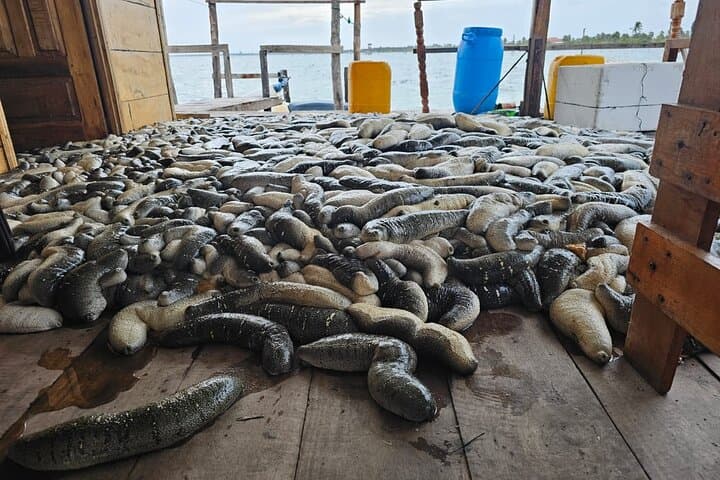
Expect a short scenic boat ride (about 10–20 minutes) from Poonpookar to the farm, a guided walk through floating pens, and hands-on time holding live sea cucumbers while guides explain their life cycle and market value. Language options commonly include English, Tamil, Sinhala and German; accessibility is straightforward—low boats and a raised hut with basic decking.
Practical notes: wear non-slip water shoes and sun protection, bring a small dry bag for valuables, and be prepared for a low-slung, informal setting rather than polished tourist infrastructure. The experience is intimate—respectful questions and clean hands keep interactions safe for you and the animals. Finish with tea and light snacks while the ocean opens and closes its little tides—quiet, practical, quietly revealing of Jaffna’s coastal culture.
easy.
2–2.5 hours.
Suitable for all fitness levels; requires stepping into low boats and standing on decking for short periods.
Yes; the tour is family-friendly. Infants must sit on an adult’s lap and operators provide stable low boats, but supervision is needed around water.
Yes—guides provide supervised, hands-on handling and will demonstrate safe techniques that protect the animals and you.
Yes—pickup from hotels in Jaffna city is typically included; confirm your pickup point at booking.
Facilities are basic; the floating guest hut has seating and shade but limited restroom infrastructure—plan accordingly.
Jaffna’s coastal communities have fished and traded across the Palk Strait for centuries; modern sea cucumber farming reflects local adaptation to global markets.
Small-scale farms aim to reduce pressure on wild populations; visitors should avoid introducing pollutants and follow guides’ biosecurity rules to protect stock and reefs.
Recharge Travels Tours operates guided outdoor trips and adventures with an emphasis on safety, stewardship, and memorable experiences.
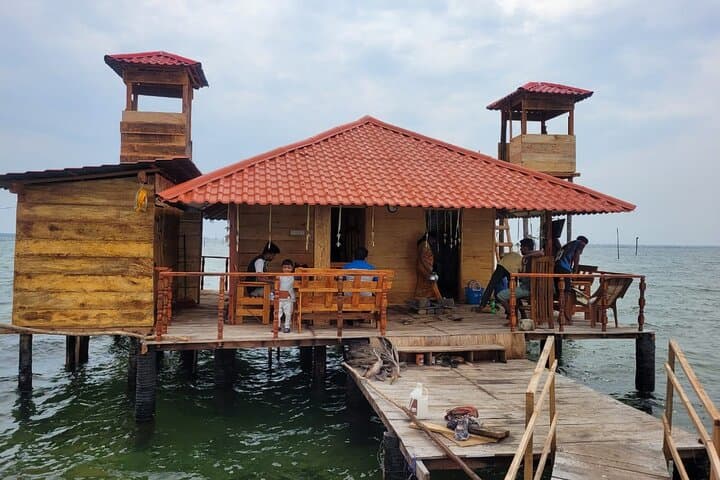
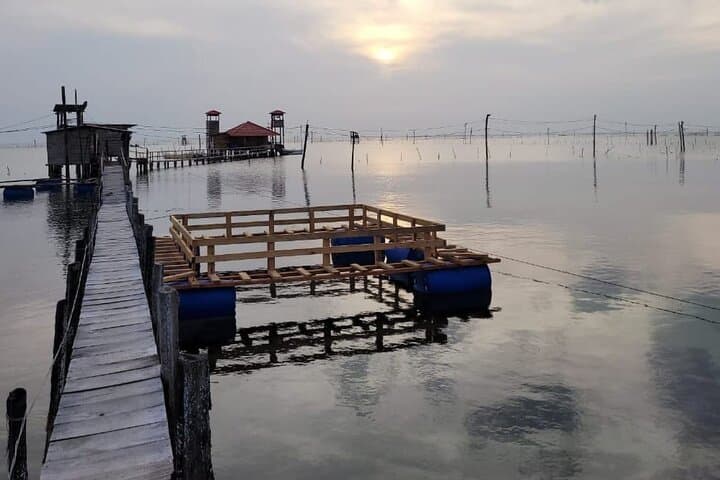
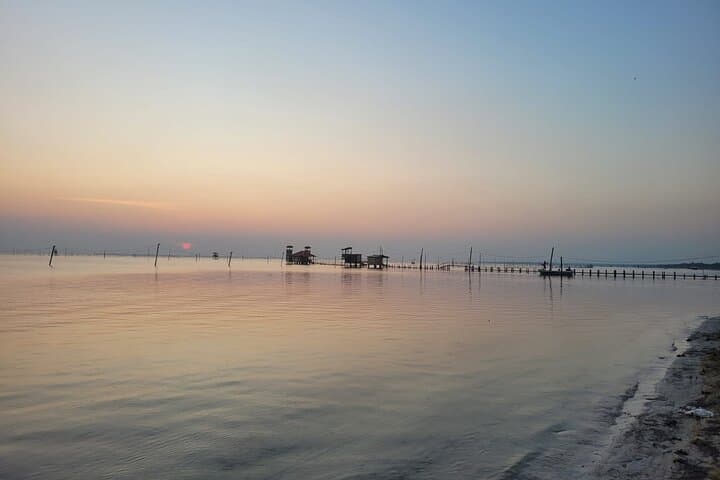
You step off a low wooden boat and the ocean breathes up around you—shallow turquoise stretching to a rim of distant reef, the sea daring you to lean closer. The farm’s floating pens rock gently; nets and bamboo poles form a simple geometry against the wide sky. In the center a wooden guest hut hovers above water, where steaming Ceylon tea waits.
You step off a low wooden boat and the ocean breathes up around you—shallow turquoise stretching to a rim of distant reef, the sea daring you to lean closer. The farm’s floating pens rock gently; nets and bamboo poles form a simple geometry against the wide sky. In the center a wooden guest hut hovers above water, where steaming Ceylon tea waits.
Jaffna’s coastline has fed Tamil fishing communities for generations. In recent decades local farmers have combined traditional knowledge with small-scale aquaculture to cultivate sea cucumbers, an animal prized in regional markets and key to coastal livelihoods. The geology here is flat coral and sand; currents and tidal exchange make the lagoon-like patches ideal for pens that sit in open sea but in sheltered pockets.
Expect a short scenic boat ride (about 10–20 minutes) from Poonpookar to the farm, a guided walk through floating pens, and hands-on time holding live sea cucumbers while guides explain their life cycle and market value. Language options commonly include English, Tamil, Sinhala and German; accessibility is straightforward—low boats and a raised hut with basic decking.
Practical notes: wear non-slip water shoes and sun protection, bring a small dry bag for valuables, and be prepared for a low-slung, informal setting rather than polished tourist infrastructure. The experience is intimate—respectful questions and clean hands keep interactions safe for you and the animals. Finish with tea and light snacks while the ocean opens and closes its little tides—quiet, practical, quietly revealing of Jaffna’s coastal culture.