THE ADVENTURE COLLECTIVE® · Independent discovery and booking for outdoor travel

Step off Tokyo’s streets and into a living dojo where Tokugawa-era techniques meet hands-on training. In 80 minutes you’ll learn stealth steps, shuriken throwing and sword etiquette taught by a high‑rank instructor.
Step off Tokyo’s streets and into a living dojo where Tokugawa-era techniques meet hands-on training. In 80 minutes you’ll learn stealth steps, shuriken throwing and sword etiquette taught by a high‑rank instructor.
The tatami breathes underfoot as you step into a low-lit dojo a few blocks from Tokyo's bustle. Outside, the city hums—trains threading the Kanto Plain and the Sumida River cutting a bright line—but inside, the clan's voice guides you through measured breaths, Namba steps and the clack of wooden swords. The session begins with a short meditation that tightens focus; then a sixth-dan instructor demonstrates techniques passed down to Tokugawa-era retainers.
Verified experiences and guided adventures in the surrounding area.
Operated by Musashi Ninja Clan Honjin Dojo in Asakusa · Tokyo, Tokyo
The tatami breathes underfoot as you step into a low-lit dojo a few blocks from Tokyo's bustle. Outside, the city hums—trains threading the Kanto Plain and the Sumida River cutting a bright line—but inside, the clan's voice guides you through measured breaths, Namba steps and the clack of wooden swords. The session begins with a short meditation that tightens focus; then a sixth-dan instructor demonstrates techniques passed down to Tokugawa-era retainers.
This experience threads cultural history and practical craft. The clan traces lineage to samurai who escorted Tokugawa Ieyasu in the late 1500s; weapons here are forged by in-house smiths, and exercises (shuriken throwing, hakama practice, kujikiri) are taught with ritualized etiquette. Geologically, Tokyo sits on the Kanto Plain—flat streets make access easy—while the city’s layered history, from Edo to modern metropolis, frames the practice.
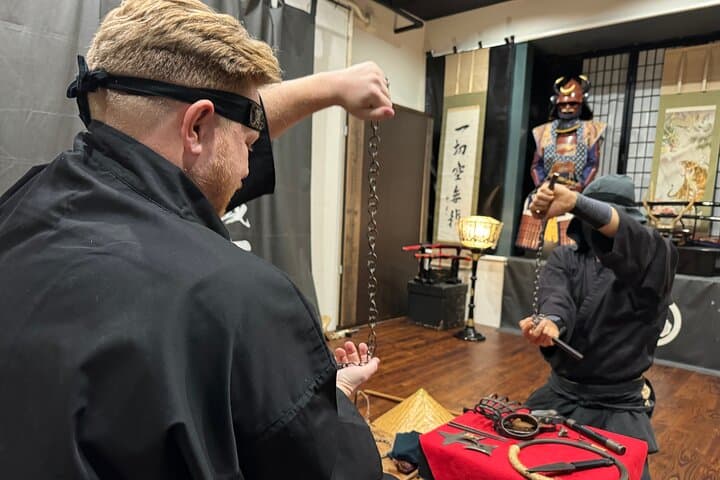
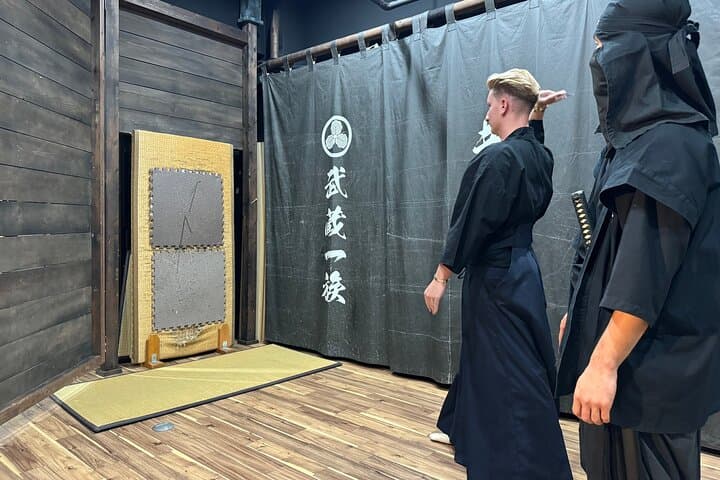
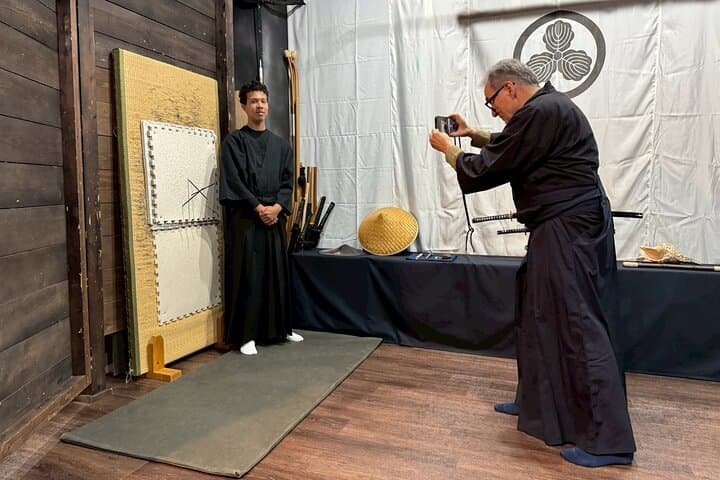
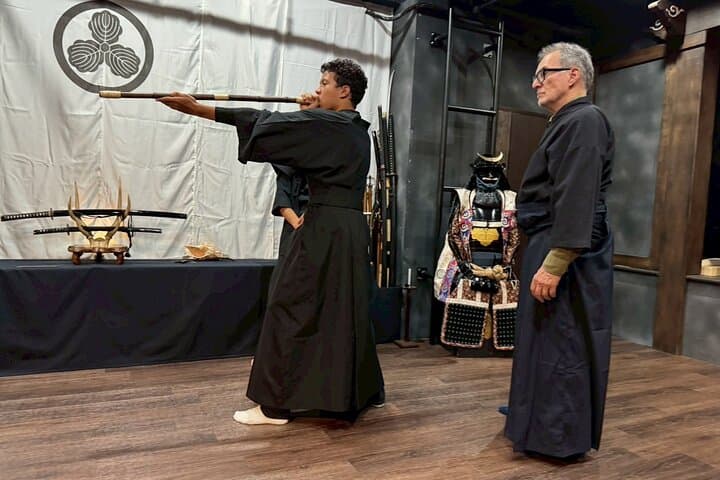
Expect a structured, hands-on 80–90 minute lesson: changing into hakama trousers, instructor demos, stealth-walk drills, shuriken practice, sword drawing basics, and a short Q&A and photo time. The dojo emphasizes safety and respect—movements are scaled for beginners, and children under 12 may join with a guardian. Photographs are welcome during designated times, and a small spectator fee applies.
Practical notes: arrive 10–15 minutes early to change; bring photo ID; listen closely to etiquette around footwear and weapon handling. This is an active, culturally focused class that gives a direct, disciplined window into Ninshido while remaining accessible to first-time practitioners.
easy.
1–1.5 hours.
Basic mobility and balance are sufficient; no prior martial arts experience required.
No—this session is designed for all fitness levels; instructors scale drills for first-timers while teaching proper form and safety.
Yes—children under 12 may join but must be accompanied by a participating guardian; inform the host at booking.
Not recommended—this activity involves bending, stepping drills and light impact; the provider advises against participation for pregnant guests and those with spinal injuries.
Bookings are manually confirmed; for a full refund cancel at least 24 hours before the start time. If your date is unavailable, provide alternate dates when booking.
The clan teaching this class links its lineage to samurai retainers of Tokugawa Ieyasu; many practices reflect Edo‑period training adapted for modern instruction.
The dojo preserves handmade clan weapons and traditional techniques—visitors are encouraged to treat tools and the space respectfully to support cultural preservation.
Musashi Ninja Clan Honjin Dojo in Asakusa operates guided outdoor trips and adventures with an emphasis on safety, stewardship, and memorable experiences.
The tatami breathes underfoot as you step into a low-lit dojo a few blocks from Tokyo's bustle. Outside, the city hums—trains threading the Kanto Plain and the Sumida River cutting a bright line—but inside, the clan's voice guides you through measured breaths, Namba steps and the clack of wooden swords. The session begins with a short meditation that tightens focus; then a sixth-dan instructor demonstrates techniques passed down to Tokugawa-era retainers.
The tatami breathes underfoot as you step into a low-lit dojo a few blocks from Tokyo's bustle. Outside, the city hums—trains threading the Kanto Plain and the Sumida River cutting a bright line—but inside, the clan's voice guides you through measured breaths, Namba steps and the clack of wooden swords. The session begins with a short meditation that tightens focus; then a sixth-dan instructor demonstrates techniques passed down to Tokugawa-era retainers.
This experience threads cultural history and practical craft. The clan traces lineage to samurai who escorted Tokugawa Ieyasu in the late 1500s; weapons here are forged by in-house smiths, and exercises (shuriken throwing, hakama practice, kujikiri) are taught with ritualized etiquette. Geologically, Tokyo sits on the Kanto Plain—flat streets make access easy—while the city’s layered history, from Edo to modern metropolis, frames the practice.
Expect a structured, hands-on 80–90 minute lesson: changing into hakama trousers, instructor demos, stealth-walk drills, shuriken practice, sword drawing basics, and a short Q&A and photo time. The dojo emphasizes safety and respect—movements are scaled for beginners, and children under 12 may join with a guardian. Photographs are welcome during designated times, and a small spectator fee applies.
Practical notes: arrive 10–15 minutes early to change; bring photo ID; listen closely to etiquette around footwear and weapon handling. This is an active, culturally focused class that gives a direct, disciplined window into Ninshido while remaining accessible to first-time practitioners.