THE ADVENTURE COLLECTIVE® · Independent discovery and booking for outdoor travel

Turn a Roman afternoon into hands-on practice: learn to roll fettuccine, hand-stuff ravioli and customize tiramisù under an English-speaking chef’s guidance. Expect technique, tasting, and a convivial meal at the end.
Turn a Roman afternoon into hands-on practice: learn to roll fettuccine, hand-stuff ravioli and customize tiramisù under an English-speaking chef’s guidance. Expect technique, tasting, and a convivial meal at the end.
Steam fogs the terrace as a spritz lands in your hand and the wooden rolling board waits—this is Rome measured in flour, egg, and conversation. In a compact, air-conditioned kitchen near the city’s historic center you’ll stand shoulder-to-shoulder with fellow cooks, pressing dough, folding ravioli and assembling tiramisù while the chef narrates techniques learned in Roman home kitchens.
Verified experiences and guided adventures in the surrounding area.
Operated by Insideat · Rome, Lazio
Steam fogs the terrace as a spritz lands in your hand and the wooden rolling board waits—this is Rome measured in flour, egg, and conversation. In a compact, air-conditioned kitchen near the city’s historic center you’ll stand shoulder-to-shoulder with fellow cooks, pressing dough, folding ravioli and assembling tiramisù while the chef narrates techniques learned in Roman home kitchens.
Food here is history you can touch: pasta evolved through centuries of regional practice and Roman dishes like cacio e pepe and carbonara reflect simple, high-quality ingredients. The kitchen sits in a city carved by the Tiber and layered with stone and markets; food culture is both civic ritual and improvisation—an aperitivo before work, a slow Sunday meal, a lesson in restraint and flavor.
Expect hands-on instruction in fettuccine and filled ravioli, a guided sauce pairing, and customization of a classic tiramisù. The chef offers practical tips—hydration for dough, how to avoid overworking gluten, and how to rescue a broken emulsion—plus local lore about markets and suppliers.
Practicalities: plan for about three hours, arrive 10–15 minutes early, and report allergies in advance. The class supplies aprons, tools and a printed recipe book; wear comfortable closed-toe shoes and bring a small bag for leftovers. This is social cooking—ask questions, swap tricks at the communal table, and savor what you’ve made with a glass of Italian wine. Whether you want a skill to recreate at home or an immediate taste of Rome, this class delivers technique and texture in equal measure.
easy.
3 hours.
Light physical activity—comfortable standing and basic manual dexterity; suitable for most adults.
Yes—vegetarian, vegan, gluten-free and dairy-free options are available if you notify the operator before the class.
The chef provides instruction in English; the class is designed for international participants.
Arrive 10–15 minutes early. For a full refund cancel at least 24 hours before the start time.
Yes; the location and surfaces are wheelchair accessible and service animals are allowed.
Roman cooking combines ancient grain cultivation and pastoral traditions with influences from medieval and Renaissance trade—modern classics like cacio e pepe and carbonara evolved from these practical roots.
Classes often source local ingredients and encourage minimizing food waste; request information on seasonal sourcing if sustainability is important to you.
Insideat operates guided outdoor trips and adventures with an emphasis on safety, stewardship, and memorable experiences.
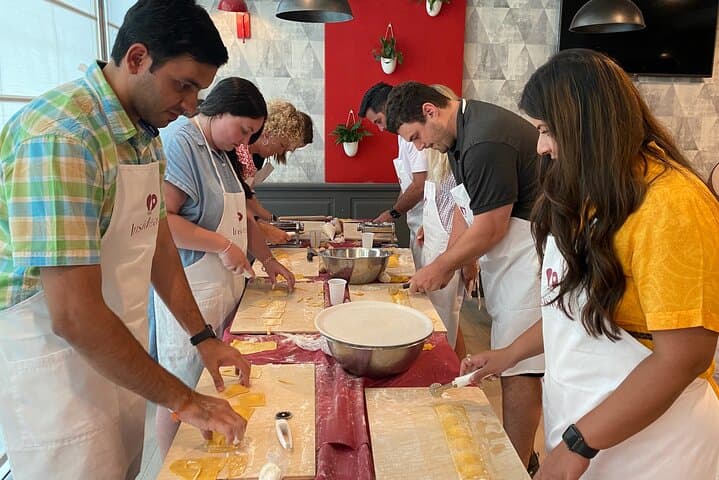
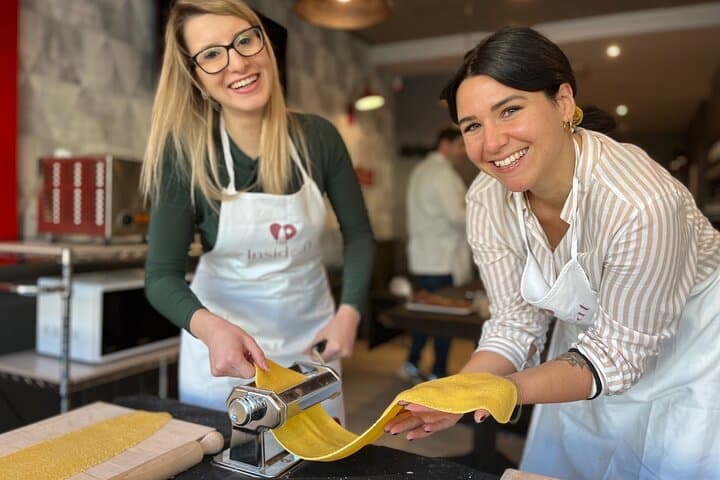
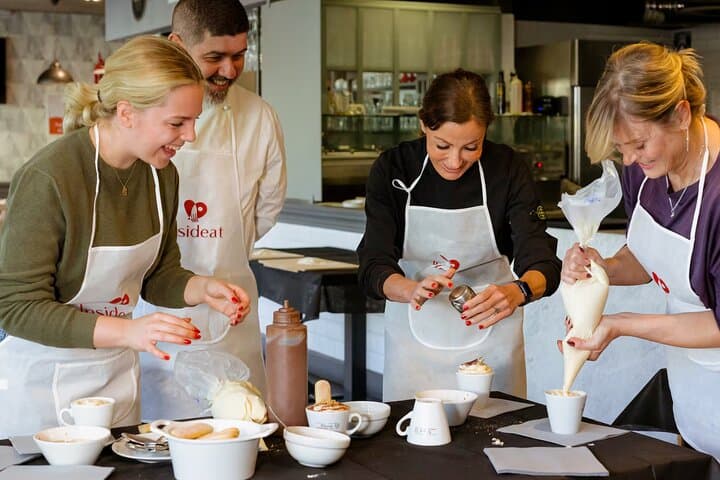
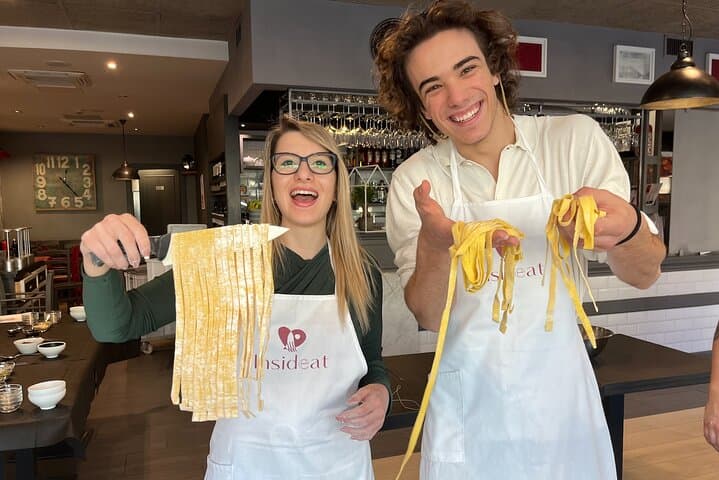
Steam fogs the terrace as a spritz lands in your hand and the wooden rolling board waits—this is Rome measured in flour, egg, and conversation. In a compact, air-conditioned kitchen near the city’s historic center you’ll stand shoulder-to-shoulder with fellow cooks, pressing dough, folding ravioli and assembling tiramisù while the chef narrates techniques learned in Roman home kitchens.
Steam fogs the terrace as a spritz lands in your hand and the wooden rolling board waits—this is Rome measured in flour, egg, and conversation. In a compact, air-conditioned kitchen near the city’s historic center you’ll stand shoulder-to-shoulder with fellow cooks, pressing dough, folding ravioli and assembling tiramisù while the chef narrates techniques learned in Roman home kitchens.
Food here is history you can touch: pasta evolved through centuries of regional practice and Roman dishes like cacio e pepe and carbonara reflect simple, high-quality ingredients. The kitchen sits in a city carved by the Tiber and layered with stone and markets; food culture is both civic ritual and improvisation—an aperitivo before work, a slow Sunday meal, a lesson in restraint and flavor.
Expect hands-on instruction in fettuccine and filled ravioli, a guided sauce pairing, and customization of a classic tiramisù. The chef offers practical tips—hydration for dough, how to avoid overworking gluten, and how to rescue a broken emulsion—plus local lore about markets and suppliers.
Practicalities: plan for about three hours, arrive 10–15 minutes early, and report allergies in advance. The class supplies aprons, tools and a printed recipe book; wear comfortable closed-toe shoes and bring a small bag for leftovers. This is social cooking—ask questions, swap tricks at the communal table, and savor what you’ve made with a glass of Italian wine. Whether you want a skill to recreate at home or an immediate taste of Rome, this class delivers technique and texture in equal measure.