
Hands-On Rice Farming in Sasebo: Terraced Paddies Overlooking Kujuku Islands
Step into working terraced rice fields above the Kujuku Islands for a 90-minute, hands-on farming session with local producers. Plant, weed, harvest or carve bamboo under practical guidance and learn about satoyama life on Japan’s coastal terraces.
An Adventure In Sasebo.
Step into working terraced rice fields above the Kujuku Islands for a 90-minute, hands-on farming session with local producers. Plant, weed, harvest or carve bamboo under practical guidance and learn about satoyama life on Japan’s coastal terraces.
Read the full experience
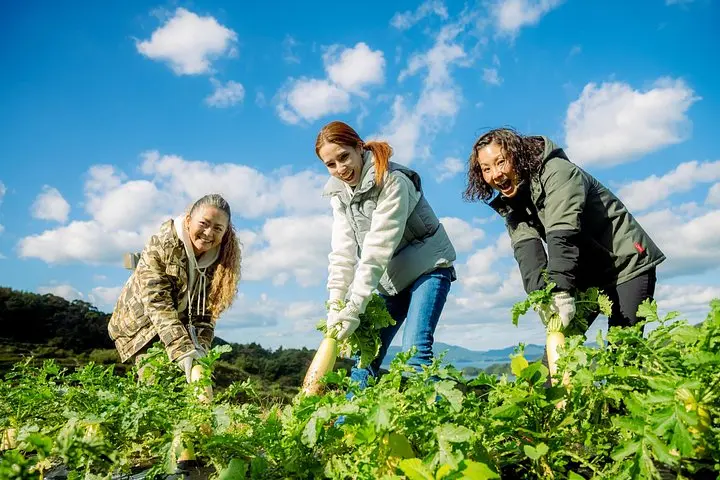
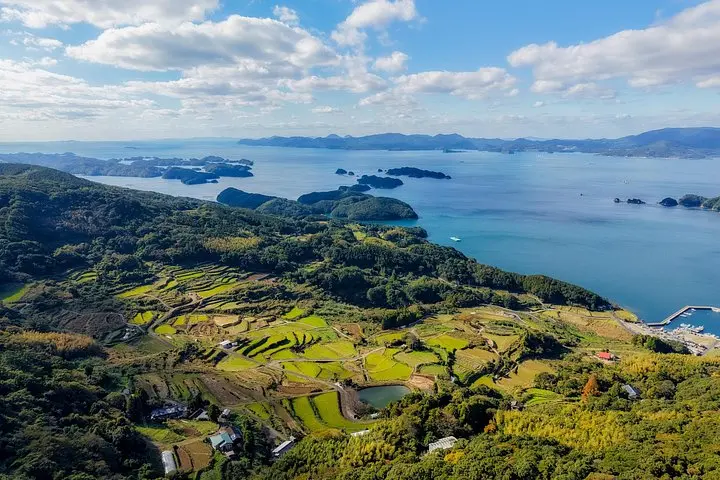
Fog lifts off the bay and the terraces appear like green steps cut into the hillside, each shallow pool catching the light of Kujuku Islands beyond. Participants move slowly here—knees bent in wet earth, hands cradling seedlings—while waves and gulls mark the boundary between sea and field. The work is deliberate: transplanting, weeding, or harvesting by hand under the guidance of local farmers who still practice traditional methods.
Fog lifts off the bay and the terraces appear like green steps cut into the hillside, each shallow pool catching the light of Kujuku Islands beyond. Participants move slowly here—knees bent in wet earth, hands cradling seedlings—while waves and gulls mark the boundary between sea and field. The work is deliberate: transplanting, weeding, or harvesting by hand under the guidance of local farmers who still practice traditional methods.
These terraced paddies are part of Japan’s satoyama landscape, a cultural system where small-scale agriculture and coastal fisheries have shaped the land for centuries. Geologically the terraces follow resistant beds and coastal slopes, creating panoramic lines that frame the islands; culturally they preserve a way of life tied to seasonal rhythms and community labor.
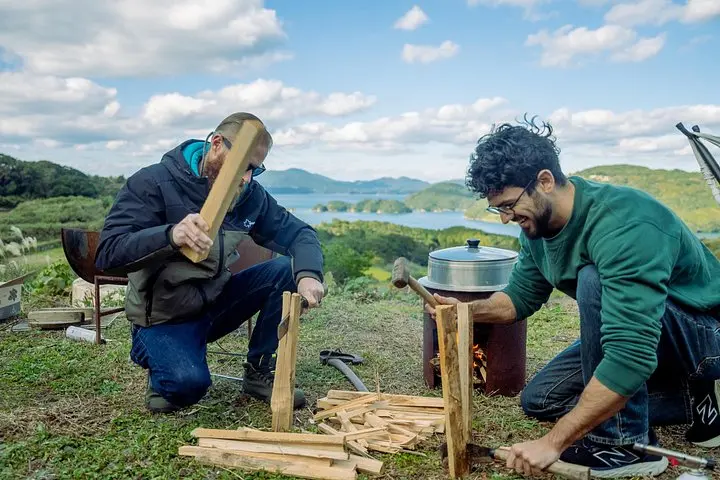
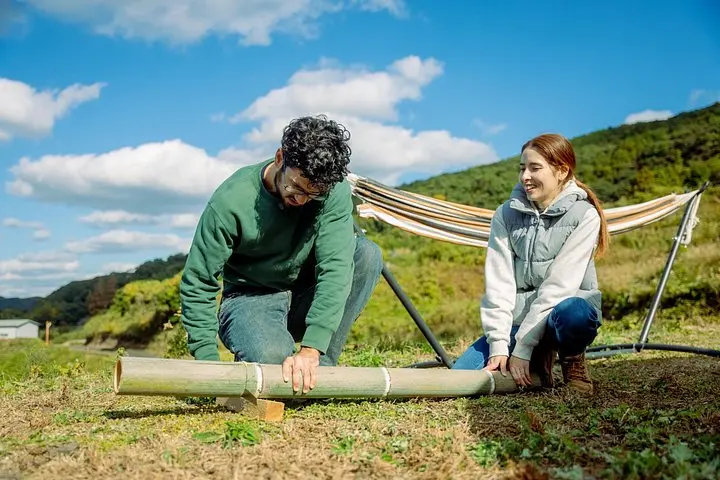
Visitors can also try bamboo craft—cutting stems and fashioning simple plates or chopsticks—a technique rooted in regional resourcefulness. Interaction with producers is part of the program: expect translation via an app and practical instruction rather than formal lectures.
Practically, the experience is compact and accessible: roughly 90 minutes of hands-on work on uneven, wet ground. Wear waterproof footwear and clothes you don’t mind soiling. Bring sun protection and a small towel. Pace yourself; tasks are repetitive but undemanding, and hosts adjust activities to the season and group.
This day gives a direct connection to food production, coastal farming culture, and a landscape where sea and terrace press close together—quiet, physical, and unexpectedly restorative.
Frequently asked questions
No. Hosts provide hands-on instruction for beginners and adjust tasks to participant ability.
Yes; interpretation is usually provided via a translation app and local helpers who offer simple English guidance.
Generally yes, but activities involve wet, uneven ground and sharp tools for bamboo work—supervision and caution are required.
Wear clothes you don’t mind getting muddy, waterproof footwear, and layers for changing coastal weather.
About This Experience
株式会社VISIT九州 operates guided outdoor trips and adventures with an emphasis on safety, stewardship, and memorable experiences.
Adventure tips
Recommended gear
- Waterproof boots or wellies: Keeps feet dry and protected in flooded seedling beds.
- Work gloves: Protects hands when planting, harvesting, and doing bamboo craft.
- Quick-dry clothing: Dries faster if you get splashed or sweat during active tasks.
- Sun hat and sunscreen: Protects against sun exposure on exposed terrace edges.
Photos of the experience
Related adventures & guides
Read the full experience
Fog lifts off the bay and the terraces appear like green steps cut into the hillside, each shallow pool catching the light of Kujuku Islands beyond. Participants move slowly here—knees bent in wet earth, hands cradling seedlings—while waves and gulls mark the boundary between sea and field. The work is deliberate: transplanting, weeding, or harvesting by hand under the guidance of local farmers who still practice traditional methods.
Fog lifts off the bay and the terraces appear like green steps cut into the hillside, each shallow pool catching the light of Kujuku Islands beyond. Participants move slowly here—knees bent in wet earth, hands cradling seedlings—while waves and gulls mark the boundary between sea and field. The work is deliberate: transplanting, weeding, or harvesting by hand under the guidance of local farmers who still practice traditional methods.
These terraced paddies are part of Japan’s satoyama landscape, a cultural system where small-scale agriculture and coastal fisheries have shaped the land for centuries. Geologically the terraces follow resistant beds and coastal slopes, creating panoramic lines that frame the islands; culturally they preserve a way of life tied to seasonal rhythms and community labor.
Visitors can also try bamboo craft—cutting stems and fashioning simple plates or chopsticks—a technique rooted in regional resourcefulness. Interaction with producers is part of the program: expect translation via an app and practical instruction rather than formal lectures.
Practically, the experience is compact and accessible: roughly 90 minutes of hands-on work on uneven, wet ground. Wear waterproof footwear and clothes you don’t mind soiling. Bring sun protection and a small towel. Pace yourself; tasks are repetitive but undemanding, and hosts adjust activities to the season and group.
This day gives a direct connection to food production, coastal farming culture, and a landscape where sea and terrace press close together—quiet, physical, and unexpectedly restorative.
Make a day of it nearby.
Verified experiences and guided adventures in the surrounding area.