THE ADVENTURE COLLECTIVE® · Independent discovery and booking for outdoor travel

Learn to make authentic Spanish paella in a lively Barcelona kitchen. This two-hour hands-on masterclass pairs technique with local ingredients, wine, and a communal lunch you helped prepare.
Learn to make authentic Spanish paella in a lively Barcelona kitchen. This two-hour hands-on masterclass pairs technique with local ingredients, wine, and a communal lunch you helped prepare.
The kitchen hums with chatter and the bright, brassy scent of saffron — a large paella pan glitters over an open flame as cava splashes into waiting glasses. Sunlight from a city window picks out grains of rice as pairs of guests stir, taste, and learn the rhythm of simmer and socarrat.
Verified experiences and guided adventures in the surrounding area.
Operated by The Paella Club · Barcelona, Catalonia
The kitchen hums with chatter and the bright, brassy scent of saffron — a large paella pan glitters over an open flame as cava splashes into waiting glasses. Sunlight from a city window picks out grains of rice as pairs of guests stir, taste, and learn the rhythm of simmer and socarrat.
Paella’s roots trace back to Valencia and the irrigated rice fields of the Ebro Delta; here in Barcelona the dish takes on Catalan touches and benefits from nearby Penedès wines and market-fresh seafood. The class sits at the intersection of culinary history and contemporary Catalan food culture: rice techniques learned from centuries of Mediterranean agriculture, paired with family-style dining that’s central to Spanish social life.
You’ll be guided step-by-step by a professional chef, working at a shared station to prepare one of several paella styles using local ingredients. The experience blends technique (how to build flavor layers, timing the stock) with tasting — expect a starter of pa amb tomàquet, a tasting of up to five paellas depending on group size, dessert, and wine pairings.
Practicalities are straightforward: the session runs about two hours, all kitchen equipment is provided, and dietary needs are accommodated if notified in advance. Wear closed-toe shoes, bring a small appetite, and plan to arrive slightly early to soak up the market-sourced ingredients and the chef’s demonstrations. Bring a camera and an openness to get hands-on: the payoff is not just a meal but a recipe book and the confidence to recreate paella at home.
easy.
2 hours.
No special fitness required; the class involves standing and light workstation activity for the session.
The experience is family-friendly but may include open flames and hot pans; check age recommendations with the operator and supervise children closely.
Yes — the venue reports wheelchair accessibility for surfaces and areas; contact the operator if you require specific accommodations.
Yes — the session begins with cava and includes local wine pairings; guests must be over 18 to consume alcohol.
Yes — each guest receives a recipe book with the paella recipes covered and additional dishes to recreate at home.
Paella developed in eastern Spain where irrigation and rice agriculture from medieval Islamic innovations met rural cooking traditions; Valencia is the dish’s historical birthplace while Catalonia adapted its own versions.
Operators emphasize local sourcing from Penedès and nearby producers; minimizing food waste and choosing seasonal ingredients supports regional sustainability.
The Paella Club operates guided outdoor trips and adventures with an emphasis on safety, stewardship, and memorable experiences.
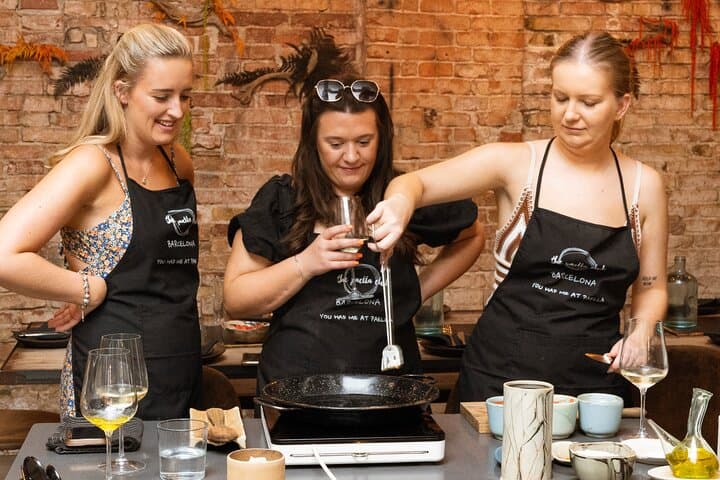
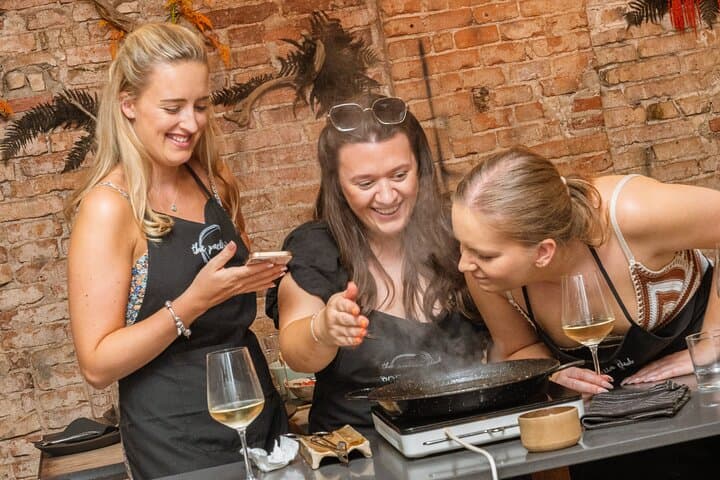
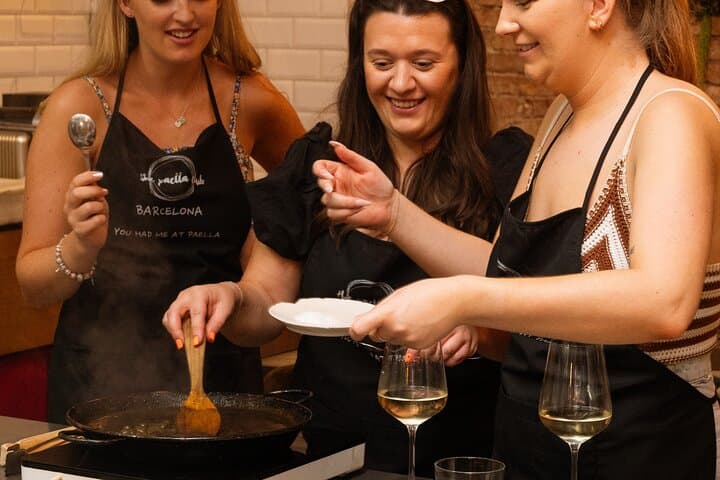
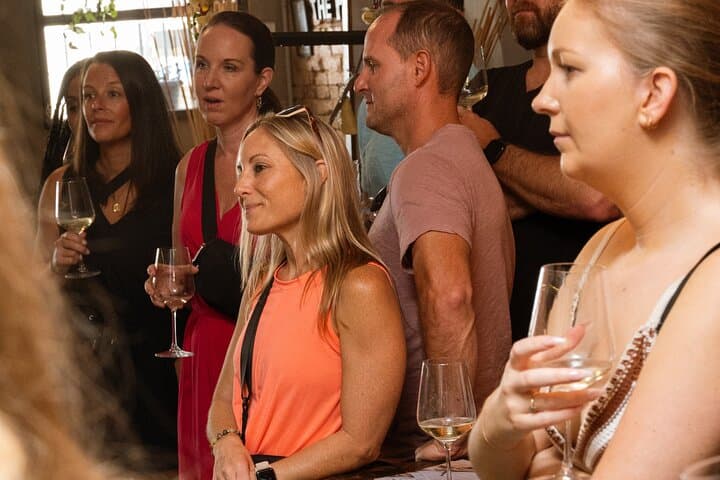
The kitchen hums with chatter and the bright, brassy scent of saffron — a large paella pan glitters over an open flame as cava splashes into waiting glasses. Sunlight from a city window picks out grains of rice as pairs of guests stir, taste, and learn the rhythm of simmer and socarrat.
The kitchen hums with chatter and the bright, brassy scent of saffron — a large paella pan glitters over an open flame as cava splashes into waiting glasses. Sunlight from a city window picks out grains of rice as pairs of guests stir, taste, and learn the rhythm of simmer and socarrat.
Paella’s roots trace back to Valencia and the irrigated rice fields of the Ebro Delta; here in Barcelona the dish takes on Catalan touches and benefits from nearby Penedès wines and market-fresh seafood. The class sits at the intersection of culinary history and contemporary Catalan food culture: rice techniques learned from centuries of Mediterranean agriculture, paired with family-style dining that’s central to Spanish social life.
You’ll be guided step-by-step by a professional chef, working at a shared station to prepare one of several paella styles using local ingredients. The experience blends technique (how to build flavor layers, timing the stock) with tasting — expect a starter of pa amb tomàquet, a tasting of up to five paellas depending on group size, dessert, and wine pairings.
Practicalities are straightforward: the session runs about two hours, all kitchen equipment is provided, and dietary needs are accommodated if notified in advance. Wear closed-toe shoes, bring a small appetite, and plan to arrive slightly early to soak up the market-sourced ingredients and the chef’s demonstrations. Bring a camera and an openness to get hands-on: the payoff is not just a meal but a recipe book and the confidence to recreate paella at home.