THE ADVENTURE COLLECTIVE® · Independent discovery and booking for outdoor travel

Train like a shadow operative for an hour in central Osaka—learn footwork, sword basics, and shuriken throws while wearing a ninja costume. Small-group instruction and photo time make this a hands-on cultural stop for travelers.
Train like a shadow operative for an hour in central Osaka—learn footwork, sword basics, and shuriken throws while wearing a ninja costume. Small-group instruction and photo time make this a hands-on cultural stop for travelers.
Step into a low-ceiling training room a short walk from Shinsekai and feel the city press against the windows as wooden floorboards take the impact of practiced footwork.
Verified experiences and guided adventures in the surrounding area.
Operated by 忍者堂 · Osaka, Osaka Prefecture
Step into a low-ceiling training room a short walk from Shinsekai and feel the city press against the windows as wooden floorboards take the impact of practiced footwork.
The class opens with posture and stance—movements honed from a long history of covert scouts and messengers in feudal Japan. Ninja were tactical operatives rather than theatrical figures; modern dojos distill those conditioning drills into safe, accessible lessons that emphasize balance, focus, and quick reflexes.
Osaka’s flat urban geology and dense neighborhoods mean this is an inside-city experience: street sounds filter in, and on clear days the nearby Tsutenkaku tower is visible through a doorway. Culture here is hands-on—costume rental, staged photos, and demonstrations fuse performance and instruction in a way rooted in local entertainment districts like Shinsekai and the retail bustle around Abeno Harukas.
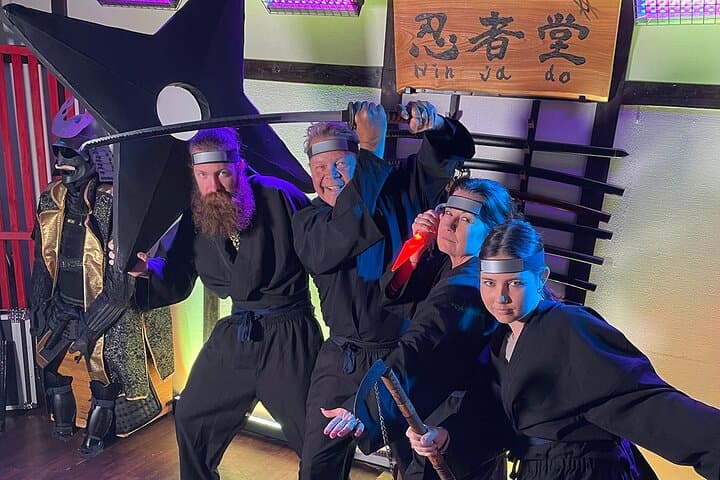
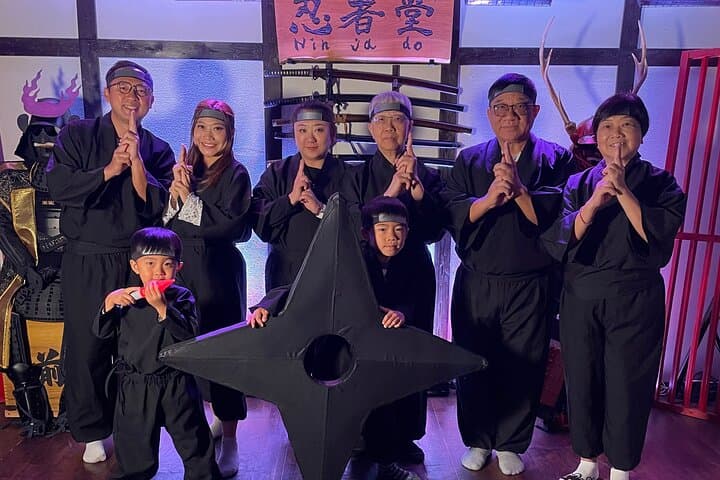
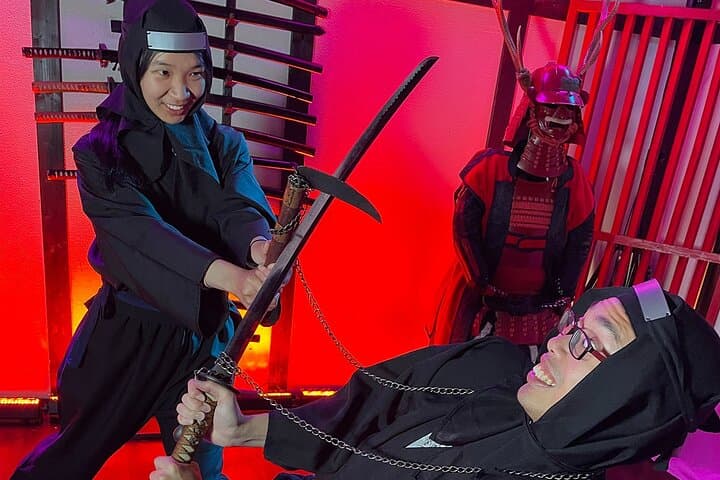
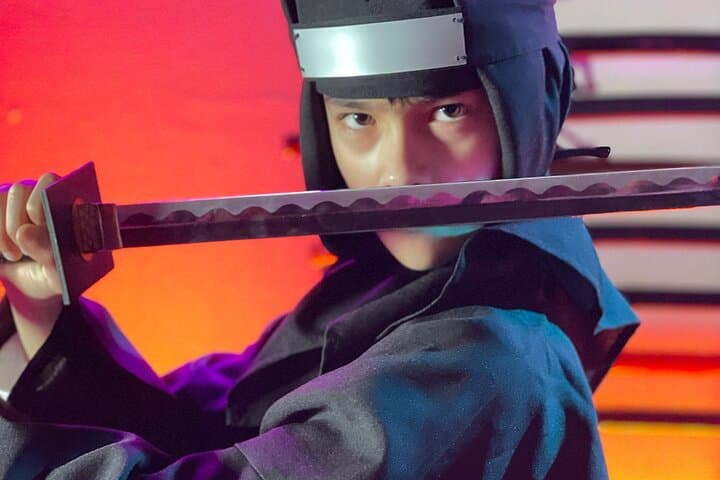
Expect a compact, one-hour session that covers silent footwork, basic sword handling, and short-range shuriken practice, with time set aside for photos in traditional gear. Classes are suitable for most ages and fitness levels but require basic mobility—squatting, turning, and light kneeling can occur.
Practical details: arrive 10–15 minutes early to change into costumes; bring a water bottle and wear flexible layers. The activity is taught in small groups (typically up to eight), and public transit access makes it an easy add-on to a day of sightseeing. If you have back, heart, or pregnancy restrictions, this session is not recommended; check cancellation rules for refunds at least 24 hours before your slot.
easy.
1 hour.
Suitable for people with basic mobility and average fitness; involves standing, crouching, and light kneeling.
The session is one hour long and typically includes training drills, a basic weapon demonstration, and time for photos in costume.
Yes—ninja costume rental and admission are included in the booking price.
Yes—classes are family-friendly and stroller access is noted, but children should be able to follow basic safety instructions.
For a full refund cancel at least 24 hours before the scheduled start; cancellations within 24 hours are not refundable.
Ninja originated as specialized operatives during Japan’s feudal era; modern dojo classes adapt conditioning and tool-handling into short, safe lessons for civilian students.
Respect costumes and studio property—many small operators rely on costume maintenance and local tourism, so follow hygiene rules and support nearby businesses.
忍者堂 operates guided outdoor trips and adventures with an emphasis on safety, stewardship, and memorable experiences.
Step into a low-ceiling training room a short walk from Shinsekai and feel the city press against the windows as wooden floorboards take the impact of practiced footwork.
Step into a low-ceiling training room a short walk from Shinsekai and feel the city press against the windows as wooden floorboards take the impact of practiced footwork.
The class opens with posture and stance—movements honed from a long history of covert scouts and messengers in feudal Japan. Ninja were tactical operatives rather than theatrical figures; modern dojos distill those conditioning drills into safe, accessible lessons that emphasize balance, focus, and quick reflexes.
Osaka’s flat urban geology and dense neighborhoods mean this is an inside-city experience: street sounds filter in, and on clear days the nearby Tsutenkaku tower is visible through a doorway. Culture here is hands-on—costume rental, staged photos, and demonstrations fuse performance and instruction in a way rooted in local entertainment districts like Shinsekai and the retail bustle around Abeno Harukas.
Expect a compact, one-hour session that covers silent footwork, basic sword handling, and short-range shuriken practice, with time set aside for photos in traditional gear. Classes are suitable for most ages and fitness levels but require basic mobility—squatting, turning, and light kneeling can occur.
Practical details: arrive 10–15 minutes early to change into costumes; bring a water bottle and wear flexible layers. The activity is taught in small groups (typically up to eight), and public transit access makes it an easy add-on to a day of sightseeing. If you have back, heart, or pregnancy restrictions, this session is not recommended; check cancellation rules for refunds at least 24 hours before your slot.