THE ADVENTURE COLLECTIVE® · Independent discovery and booking for outdoor travel

Train like a ninja in Kyoto with a two-hour, beginner-friendly lesson led by a Japanese sensei. Learn Kuji-kiri meditation, breathing, silent walking and basic weapon drills in a small-group, hands-on session.
Train like a ninja in Kyoto with a two-hour, beginner-friendly lesson led by a Japanese sensei. Learn Kuji-kiri meditation, breathing, silent walking and basic weapon drills in a small-group, hands-on session.
Step into the low-lit dojo, wooden floorboards humming underfoot, and feel the weight of focused discipline in the air. In this two-hour, hands-on lesson in central Kyoto you practice breathing, silent steps and throwing techniques under a Japanese sensei who teaches in English. The session opens with Kuji-kiri meditation and breath control — exercises that steady the body and sharpen attention — then moves through basic martial-walk patterns, knife and rope work, shuriken throwing and simple concealment tricks.
Verified experiences and guided adventures in the surrounding area.
Operated by NINJA DOJO and STORE · Kyoto, Kyoto Prefecture
Step into the low-lit dojo, wooden floorboards humming underfoot, and feel the weight of focused discipline in the air. In this two-hour, hands-on lesson in central Kyoto you practice breathing, silent steps and throwing techniques under a Japanese sensei who teaches in English. The session opens with Kuji-kiri meditation and breath control — exercises that steady the body and sharpen attention — then moves through basic martial-walk patterns, knife and rope work, shuriken throwing and simple concealment tricks.
Though true ninjutsu traces its roots to the Iga and Koga clans, lessons like this adapt historical drills into safe, modern formats for visitors. Kyoto’s compact urban grid and centuries-old temples provide immediate cultural context: you’re learning movement forms in a city that shaped samurai etiquette and performance arts.
Expect practical, repetitive drills more than cinematic acrobatics. The class is small (max six), hands-on, and includes rental ninja clothing; it’s designed for beginners with no technical skill required. Physical intensity is low, but the practice demands coordination, balance and attention to instruction.
Practical tips: arrive early, wear non-slip shoes, and bring a water bottle. The lesson is not recommended for people with spinal, heart conditions, or pregnancy. If you want photos, ask the instructor — many allow a quick shot at the end. By the final exercise you’ll feel steadier, quieter, and able to move with purpose — which is exactly the point.
easy.
2 hours.
Suitable for most adults with basic mobility; requires balance, coordination, and light standing activity.
No — the lesson is designed for beginners and introduces basic techniques with step-by-step coaching.
Yes — the Japanese master leading this session provides instruction in English for international guests.
Ninja clothing rental is included; basic training props (shuriken mock-ups, wooden swords) are supplied by the dojo.
People with spinal injuries, heart conditions, or pregnant travelers should not participate; check with the operator if unsure.
Ninjutsu developed as irregular warfare and espionage techniques in feudal Japan; modern lessons condense practical drills from Iga/Koga traditions into safe, instructional formats.
Dojo-based lessons have low environmental impact; choose operators who respect local neighborhoods and limit group size to reduce wear on small urban sites.
NINJA DOJO and STORE operates guided outdoor trips and adventures with an emphasis on safety, stewardship, and memorable experiences.
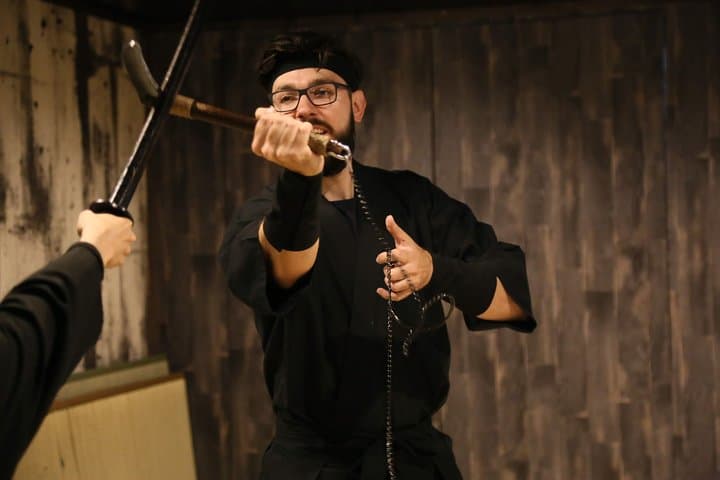


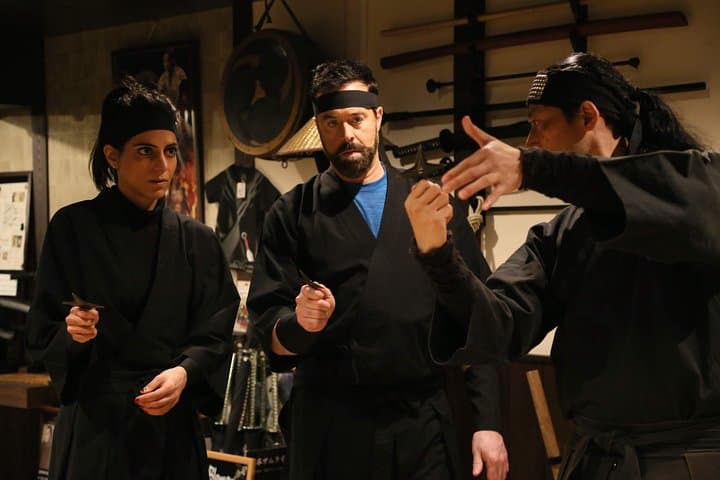
Step into the low-lit dojo, wooden floorboards humming underfoot, and feel the weight of focused discipline in the air. In this two-hour, hands-on lesson in central Kyoto you practice breathing, silent steps and throwing techniques under a Japanese sensei who teaches in English. The session opens with Kuji-kiri meditation and breath control — exercises that steady the body and sharpen attention — then moves through basic martial-walk patterns, knife and rope work, shuriken throwing and simple concealment tricks.
Step into the low-lit dojo, wooden floorboards humming underfoot, and feel the weight of focused discipline in the air. In this two-hour, hands-on lesson in central Kyoto you practice breathing, silent steps and throwing techniques under a Japanese sensei who teaches in English. The session opens with Kuji-kiri meditation and breath control — exercises that steady the body and sharpen attention — then moves through basic martial-walk patterns, knife and rope work, shuriken throwing and simple concealment tricks.
Though true ninjutsu traces its roots to the Iga and Koga clans, lessons like this adapt historical drills into safe, modern formats for visitors. Kyoto’s compact urban grid and centuries-old temples provide immediate cultural context: you’re learning movement forms in a city that shaped samurai etiquette and performance arts.
Expect practical, repetitive drills more than cinematic acrobatics. The class is small (max six), hands-on, and includes rental ninja clothing; it’s designed for beginners with no technical skill required. Physical intensity is low, but the practice demands coordination, balance and attention to instruction.
Practical tips: arrive early, wear non-slip shoes, and bring a water bottle. The lesson is not recommended for people with spinal, heart conditions, or pregnancy. If you want photos, ask the instructor — many allow a quick shot at the end. By the final exercise you’ll feel steadier, quieter, and able to move with purpose — which is exactly the point.