THE ADVENTURE COLLECTIVE® · Independent discovery and booking for outdoor travel

Step into the pulse of Nagasaki’s festival tradition with a 20-minute, hands-on Ja-Odori using a 4-person dragon. Learn rhythm, handle the dragon, and capture up-close photos under English guidance—ideal for travelers curious about living cultural practice.
Step into the pulse of Nagasaki’s festival tradition with a 20-minute, hands-on Ja-Odori using a 4-person dragon. Learn rhythm, handle the dragon, and capture up-close photos under English guidance—ideal for travelers curious about living cultural practice.
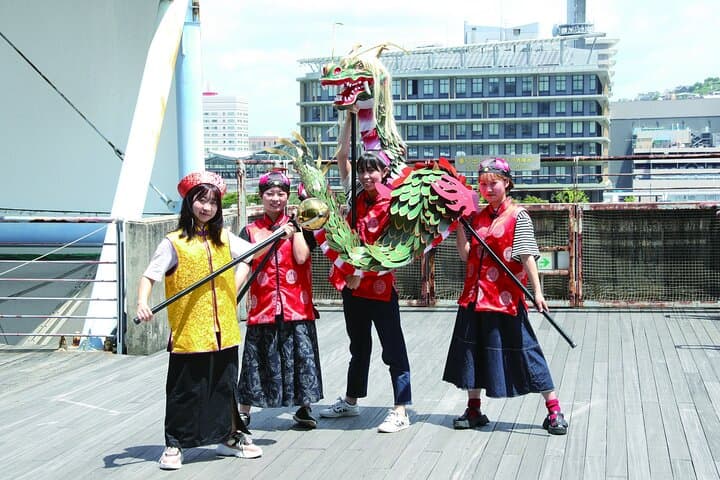
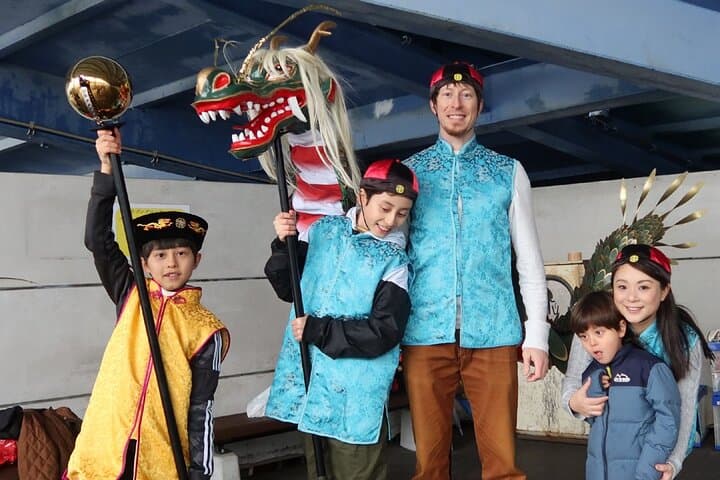
You step off a narrow Nagasaki lane and the recorded gongs and drums hit first—rhythm that seems to nudge the harbor breeze. Four people shoulder the light, articulated dragon and feel it coil, surge and dip; the costume breathes with each synchronized step. For twenty minutes you aren’t just watching a festival, you are making its motion and rhythm.
Verified experiences and guided adventures in the surrounding area.
Operated by Zettoya · Nagasaki, Nagasaki Prefecture
You step off a narrow Nagasaki lane and the recorded gongs and drums hit first—rhythm that seems to nudge the harbor breeze. Four people shoulder the light, articulated dragon and feel it coil, surge and dip; the costume breathes with each synchronized step. For twenty minutes you aren’t just watching a festival, you are making its motion and rhythm.
The Dragon Dance in Nagasaki reflects the city’s long Chinese connections: merchants, temples and immigrant communities shaped local festival forms, most visibly at the annual Kunchi celebration. The compact, four-person dragon is a pragmatic adaptation—it delivers the same twisting energy in a smaller footprint suited to city streets and cultural workshops.
Set against Nagasaki’s hilly harbor geography, the performance emphasizes timing and teamwork more than raw strength. Instructors introduce the cultural background and basic patterns, then guide participants through crawl-under moves and the playful chase of the golden ball—a classic cue that draws attention and photos.
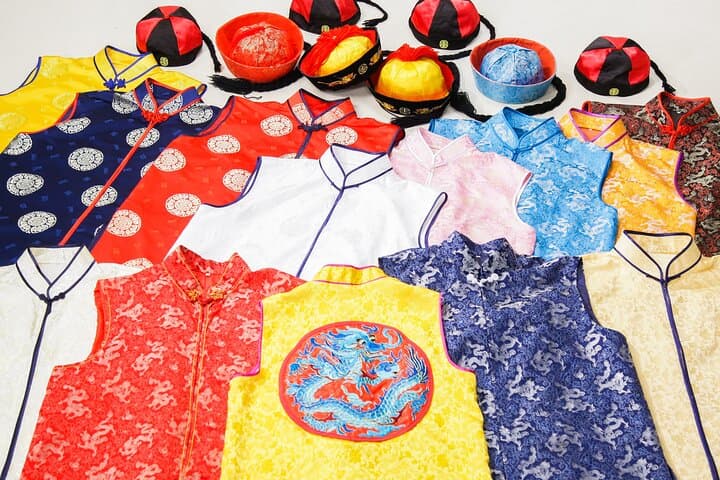
Practicalities matter: the experience lasts about 20 minutes, includes a festival vest (up to 2L) and is led in English. It’s accessible to most people but not recommended for pregnant guests or those with spinal or serious heart problems. Public transit serves the area, so plan arrival 15–20 minutes early to change into costume and warm up.
Bring sturdy, flat-soled shoes and a small, fast camera; wear layers for variable indoor/outdoor temperatures. Expect close-up photos, rhythmic exertion and a memory of movement that connects Nagasaki’s maritime history to its living festival culture.
easy.
20 minutes.
Suitable for most fitness levels; requires basic mobility, balance and short bursts of coordinated movement
The hands-on session runs about 20 minutes and includes a brief cultural introduction, the dance practice, and a photo moment.
This activity is generally suitable for most ages, but it is not recommended for pregnant guests or those with spinal or serious heart problems; check with the operator if you have concerns.
Yes—English-speaking instructors guide participants step-by-step, so no prior experience is required.
Yes—participants are encouraged to photograph and record the experience, and instructors often stage quick photo poses at the end.
Nagasaki’s dragon dance reflects centuries of Chinese cultural influence tied to the port’s trade links and the city’s distinctive festival calendar, notably Kunchi.
Respect for cultural heritage matters—ask before handling costumes and avoid obstructing public spaces; small experiences like this rely on local goodwill and preservation of tangible and intangible traditions.
Zettoya operates guided outdoor trips and adventures with an emphasis on safety, stewardship, and memorable experiences.
You step off a narrow Nagasaki lane and the recorded gongs and drums hit first—rhythm that seems to nudge the harbor breeze. Four people shoulder the light, articulated dragon and feel it coil, surge and dip; the costume breathes with each synchronized step. For twenty minutes you aren’t just watching a festival, you are making its motion and rhythm.
You step off a narrow Nagasaki lane and the recorded gongs and drums hit first—rhythm that seems to nudge the harbor breeze. Four people shoulder the light, articulated dragon and feel it coil, surge and dip; the costume breathes with each synchronized step. For twenty minutes you aren’t just watching a festival, you are making its motion and rhythm.
The Dragon Dance in Nagasaki reflects the city’s long Chinese connections: merchants, temples and immigrant communities shaped local festival forms, most visibly at the annual Kunchi celebration. The compact, four-person dragon is a pragmatic adaptation—it delivers the same twisting energy in a smaller footprint suited to city streets and cultural workshops.
Set against Nagasaki’s hilly harbor geography, the performance emphasizes timing and teamwork more than raw strength. Instructors introduce the cultural background and basic patterns, then guide participants through crawl-under moves and the playful chase of the golden ball—a classic cue that draws attention and photos.
Practicalities matter: the experience lasts about 20 minutes, includes a festival vest (up to 2L) and is led in English. It’s accessible to most people but not recommended for pregnant guests or those with spinal or serious heart problems. Public transit serves the area, so plan arrival 15–20 minutes early to change into costume and warm up.
Bring sturdy, flat-soled shoes and a small, fast camera; wear layers for variable indoor/outdoor temperatures. Expect close-up photos, rhythmic exertion and a memory of movement that connects Nagasaki’s maritime history to its living festival culture.