THE ADVENTURE COLLECTIVE® · Independent discovery and booking for outdoor travel

Join a Tangier family for a market-to-table cooking class that pairs hands-on technique with local stories. Learn to shop the medina, cook classic dishes, and share a communal meal.
Join a Tangier family for a market-to-table cooking class that pairs hands-on technique with local stories. Learn to shop the medina, cook classic dishes, and share a communal meal.
You step off the narrow medina alley into a sun-dusted market where oranges glint like coins and a spice stall seems to hum. The vendors call; the air is thick with cumin, paprika and preserved lemon. A local family greets you, guiding you from stall to kitchen, translating the market’s character into a plate.
Verified experiences and guided adventures in the surrounding area.
Operated by Mouha tour tanger · Tangier, Tanger-Tétouan-Al Hoceima
You step off the narrow medina alley into a sun-dusted market where oranges glint like coins and a spice stall seems to hum. The vendors call; the air is thick with cumin, paprika and preserved lemon. A local family greets you, guiding you from stall to kitchen, translating the market’s character into a plate.
Tangier sits at the intersection of the Atlantic and Mediterranean, a city shaped by centuries of trade and cultural mixing — Berber, Arab, Andalusian and European flavors layered into everyday food. Geology and sea breezes influence local produce: citrus thrives in the region’s mild climate and the Strait’s currents have long brought ingredients and ideas ashore.
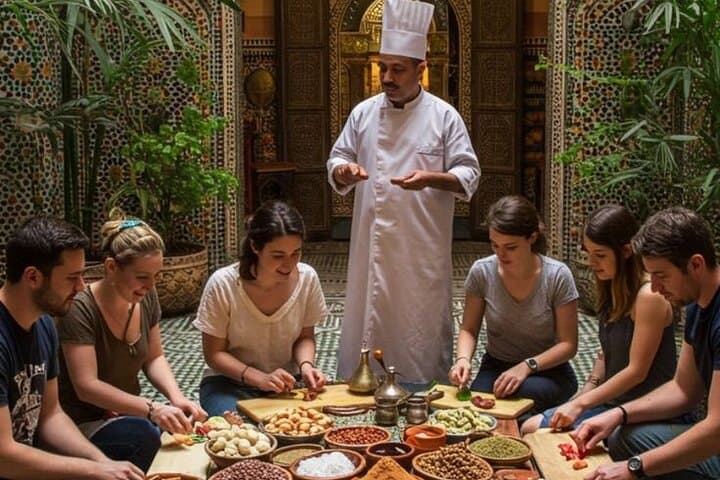
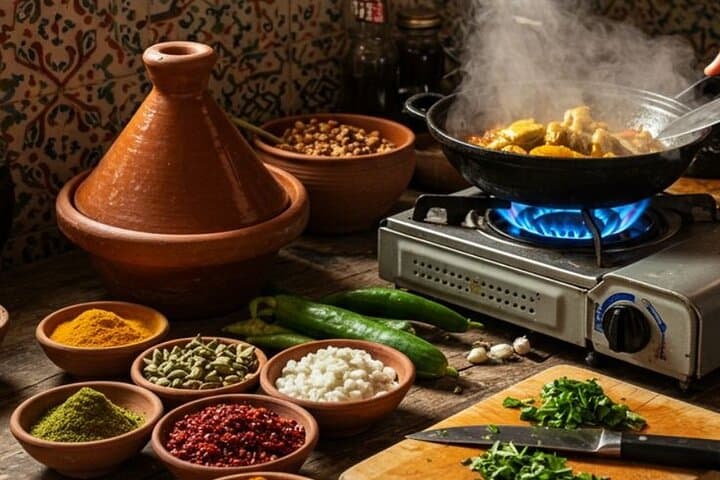
In the family kitchen you learn the mechanics of tagine and couscous — how spices bloom in oil, how slow steam coaxes textures. The format is hands-on: prep, cook, and eat together. Conversation will likely range from recipe origins to household traditions; expect warmth and practical lessons rather than a staged demo.
Practical guidance: arrive with comfortable shoes for medina cobbles and loose, respectful clothing for a private home. Bring a small bag for market purchases and a list of dietary restrictions in advance. Classes run about four hours and include lunch or dinner; most hosts accommodate vegetarian needs with notice. Cash for market buys and a modest tip for your hosts is customary.
This is less a show than a domestic exchange — you leave with recipes, stories, and the sensory memory of spices that shaped a city.
easy.
4 hours.
Minimal physical exertion; you should be able to stand and move in a kitchen and walk short distances on cobbled streets.
No — classes are designed for all levels; hosts teach basic knife skills, spice use and timing during the session.
Yes — most families can adjust dishes for vegetarians or common allergies if informed when booking.
The market portion is part of the experience to teach ingredient selection, but hosts may shorten it on request for accessibility reasons.
Accessibility depends on specific routes in the medina and the host home; confirm accessibility needs with the operator before booking.
Tangier’s location at the Strait has made it a multicultural crossroads for millennia; its cuisine reflects Berber, Arab, Andalusian and European influences.
Buy spices and produce from local vendors to support small businesses; avoid single-use plastics when shopping and bring reusable bags.
Mouha tour tanger operates guided outdoor trips and adventures with an emphasis on safety, stewardship, and memorable experiences.
You step off the narrow medina alley into a sun-dusted market where oranges glint like coins and a spice stall seems to hum. The vendors call; the air is thick with cumin, paprika and preserved lemon. A local family greets you, guiding you from stall to kitchen, translating the market’s character into a plate.
You step off the narrow medina alley into a sun-dusted market where oranges glint like coins and a spice stall seems to hum. The vendors call; the air is thick with cumin, paprika and preserved lemon. A local family greets you, guiding you from stall to kitchen, translating the market’s character into a plate.
Tangier sits at the intersection of the Atlantic and Mediterranean, a city shaped by centuries of trade and cultural mixing — Berber, Arab, Andalusian and European flavors layered into everyday food. Geology and sea breezes influence local produce: citrus thrives in the region’s mild climate and the Strait’s currents have long brought ingredients and ideas ashore.
In the family kitchen you learn the mechanics of tagine and couscous — how spices bloom in oil, how slow steam coaxes textures. The format is hands-on: prep, cook, and eat together. Conversation will likely range from recipe origins to household traditions; expect warmth and practical lessons rather than a staged demo.
Practical guidance: arrive with comfortable shoes for medina cobbles and loose, respectful clothing for a private home. Bring a small bag for market purchases and a list of dietary restrictions in advance. Classes run about four hours and include lunch or dinner; most hosts accommodate vegetarian needs with notice. Cash for market buys and a modest tip for your hosts is customary.
This is less a show than a domestic exchange — you leave with recipes, stories, and the sensory memory of spices that shaped a city.