THE ADVENTURE COLLECTIVE® · Independent discovery and booking for outdoor travel

Spend three immersive hours in Galle Fort learning to carve and paint a traditional kaduru mask. This hands-on private session covers the techniques, symbolism, and history behind Sri Lanka’s celebrated mask-making tradition—plus you leave with your own handcrafted piece.
Spend three immersive hours in Galle Fort learning to carve and paint a traditional kaduru mask. This hands-on private session covers the techniques, symbolism, and history behind Sri Lanka’s celebrated mask-making tradition—plus you leave with your own handcrafted piece.
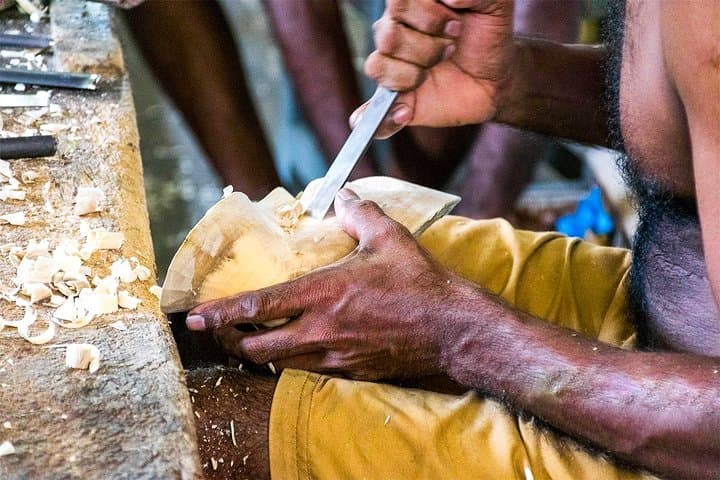
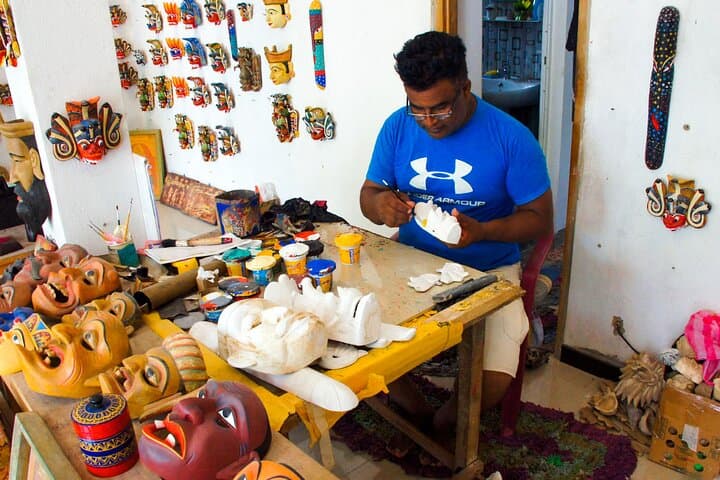
A warm sea breeze carries the smell of salt and wood dust as you step into a tucked-away workshop in Galle Fort, tools and half-carved forms arranged like a craftsman’s alphabet. The tour begins with the rhythm of hands and knives—your host demonstrates how a flat block of kaduru (light jackfruit wood) becomes a face used in Kolam dance and healing ceremonies. You watch, then take the tools, learning to shape exaggerated eyes and teeth that make these masks immediately recognizable.
Verified experiences and guided adventures in the surrounding area.
Operated by Lakpura LLC · Galle, Southern Province
A warm sea breeze carries the smell of salt and wood dust as you step into a tucked-away workshop in Galle Fort, tools and half-carved forms arranged like a craftsman’s alphabet. The tour begins with the rhythm of hands and knives—your host demonstrates how a flat block of kaduru (light jackfruit wood) becomes a face used in Kolam dance and healing ceremonies. You watch, then take the tools, learning to shape exaggerated eyes and teeth that make these masks immediately recognizable.
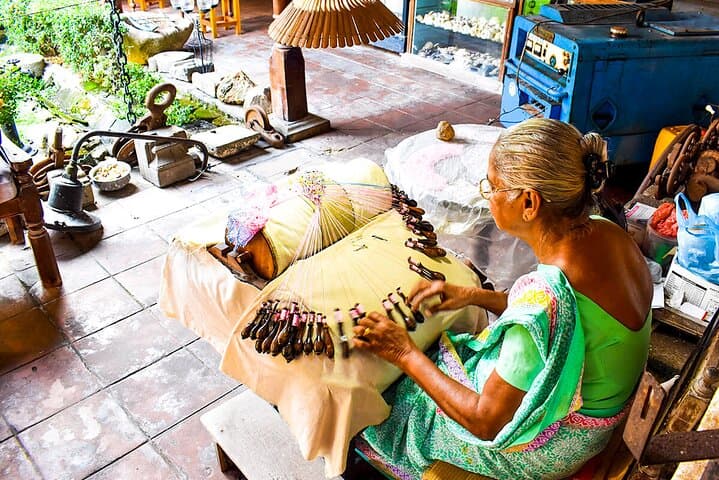
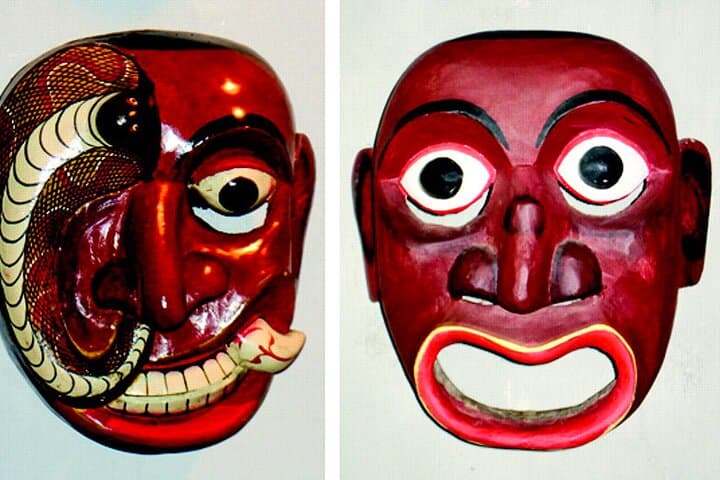
Mask-making in Sri Lanka ties into long-standing cultural practices: masks have roles in Kolam folk theatre, devil-dance rituals, and local storytelling, and many designs carry symbolic meanings or are used to ward off illness. Geologically, the southern coast sits on ancient rock and coastal sands; timber like kaduru has been a regional craft material because it carves cleanly and stays light.
The experience is practical and hands-on—about three hours in a private session—suitable for all skill levels. Hosts explain carving techniques, paint mixing, and the iconography behind common masks. Expect conversation about Galle Fort’s colonial layers (Portuguese, Dutch, British) and how those histories intersect with local crafts.
Practical guidance: wear closed-toe shoes and sun protection for short walks around the fort; the workshop provides water and tools. Travel time from Bentota to Galle is roughly 35–45 minutes by car, so schedule transit accordingly. This is a compact cultural excursion that combines history, craft, and a tangible souvenir you leave with—a carved mask you cut, sand, and paint yourself.
easy.
3 hours.
Suitable for all fitness levels; requires standing and light hand activity for a few hours
No. The host provides step-by-step instruction and guidance suitable for beginners; you’ll work on a small mask under supervision.
This listing is sold as a private tour from Bentota; confirm pickup details with the operator at booking and allow time for travel to Galle Fort.
Families with older children (often 8+) can participate; children should be supervised around hand tools and paint.
Sessions are commonly conducted in English and/or Sinhala—confirm language preferences with the operator when booking.
Galle Fort reflects layers of colonial history—built by the Portuguese and expanded by the Dutch in the 17th century—and local crafts like mask-making have long coexisted with these trading-era influences.
Artisan projects increasingly emphasize sustainable wood sourcing and traditional techniques; visitors can support conservation by choosing workshops that source kaduru responsibly and minimize waste.
Lakpura LLC operates guided outdoor trips and adventures with an emphasis on safety, stewardship, and memorable experiences.
A warm sea breeze carries the smell of salt and wood dust as you step into a tucked-away workshop in Galle Fort, tools and half-carved forms arranged like a craftsman’s alphabet. The tour begins with the rhythm of hands and knives—your host demonstrates how a flat block of kaduru (light jackfruit wood) becomes a face used in Kolam dance and healing ceremonies. You watch, then take the tools, learning to shape exaggerated eyes and teeth that make these masks immediately recognizable.
A warm sea breeze carries the smell of salt and wood dust as you step into a tucked-away workshop in Galle Fort, tools and half-carved forms arranged like a craftsman’s alphabet. The tour begins with the rhythm of hands and knives—your host demonstrates how a flat block of kaduru (light jackfruit wood) becomes a face used in Kolam dance and healing ceremonies. You watch, then take the tools, learning to shape exaggerated eyes and teeth that make these masks immediately recognizable.
Mask-making in Sri Lanka ties into long-standing cultural practices: masks have roles in Kolam folk theatre, devil-dance rituals, and local storytelling, and many designs carry symbolic meanings or are used to ward off illness. Geologically, the southern coast sits on ancient rock and coastal sands; timber like kaduru has been a regional craft material because it carves cleanly and stays light.
The experience is practical and hands-on—about three hours in a private session—suitable for all skill levels. Hosts explain carving techniques, paint mixing, and the iconography behind common masks. Expect conversation about Galle Fort’s colonial layers (Portuguese, Dutch, British) and how those histories intersect with local crafts.
Practical guidance: wear closed-toe shoes and sun protection for short walks around the fort; the workshop provides water and tools. Travel time from Bentota to Galle is roughly 35–45 minutes by car, so schedule transit accordingly. This is a compact cultural excursion that combines history, craft, and a tangible souvenir you leave with—a carved mask you cut, sand, and paint yourself.