THE ADVENTURE COLLECTIVE® · Independent discovery and booking for outdoor travel

Cook a complete Korean table in a Hanok-inspired studio in central Seoul. Learn sauces, make banchan, plate bibimbap, and taste chef-grilled pork belly in a three-hour hands-on session.
Cook a complete Korean table in a Hanok-inspired studio in central Seoul. Learn sauces, make banchan, plate bibimbap, and taste chef-grilled pork belly in a three-hour hands-on session.
The room smells faintly of toasted sesame and simmering broth as you step through a low wooden lintel modeled on Hanok architecture.
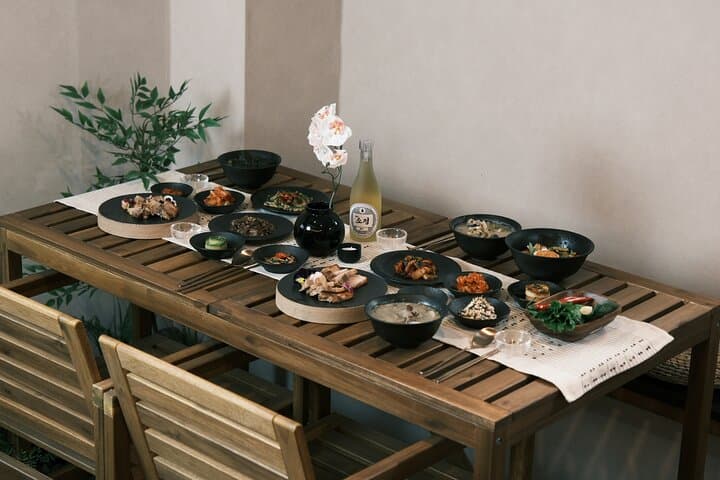
Light filters through papered screens while a long, shared table waits set for a full Korean meal — banchan arranged like small promises, rice steaming in a pot, sauces ranging from salty doenjang to bright gochujang.
Verified experiences and guided adventures in the surrounding area.
Operated by Soop Table: The Hansik Atelier · Seoul, Seoul
The room smells faintly of toasted sesame and simmering broth as you step through a low wooden lintel modeled on Hanok architecture.
Light filters through papered screens while a long, shared table waits set for a full Korean meal — banchan arranged like small promises, rice steaming in a pot, sauces ranging from salty doenjang to bright gochujang.
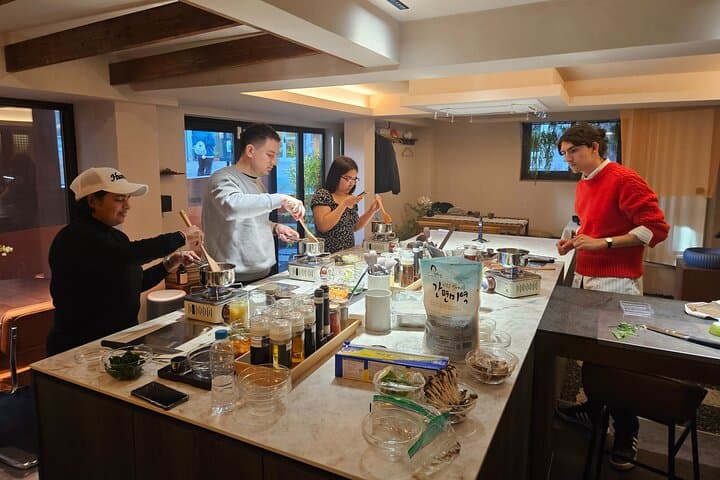
This class moves at a measured domestic pace: guests learn foundational sauces, slice seasonal vegetables, and assemble four banchan before choosing a main and a soup. The chef explains how Korea’s climate and seasons shaped fermentation and preservation techniques, and why multiple small dishes arrive all at once to balance flavor and texture.
Seoul’s food culture blends centuries-old home cooking with modern sensibilities. The studio references Hanok form, and many ingredients — fermented pastes, kimchi styles, or an heirloom soy sauce — carry regional stories from Korean provinces.
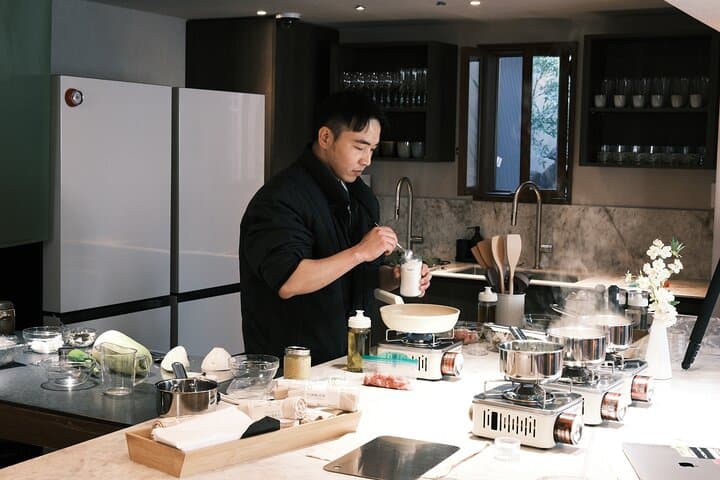
Practical guidance: arrive ready to stand and use a knife; wear closed-toe shoes and clothes that can handle splatter. Expect hands-on instruction for nearly every dish; the chef grills the pork belly at the table and pours a small tasting of traditional liquor. Public transit reaches the neighborhood easily; classes cap small to keep the pace deliberate.
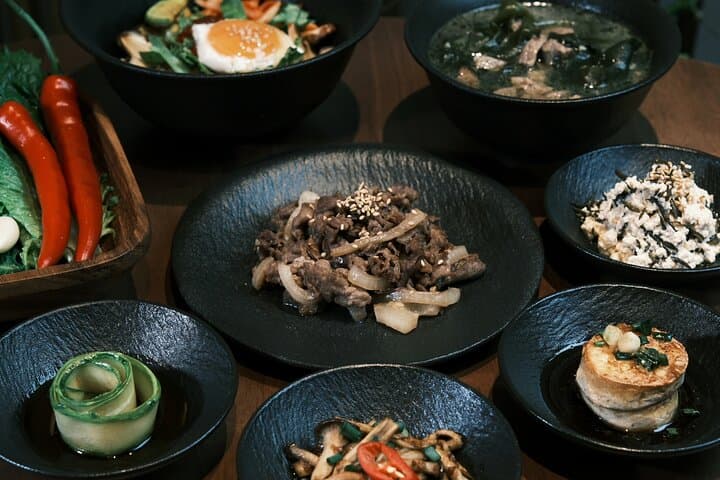
Leave with plated dishes, a link to a recipe archive, and practical techniques you can replicate at home — from balancing banchan salt to finishing a clean radish soup. It’s less a spectacle and more an invitation to sit, cook, and eat the way Koreans have for generations.
easy.
3 hours.
Light — comfortable standing, light chopping, stirring and occasional lifting of pots
Yes — with advance notice the chef can offer vegetarian mains and adjust banchan to remove fish-based ingredients.
Classes are typically run in English or with English translation; confirm at booking if you need other language support.
The studio is centrally located in Seoul with nearby subway stations and bus connections; walking from the nearest stop is usually short.
Full refund is available if you cancel at least 24 hours before the scheduled start; check your booking confirmation for specifics.
Korean communal dining evolved from agrarian households where multiple small side dishes balanced seasonal produce and preserved flavors — a cultural practice tied to regional fermentation methods.
The studio emphasizes seasonal vegetables and minimizing food waste; guests are encouraged to take leftovers responsibly and learn preservation techniques that reduce spoilage.
Soop Table: The Hansik Atelier operates guided outdoor trips and adventures with an emphasis on safety, stewardship, and memorable experiences.
The room smells faintly of toasted sesame and simmering broth as you step through a low wooden lintel modeled on Hanok architecture.
Light filters through papered screens while a long, shared table waits set for a full Korean meal — banchan arranged like small promises, rice steaming in a pot, sauces ranging from salty doenjang to bright gochujang.
The room smells faintly of toasted sesame and simmering broth as you step through a low wooden lintel modeled on Hanok architecture.
Light filters through papered screens while a long, shared table waits set for a full Korean meal — banchan arranged like small promises, rice steaming in a pot, sauces ranging from salty doenjang to bright gochujang.
This class moves at a measured domestic pace: guests learn foundational sauces, slice seasonal vegetables, and assemble four banchan before choosing a main and a soup. The chef explains how Korea’s climate and seasons shaped fermentation and preservation techniques, and why multiple small dishes arrive all at once to balance flavor and texture.
Seoul’s food culture blends centuries-old home cooking with modern sensibilities. The studio references Hanok form, and many ingredients — fermented pastes, kimchi styles, or an heirloom soy sauce — carry regional stories from Korean provinces.
Practical guidance: arrive ready to stand and use a knife; wear closed-toe shoes and clothes that can handle splatter. Expect hands-on instruction for nearly every dish; the chef grills the pork belly at the table and pours a small tasting of traditional liquor. Public transit reaches the neighborhood easily; classes cap small to keep the pace deliberate.
Leave with plated dishes, a link to a recipe archive, and practical techniques you can replicate at home — from balancing banchan salt to finishing a clean radish soup. It’s less a spectacle and more an invitation to sit, cook, and eat the way Koreans have for generations.