THE ADVENTURE COLLECTIVE® · Independent discovery and booking for outdoor travel

Spend a morning at Seoul’s Mangwon Market learning to make four types of kimchi, tasting local street food and taking home over 1 kg of your own fermented work. This hands-on class pairs cultural context with practical technique so you can recreate kimchi at home.
Spend a morning at Seoul’s Mangwon Market learning to make four types of kimchi, tasting local street food and taking home over 1 kg of your own fermented work. This hands-on class pairs cultural context with practical technique so you can recreate kimchi at home.
The morning air in Mangwon crackles with frying oil and the bright tang of pickled vegetables as you step out of Exit 2 of Mangwon Station.
Verified experiences and guided adventures in the surrounding area.
Operated by cookorean · Seoul, Seoul
The morning air in Mangwon crackles with frying oil and the bright tang of pickled vegetables as you step out of Exit 2 of Mangwon Station.
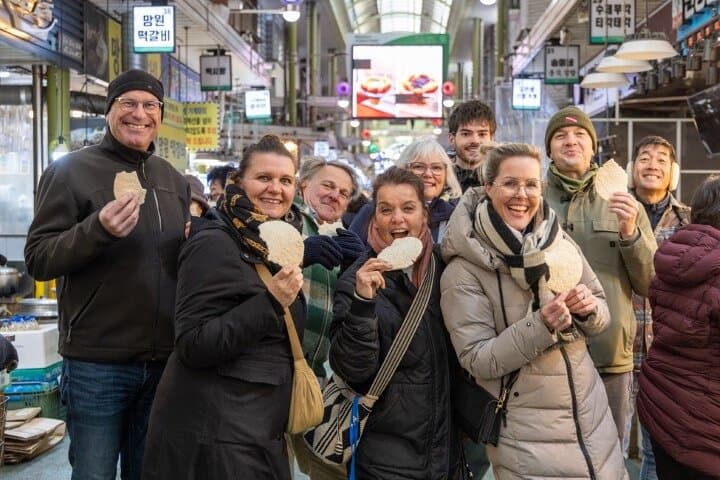
A local guide leads the procession through narrow alleys where stalls shout with stainless-steel bowls, gochugaru mounds and jars that glint like small batteries of flavor. You taste street food, learn ingredient names, then move into a bright cooking studio that feels like a neighborhood kitchen put on display.
Kimchi is both pantry and story in Korea: a seasonal practice rooted in centuries of preservation, family labor and regional twists. Seoul sits on low river plains beside the Han, and its markets grew after the 20th century to feed quickly changing urban neighborhoods—Mangwon is one of the livelier examples of that evolution.
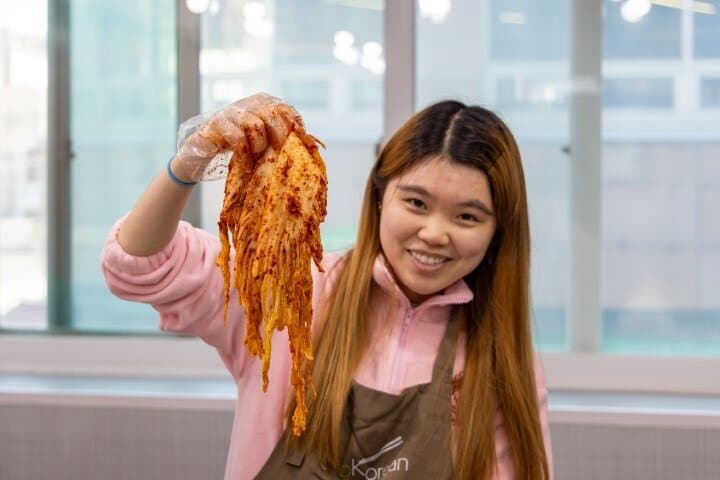
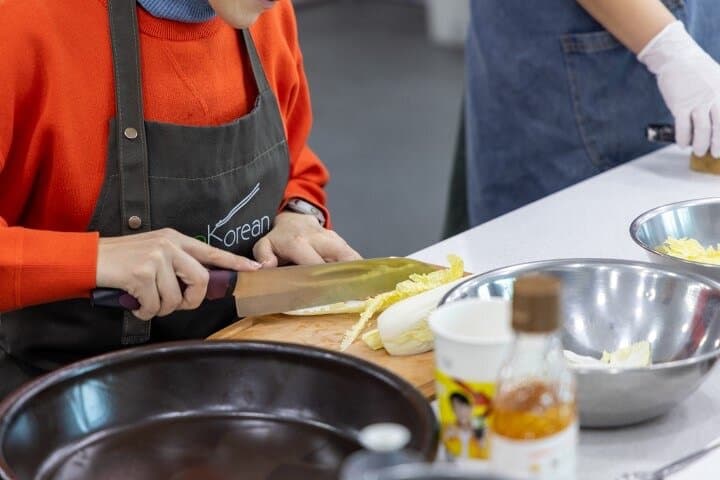
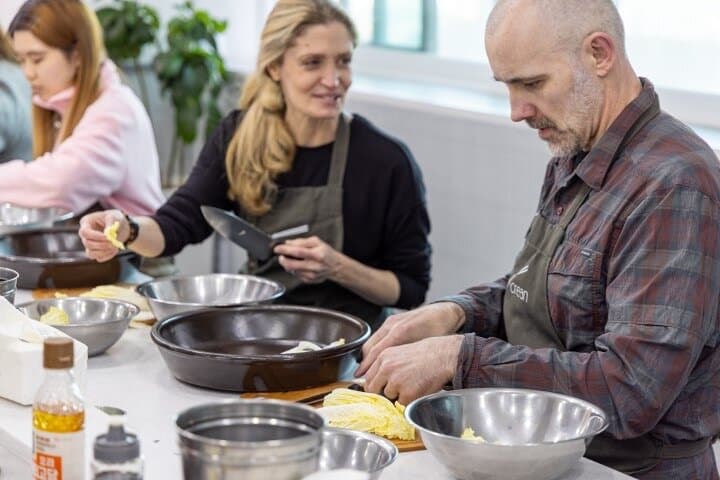
In the studio you’ll prep cabbage, radish and cucumber, measure salt and spice, and make four distinct kimchi styles under guided instruction. The class ends at a shared table with boiled pork, fried tofu and rice wine—an everyday celebratory meal—and you leave with more than a taste: a labeled container of your kimchi (over 1 kg) and a professionally designed recipe booklet.
Practicalities matter: wear shoes for standing, bring dietary notes if you’re vegan or allergic, and plan for public-transport access. The experience balances hands-on technique with cultural context—perfect for travelers who want to cook with confidence back home and understand why kimchi remains central to Korean tables.
easy.
3–4 hours.
Light—able to stand for several hours and use your hands for chopping and mixing.
Meet at Mangwon Subway Station, Line 6, Exit 2. The guide will lead a brief market tour before the studio session.
Yes—vegetarian and vegan options are available but must be requested when booking or noted in your special requirements.
You receive more than 1 kg of kimchi in a provided plastic container, labeled for travel.
Strollers are accessible and children can attend, but the class involves sharp tools and spicy ingredients—supervision is required for young kids.
Kimchi-making (kimjang) is a communal, seasonal practice central to Korean foodways; Mangwon Market is a 20th-century neighborhood market that grew to serve the city’s expanding communities.
Support vendors who use local produce and minimize waste; bring a reusable bag and return or recycle plastic where possible.
cookorean operates guided outdoor trips and adventures with an emphasis on safety, stewardship, and memorable experiences.
The morning air in Mangwon crackles with frying oil and the bright tang of pickled vegetables as you step out of Exit 2 of Mangwon Station.
The morning air in Mangwon crackles with frying oil and the bright tang of pickled vegetables as you step out of Exit 2 of Mangwon Station.
A local guide leads the procession through narrow alleys where stalls shout with stainless-steel bowls, gochugaru mounds and jars that glint like small batteries of flavor. You taste street food, learn ingredient names, then move into a bright cooking studio that feels like a neighborhood kitchen put on display.
Kimchi is both pantry and story in Korea: a seasonal practice rooted in centuries of preservation, family labor and regional twists. Seoul sits on low river plains beside the Han, and its markets grew after the 20th century to feed quickly changing urban neighborhoods—Mangwon is one of the livelier examples of that evolution.
In the studio you’ll prep cabbage, radish and cucumber, measure salt and spice, and make four distinct kimchi styles under guided instruction. The class ends at a shared table with boiled pork, fried tofu and rice wine—an everyday celebratory meal—and you leave with more than a taste: a labeled container of your kimchi (over 1 kg) and a professionally designed recipe booklet.
Practicalities matter: wear shoes for standing, bring dietary notes if you’re vegan or allergic, and plan for public-transport access. The experience balances hands-on technique with cultural context—perfect for travelers who want to cook with confidence back home and understand why kimchi remains central to Korean tables.