THE ADVENTURE COLLECTIVE® · Independent discovery and booking for outdoor travel

Learn to make classic cabbage and cucumber kimchi in a small Myeongdong studio led by a kimchi master. This hands-on 60–90 minute class mixes history, fermentation technique, and a kimchi pancake tasting for a compact cultural experience.
Learn to make classic cabbage and cucumber kimchi in a small Myeongdong studio led by a kimchi master. This hands-on 60–90 minute class mixes history, fermentation technique, and a kimchi pancake tasting for a compact cultural experience.
Step into a compact studio above Myeongdong’s busy streets and the scent of garlic and chili paste fills the air—sharp, warm, immediate. The class opens with a short pour of traditional tea while a kimchi master with decades of practice explains the ingredients laid out like a simple map: napa cabbage, cucumber, gochugaru, salted brine and fermented anchovy or fish sauce.
Verified experiences and guided adventures in the surrounding area.
Operated by Woo’s House · Seoul, Seoul
Step into a compact studio above Myeongdong’s busy streets and the scent of garlic and chili paste fills the air—sharp, warm, immediate. The class opens with a short pour of traditional tea while a kimchi master with decades of practice explains the ingredients laid out like a simple map: napa cabbage, cucumber, gochugaru, salted brine and fermented anchovy or fish sauce.
Kimchi’s history stretches back centuries as a practical method of preserving vegetables through Korea’s cold winters; the technique visible here is both culinary and cultural—salt-curing, seasoning, and layering by hand. Myeongdong itself is a modern commercial heart carved from older Seoul lanes, so the class feels urban and focused rather than pastoral.
Participants make two styles—cabbage and cucumber—under guided steps, learning timing, texture, and how to press and pack to encourage fermentation. The session ends with a wrapped take-home portion, a kimchi pancake tasting, and a sample of makgeolli, making the lesson taste as much as it teaches.
Practical notes: arrive 10 minutes early, wash hands in the facility, and wear clothes you don’t mind splashing. Most instruction is given in English and Japanese; small group sizes (2–10) mean hands-on attention. If you plan to fly with your kimchi, pack it securely in checked luggage and be aware of customs rules for food. For travelers wanting a short, sensory immersion in Korean food culture, this class delivers technique, history, and a tangible souvenir.
easy.
1–1.5 hours.
No particular fitness required; suitable for most adults and older children who can stand for short periods.
Yes — wrapped kimchi is provided as a take-home gift; bring a leakproof container for extra security and check airline/customs rules if flying internationally.
Instruction and commentary are provided in English and Japanese; the host has experience teaching international guests.
Small groups accept various ages but confirm during booking (AGEBAND requested); note the activity involves standing and manual mixing—not recommended for people with serious spinal or cardiovascular conditions or for pregnant guests per the provider's guidance.
Full refund available if cancelled at least 24 hours before the scheduled start; cancellations within 24 hours are not refundable.
Kimchi developed as a winter preservation method; modern recipes reflect centuries of regional variation and 20th-century standardization that made it a national staple.
Fermentation reduces food waste and the class emphasizes making appropriate batch sizes; travelers are encouraged to minimize single-use plastics when transporting food.
Woo’s House operates guided outdoor trips and adventures with an emphasis on safety, stewardship, and memorable experiences.
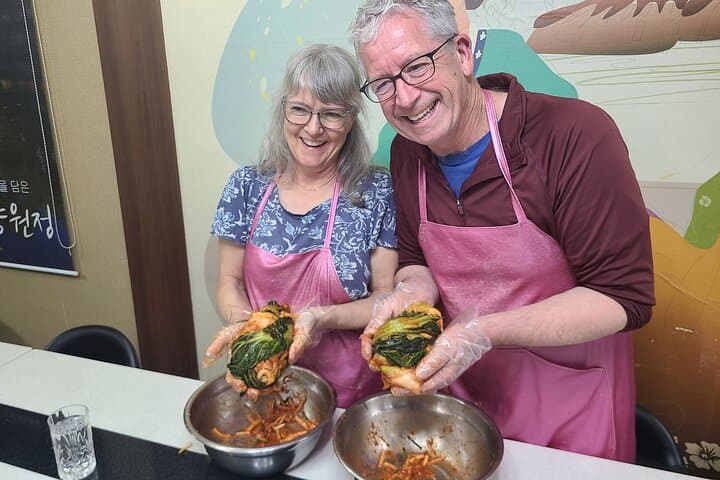
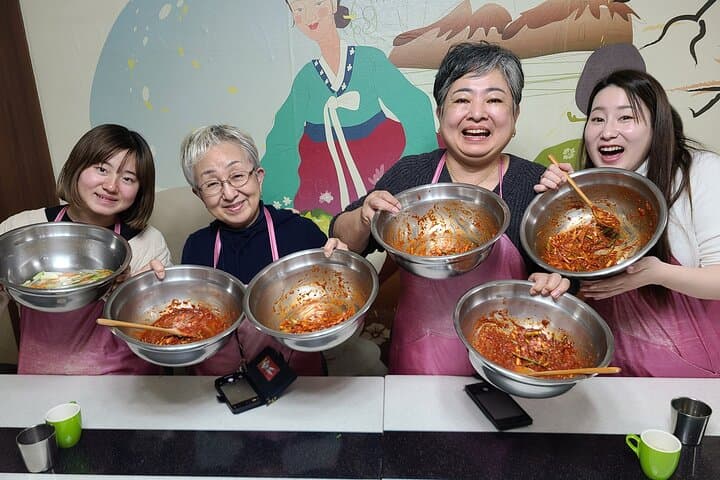
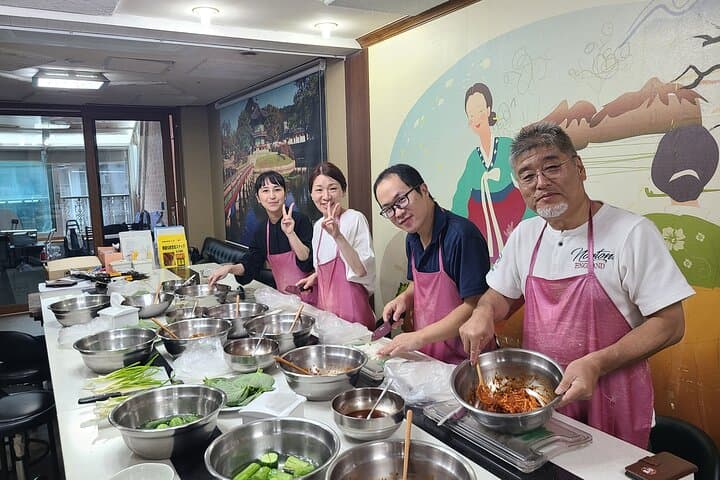
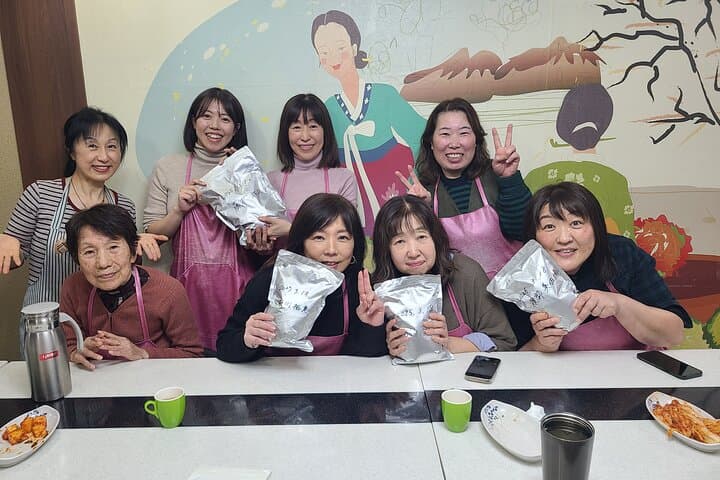
Step into a compact studio above Myeongdong’s busy streets and the scent of garlic and chili paste fills the air—sharp, warm, immediate. The class opens with a short pour of traditional tea while a kimchi master with decades of practice explains the ingredients laid out like a simple map: napa cabbage, cucumber, gochugaru, salted brine and fermented anchovy or fish sauce.
Step into a compact studio above Myeongdong’s busy streets and the scent of garlic and chili paste fills the air—sharp, warm, immediate. The class opens with a short pour of traditional tea while a kimchi master with decades of practice explains the ingredients laid out like a simple map: napa cabbage, cucumber, gochugaru, salted brine and fermented anchovy or fish sauce.
Kimchi’s history stretches back centuries as a practical method of preserving vegetables through Korea’s cold winters; the technique visible here is both culinary and cultural—salt-curing, seasoning, and layering by hand. Myeongdong itself is a modern commercial heart carved from older Seoul lanes, so the class feels urban and focused rather than pastoral.
Participants make two styles—cabbage and cucumber—under guided steps, learning timing, texture, and how to press and pack to encourage fermentation. The session ends with a wrapped take-home portion, a kimchi pancake tasting, and a sample of makgeolli, making the lesson taste as much as it teaches.
Practical notes: arrive 10 minutes early, wash hands in the facility, and wear clothes you don’t mind splashing. Most instruction is given in English and Japanese; small group sizes (2–10) mean hands-on attention. If you plan to fly with your kimchi, pack it securely in checked luggage and be aware of customs rules for food. For travelers wanting a short, sensory immersion in Korean food culture, this class delivers technique, history, and a tangible souvenir.