THE ADVENTURE COLLECTIVE® · Independent discovery and booking for outdoor travel

Trade Hanoi’s traffic for narrow lanes where conical hats are stitched by hand and incense is dyed and rolled in family yards. This half-day tour pairs hands-on crafting with close-up cultural context—ideal for travelers who want a tactile take-home and a glimpse of rural Vietnamese craft life.
Trade Hanoi’s traffic for narrow lanes where conical hats are stitched by hand and incense is dyed and rolled in family yards. This half-day tour pairs hands-on crafting with close-up cultural context—ideal for travelers who want a tactile take-home and a glimpse of rural Vietnamese craft life.
A bus eases out of Hanoi’s Old Quarter and the city’s clamor thins to a soundtrack of two-lane roads and rice-field air. Within an hour, narrow lanes open into villages where looms of bamboo and rows of drying incense occupy front yards; the scent of sandalwood and the rustle of palm leaves set a steady pace.
Verified experiences and guided adventures in the surrounding area.
Operated by Classic Tourist · Hanoi, Hanoi
A bus eases out of Hanoi’s Old Quarter and the city’s clamor thins to a soundtrack of two-lane roads and rice-field air. Within an hour, narrow lanes open into villages where looms of bamboo and rows of drying incense occupy front yards; the scent of sandalwood and the rustle of palm leaves set a steady pace.
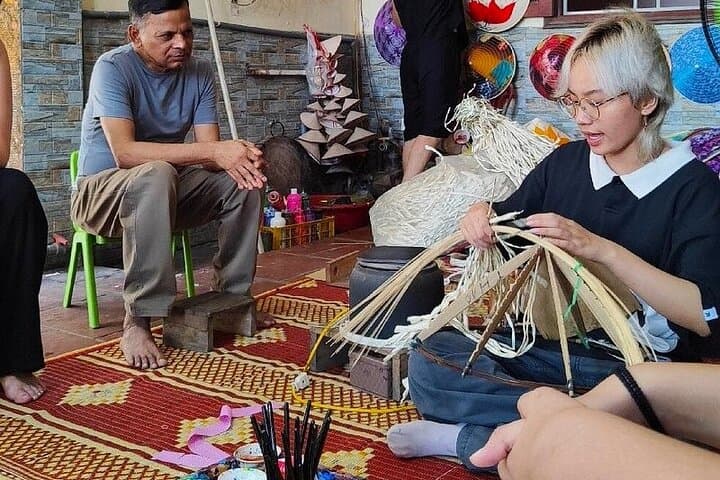
Chuong village carries a three-century practice of making the traditional non la—Vietnam’s conical hat. Artisans bend bamboo ribs, layer palm or la leaves, and stitch precise rows until a hat takes shape. Nearby, Quang Phu Cau’s incense industry threads dye vats, powdered fragrances, and hand-rolled sticks into household rhythms that date back generations. The area’s flat Red River Delta geology explains the wide, irrigated fields and the use of bamboo and reed as primary materials.
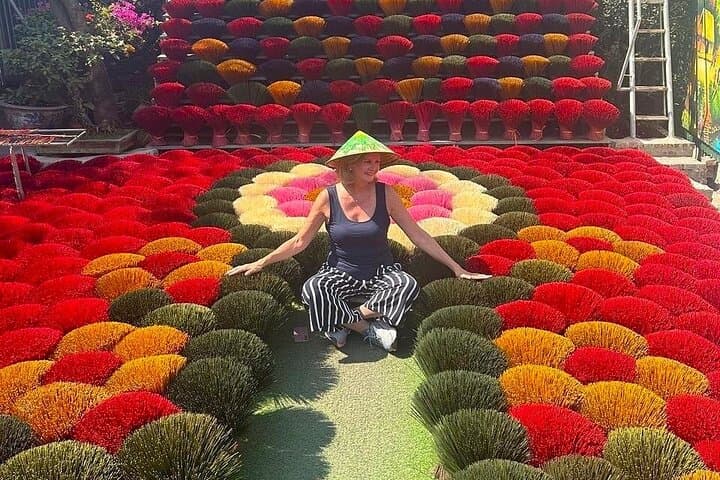
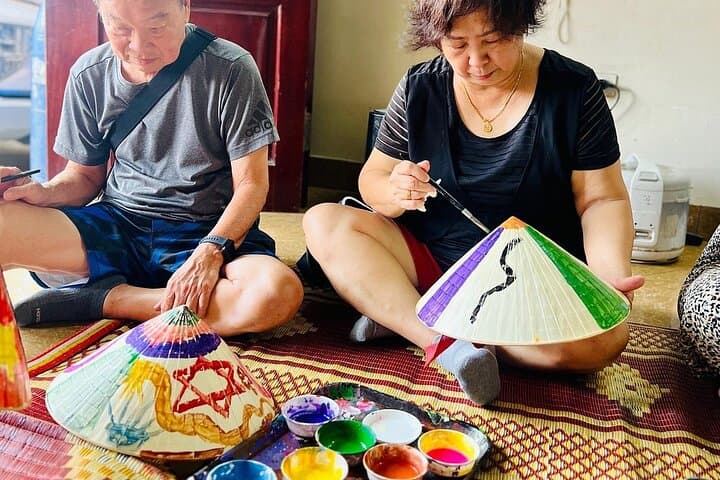
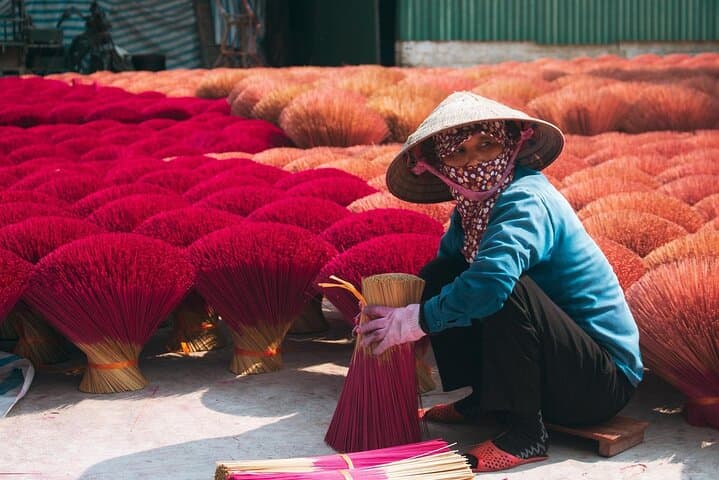
Culturally, these villages are living workshops: craft skills passed down family lines, festivals timed to planting cycles, and small-scale production that serves both local rites and urban markets. Photography yields color—piles of dyed incense and glossy palm hats—but it’s the hands-on work that sticks: painting a hat brim or rolling a stick of incense under a patient tutor.
Practical guidance: the tour runs about five hours with hotel pickup in Hanoi’s Old Quarter. Expect light walking on packed-earth lanes and standing demonstrations—comfortable shoes are recommended. Bring cash for extra purchases, a lightweight rain layer in the wet season, and insect repellent for dusk. The tour doesn’t include lunch; plan a hearty breakfast or a snack. For travelers wanting tactile souvenirs and a direct look at rural craft economies, this half-day is efficient, sensory, and rooted in everyday Vietnamese life.
easy.
4–5 hours.
Suitable for all fitness levels; requires light walking and standing during demonstrations.
The tour is approximately five hours and includes pick-up and drop-off from hotels in Hanoi’s Old Quarter.
Yes; the itinerary involves light walking on level village lanes and seated demonstrations that are accessible to most ages and abilities.
No—entrance fees and a hat are included, but additional souvenirs and larger purchases are paid locally in cash.
A water bottle is provided, but the tour does not include lunch—plan to eat beforehand or bring snacks.
Chuong’s hat-making tradition spans roughly 300 years, while Quang Phu Cau’s incense production has been a household craft for centuries tied to regional religious and market demands.
Artisanal craft here relies on locally sourced plant materials; supporting small workshops helps sustain traditional skills while reducing reliance on mass-produced goods.
Classic Tourist operates guided outdoor trips and adventures with an emphasis on safety, stewardship, and memorable experiences.
A bus eases out of Hanoi’s Old Quarter and the city’s clamor thins to a soundtrack of two-lane roads and rice-field air. Within an hour, narrow lanes open into villages where looms of bamboo and rows of drying incense occupy front yards; the scent of sandalwood and the rustle of palm leaves set a steady pace.
A bus eases out of Hanoi’s Old Quarter and the city’s clamor thins to a soundtrack of two-lane roads and rice-field air. Within an hour, narrow lanes open into villages where looms of bamboo and rows of drying incense occupy front yards; the scent of sandalwood and the rustle of palm leaves set a steady pace.
Chuong village carries a three-century practice of making the traditional non la—Vietnam’s conical hat. Artisans bend bamboo ribs, layer palm or la leaves, and stitch precise rows until a hat takes shape. Nearby, Quang Phu Cau’s incense industry threads dye vats, powdered fragrances, and hand-rolled sticks into household rhythms that date back generations. The area’s flat Red River Delta geology explains the wide, irrigated fields and the use of bamboo and reed as primary materials.
Culturally, these villages are living workshops: craft skills passed down family lines, festivals timed to planting cycles, and small-scale production that serves both local rites and urban markets. Photography yields color—piles of dyed incense and glossy palm hats—but it’s the hands-on work that sticks: painting a hat brim or rolling a stick of incense under a patient tutor.
Practical guidance: the tour runs about five hours with hotel pickup in Hanoi’s Old Quarter. Expect light walking on packed-earth lanes and standing demonstrations—comfortable shoes are recommended. Bring cash for extra purchases, a lightweight rain layer in the wet season, and insect repellent for dusk. The tour doesn’t include lunch; plan a hearty breakfast or a snack. For travelers wanting tactile souvenirs and a direct look at rural craft economies, this half-day is efficient, sensory, and rooted in everyday Vietnamese life.