THE ADVENTURE COLLECTIVE® · Independent discovery and booking for outdoor travel

Hand a humming EMF detector to a stranger in Jackson Square and the French Quarter’s shadows feel suddenly sharper. This one-hour, interactive ghost tour blends real paranormal gear with local history at landmarks like LaLaurie Mansion and Pirate’s Alley—perfect for travelers who want chills and context.
Hand a humming EMF detector to a stranger in Jackson Square and the French Quarter’s shadows feel suddenly sharper. This one-hour, interactive ghost tour blends real paranormal gear with local history at landmarks like LaLaurie Mansion and Pirate’s Alley—perfect for travelers who want chills and context.
The lamps along Jackson Square throw long, wavering ovals across the worn bricks as your guide clicks on an EMF detector and hands it to you. The device hums faintly in your palm—a scientific talisman in a city that keeps its stories close to the bone. For the next hour, the French Quarter sheds its daytime gaiety and lets its shadows take center stage: narrow alleys, iron-laced balconies, and facades that hold decades of whispered violence, ritual, and rumor.
Verified experiences and guided adventures in the surrounding area.
Operated by French Quarter Haunted Tour with free ghost hunting gear · New Orleans, Louisiana
The lamps along Jackson Square throw long, wavering ovals across the worn bricks as your guide clicks on an EMF detector and hands it to you. The device hums faintly in your palm—a scientific talisman in a city that keeps its stories close to the bone. For the next hour, the French Quarter sheds its daytime gaiety and lets its shadows take center stage: narrow alleys, iron-laced balconies, and facades that hold decades of whispered violence, ritual, and rumor.
This tour routes through the Quarter’s most infamous sites—the LaLaurie Mansion, Pirate’s Alley, the Old Ursuline Convent—so history is never far behind the goosebumps. New Orleans is layered history: French and Spanish colonial plans, a mercantile boom, and the grim economies that shaped private homes and public punishments. Buildings still show their seams: cracked stucco, ash-darkened lintels, and markers where fires and floods rewrote city blocks.
Geology is subtle here—there’s no alpine drama—but the city’s character is shaped by its relationship with water. The Quarter’s raised streets and iron fences are adaptations to a landscape that resists. Culture in New Orleans is vocal on these walks: guides translate voodoo practices, Creole traditions, and the social context behind the macabre tales, reminding travelers that legends are rooted in real lives and real loss.
The practical edge is immediate. The tour begins at the gate across from St. Louis Cathedral at Jackson Square—arrive 10 minutes early to get your EMF device and brief orientation. Guides show you how to read a detector’s lights and explain what constitutes a likely false positive (phone signals, historical wiring). Expect 30–40 minutes of walking over uneven cobbles; the route is wheelchair accessible where noted, but watch for steps at older doorways and alley entrances.
Interaction is part of the draw: this is not a passive story hour. You’ll scan doorways, sweep corners, and compare readings while a guide weaves first-person accounts and archival details into each stop. Group sizes are moderate—up to 30—so there’s room to experiment with the equipment without crowding.
For planning: bring a charged phone with a flashlight, wear quiet-soled shoes to preserve the mood (and avoid tripping), and dress for humidity or a river breeze depending on the season. If you want photos, keep flashes low and be respectful of private residences.
Above all, approach the walk with curiosity and respect. The city’s darker stories are embedded in its architecture and communities—treat both with care, and you’ll walk away with more than a few chills: you’ll have a clearer sense of how New Orleans keeps its past alive.
easy.
1 hour.
Minimal fitness required—expect standing and short walks over cobblestones; suitable for most visitors.
Yes—each party receives a real EMF detector to use during the tour; guides demonstrate how to interpret basic signals and common interference.
The operator lists the tour as wheelchair accessible for many sections, but some alleyways and older building fronts may have steps—contact the operator if you need specific accommodations.
Families are welcome, but content can be graphic; parents should judge whether tales about historical violence are appropriate for younger children.
Tours typically run in light rain—bring a rain layer; the cancellation policy offers a full refund if you cancel at least 24 hours ahead.
Yes—photography is allowed at exteriors, but avoid using flash on delicate facades and be respectful of residents and memorial sites.
Guides often have combined backgrounds in local history, storytelling, and the paranormal; they contextualize legends with archival facts and city lore.
The French Quarter’s layout and many surviving buildings date to 18th-century French and Spanish colonial planning; sites like the Old Ursuline Convent (1752) are among the oldest structures in the Mississippi Valley.
Respect for historic facades and private properties is central—avoid touching old plaster, and follow group instructions to minimize wear on fragile surfaces.
French Quarter Haunted Tour with free ghost hunting gear operates guided outdoor trips and adventures with an emphasis on safety, stewardship, and memorable experiences.
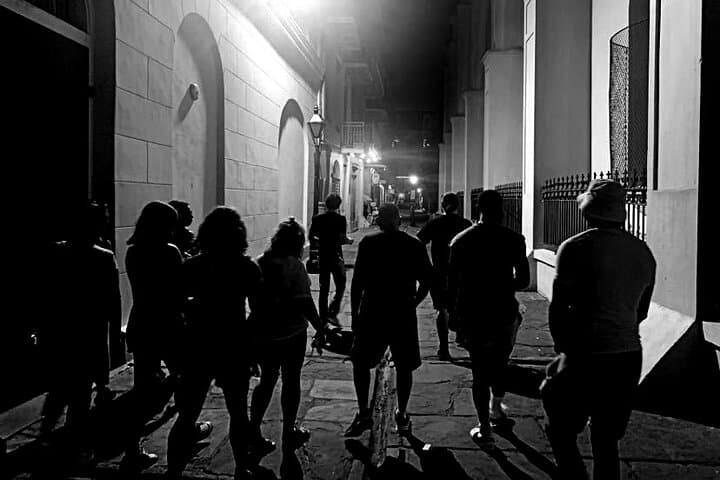
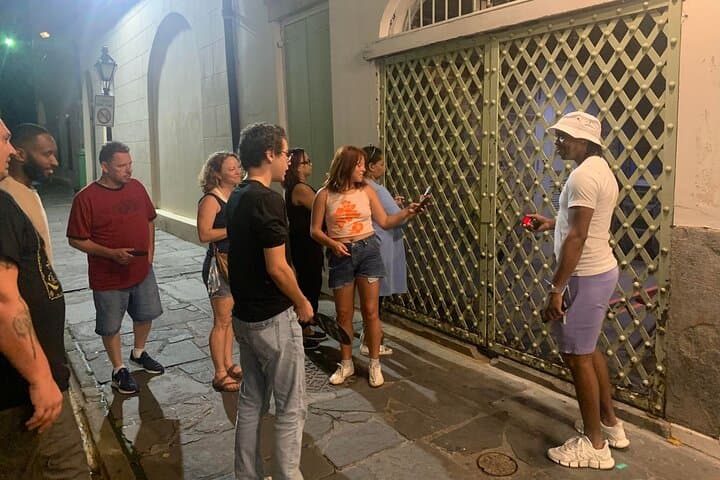
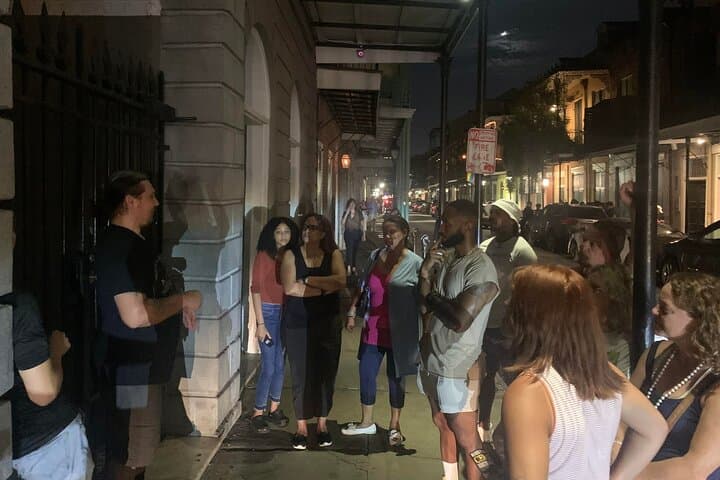
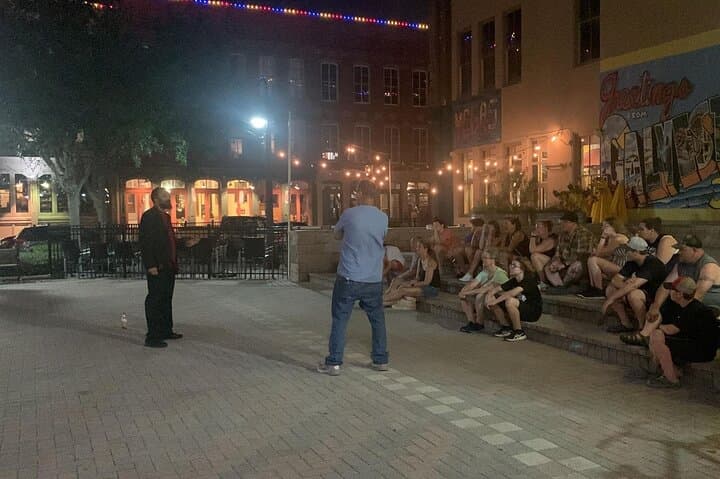
The lamps along Jackson Square throw long, wavering ovals across the worn bricks as your guide clicks on an EMF detector and hands it to you. The device hums faintly in your palm—a scientific talisman in a city that keeps its stories close to the bone. For the next hour, the French Quarter sheds its daytime gaiety and lets its shadows take center stage: narrow alleys, iron-laced balconies, and facades that hold decades of whispered violence, ritual, and rumor.
The lamps along Jackson Square throw long, wavering ovals across the worn bricks as your guide clicks on an EMF detector and hands it to you. The device hums faintly in your palm—a scientific talisman in a city that keeps its stories close to the bone. For the next hour, the French Quarter sheds its daytime gaiety and lets its shadows take center stage: narrow alleys, iron-laced balconies, and facades that hold decades of whispered violence, ritual, and rumor.
This tour routes through the Quarter’s most infamous sites—the LaLaurie Mansion, Pirate’s Alley, the Old Ursuline Convent—so history is never far behind the goosebumps. New Orleans is layered history: French and Spanish colonial plans, a mercantile boom, and the grim economies that shaped private homes and public punishments. Buildings still show their seams: cracked stucco, ash-darkened lintels, and markers where fires and floods rewrote city blocks.
Geology is subtle here—there’s no alpine drama—but the city’s character is shaped by its relationship with water. The Quarter’s raised streets and iron fences are adaptations to a landscape that resists. Culture in New Orleans is vocal on these walks: guides translate voodoo practices, Creole traditions, and the social context behind the macabre tales, reminding travelers that legends are rooted in real lives and real loss.
The practical edge is immediate. The tour begins at the gate across from St. Louis Cathedral at Jackson Square—arrive 10 minutes early to get your EMF device and brief orientation. Guides show you how to read a detector’s lights and explain what constitutes a likely false positive (phone signals, historical wiring). Expect 30–40 minutes of walking over uneven cobbles; the route is wheelchair accessible where noted, but watch for steps at older doorways and alley entrances.
Interaction is part of the draw: this is not a passive story hour. You’ll scan doorways, sweep corners, and compare readings while a guide weaves first-person accounts and archival details into each stop. Group sizes are moderate—up to 30—so there’s room to experiment with the equipment without crowding.
For planning: bring a charged phone with a flashlight, wear quiet-soled shoes to preserve the mood (and avoid tripping), and dress for humidity or a river breeze depending on the season. If you want photos, keep flashes low and be respectful of private residences.
Above all, approach the walk with curiosity and respect. The city’s darker stories are embedded in its architecture and communities—treat both with care, and you’ll walk away with more than a few chills: you’ll have a clearer sense of how New Orleans keeps its past alive.