THE ADVENTURE COLLECTIVE® · Independent discovery and booking for outdoor travel

Spend two hours at a small Koh Samui sanctuary learning everyday elephant care: prepare supplements, feed the herd, and help with a supervised bath. This half-day program focuses on safe, close observation and practical interaction under mahout guidance.
Spend two hours at a small Koh Samui sanctuary learning everyday elephant care: prepare supplements, feed the herd, and help with a supervised bath. This half-day program focuses on safe, close observation and practical interaction under mahout guidance.
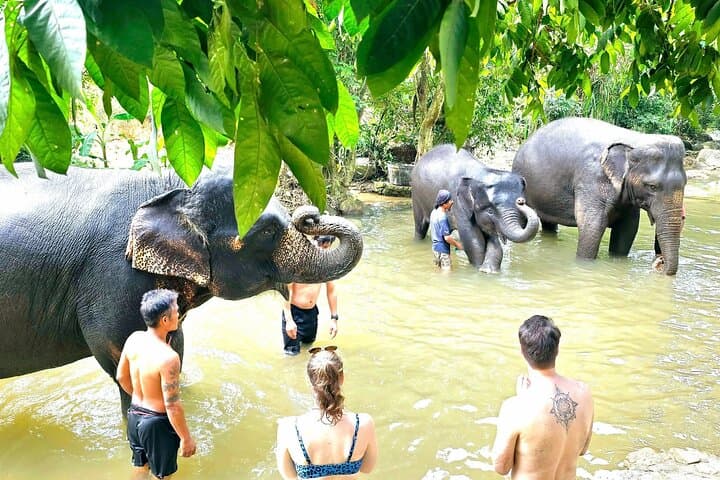
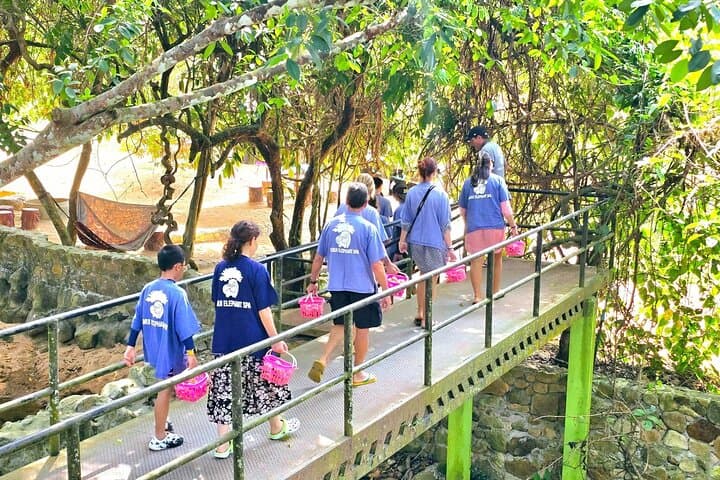
You step off the minivan into humid air scented with coconut husk and damp earth. The sanctuary sits on a low rise above a stream; elephant trunks trail through shaded pools as the animals casually sort through fruit and supplements. Light filters through rain trees while a mahout calls softly—the herd acknowledges him and then returns to grazing, curious but unhurried.
Verified experiences and guided adventures in the surrounding area.
Operated by Backpacker Samui Travel · Bophut, Surat Thani
You step off the minivan into humid air scented with coconut husk and damp earth. The sanctuary sits on a low rise above a stream; elephant trunks trail through shaded pools as the animals casually sort through fruit and supplements. Light filters through rain trees while a mahout calls softly—the herd acknowledges him and then returns to grazing, curious but unhurried.
Koh Samui’s elephants have a long cultural role in southern Thailand, once central to logging and ceremonial life and now increasingly part of conservation and community tourism. The island’s geology—eroded volcanic rock overlain by coastal sediments—creates the small valleys and freshwater pockets that make gentle bathing spots for the animals. Local guides will explain how changing land use and tourism shifted elephants from work to sanctuary life, and how local families still grow coconuts and rubber near the reserve.
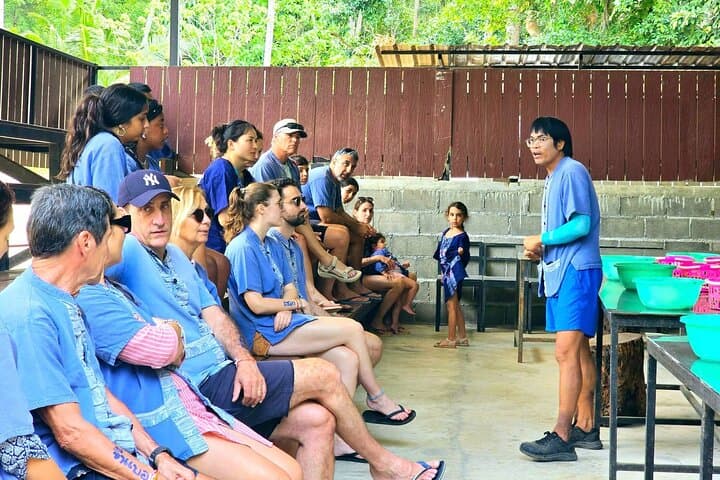
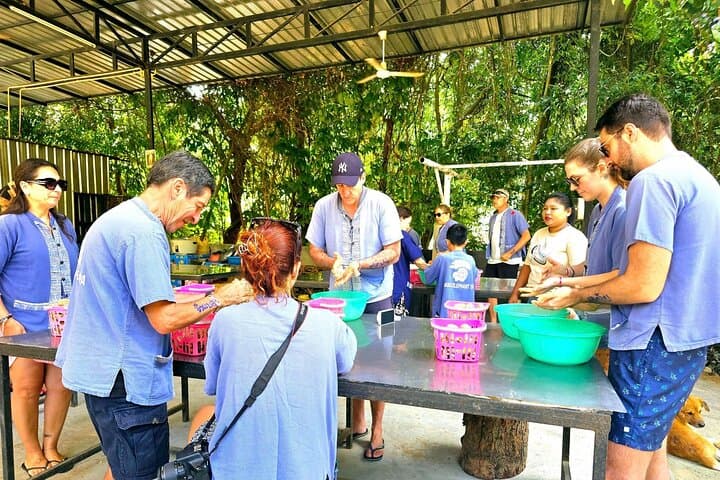
Expect a hands-on, structured program: hotel pickup, a short drive, an introduction to mahout techniques, preparing supplemental feed, supervised feeding, and a cooling bath in shallow water. The experience emphasizes welfare—no riding—and relies on simple interactions: offering fruit, scrubbing an elephant’s flank, watching the herd’s social signaling.
Practical guidance: wear closed-toe, quick-dry shoes and clothes you don’t mind getting damp. Bring a reusable water bottle and reef-safe sunscreen; avoid loose jewelry. The sun is strong midday, and sudden showers are common—timing your visit for cooler morning hours makes the bathing portion more comfortable. Follow staff instructions at all times: the animals are large and move with intent.
easy.
2 hours.
Suitable for most fitness levels; requires standing, walking on uneven ground, and light bending.
Yes—round-trip hotel transfers on Koh Samui are included in the program.
No—this program focuses on care, feeding, and bathing; riding is not offered to prioritize welfare.
Yes—children can participate but infants must sit on a lap; staff will advise age-appropriate interactions.
Full refund if cancelled at least 24 hours before departure; within 24 hours no refund.
Elephants in southern Thailand transitioned from working animals in the timber industry to sanctuary residents as logging declined and tourism rose, creating new roles for mahouts and communities.
Choose providers that prioritize natural behaviors and no-riding policies; minimize single-use plastics and follow staff rules to reduce disturbance.
Backpacker Samui Travel operates guided outdoor trips and adventures with an emphasis on safety, stewardship, and memorable experiences.
You step off the minivan into humid air scented with coconut husk and damp earth. The sanctuary sits on a low rise above a stream; elephant trunks trail through shaded pools as the animals casually sort through fruit and supplements. Light filters through rain trees while a mahout calls softly—the herd acknowledges him and then returns to grazing, curious but unhurried.
You step off the minivan into humid air scented with coconut husk and damp earth. The sanctuary sits on a low rise above a stream; elephant trunks trail through shaded pools as the animals casually sort through fruit and supplements. Light filters through rain trees while a mahout calls softly—the herd acknowledges him and then returns to grazing, curious but unhurried.
Koh Samui’s elephants have a long cultural role in southern Thailand, once central to logging and ceremonial life and now increasingly part of conservation and community tourism. The island’s geology—eroded volcanic rock overlain by coastal sediments—creates the small valleys and freshwater pockets that make gentle bathing spots for the animals. Local guides will explain how changing land use and tourism shifted elephants from work to sanctuary life, and how local families still grow coconuts and rubber near the reserve.
Expect a hands-on, structured program: hotel pickup, a short drive, an introduction to mahout techniques, preparing supplemental feed, supervised feeding, and a cooling bath in shallow water. The experience emphasizes welfare—no riding—and relies on simple interactions: offering fruit, scrubbing an elephant’s flank, watching the herd’s social signaling.
Practical guidance: wear closed-toe, quick-dry shoes and clothes you don’t mind getting damp. Bring a reusable water bottle and reef-safe sunscreen; avoid loose jewelry. The sun is strong midday, and sudden showers are common—timing your visit for cooler morning hours makes the bathing portion more comfortable. Follow staff instructions at all times: the animals are large and move with intent.