THE ADVENTURE COLLECTIVE® · Independent discovery and booking for outdoor travel

Dress in traditional Korean hanbok and walk the gates of Gyeongbokgung Palace — a tactile cultural experience that pairs costume, history, and palace photography. Learn basic styling, try traditional hair ornaments, and time your visit for the best light and smallest crowds.
Dress in traditional Korean hanbok and walk the gates of Gyeongbokgung Palace — a tactile cultural experience that pairs costume, history, and palace photography. Learn basic styling, try traditional hair ornaments, and time your visit for the best light and smallest crowds.
You step out of a narrow studio into a courtyard of color: silk skirts whisper against stone, bronze hairpins catch the late-morning light, and the gate to Gyeongbokgung waits a short walk away.
Verified experiences and guided adventures in the surrounding area.
Operated by yeshanbok · Seoul, Seoul
You step out of a narrow studio into a courtyard of color: silk skirts whisper against stone, bronze hairpins catch the late-morning light, and the gate to Gyeongbokgung waits a short walk away.
Wearing a hanbok is as much about posture as fabric — the lines pull you upright, the sleeves ask for smaller, measured movements. The costumes echo Joseon-era tailoring while the palace ahead carries layers of history: Gyeongbokgung, rebuilt after invasion and colonial disruption, lays out carved eaves and reflective ponds that map centuries of Korean court life.
The garments themselves follow a long cultural arc. Hanbok shapes evolved for seasonal practicality and Confucian-era aesthetics; visiting in one links a modern walk through Seoul to centuries of ceremony and civic life.
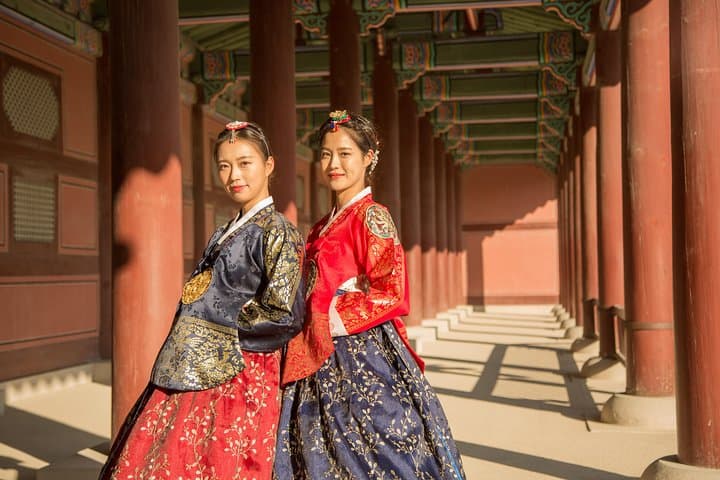
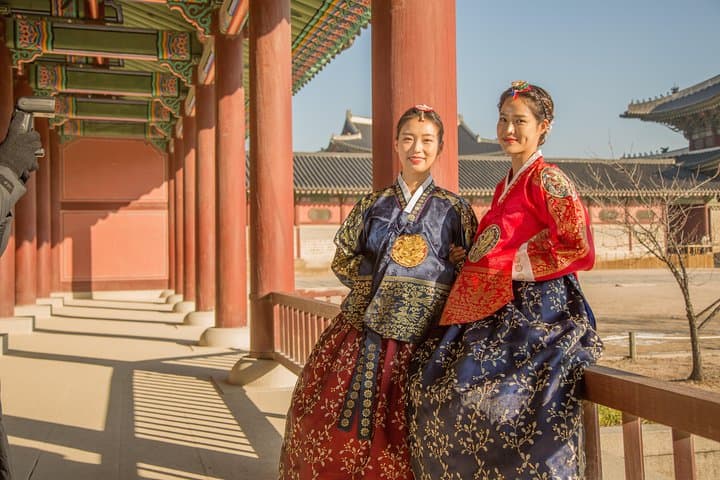
Practicalities matter: most studios supply hair accessories and basic styling, and many outfits include guided routes for photos at palace gates and throne halls. Expect paved palace paths, shallow steps, and crowds; silk hems drag if it's wet, and wooden platforms creak under careful feet. Midday sun can be strong against pale fabric, while autumn light flatters deep indigo and crimson skirts.
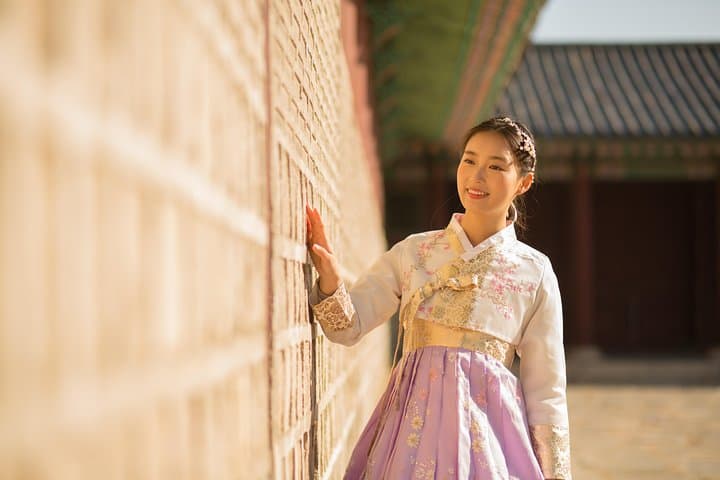
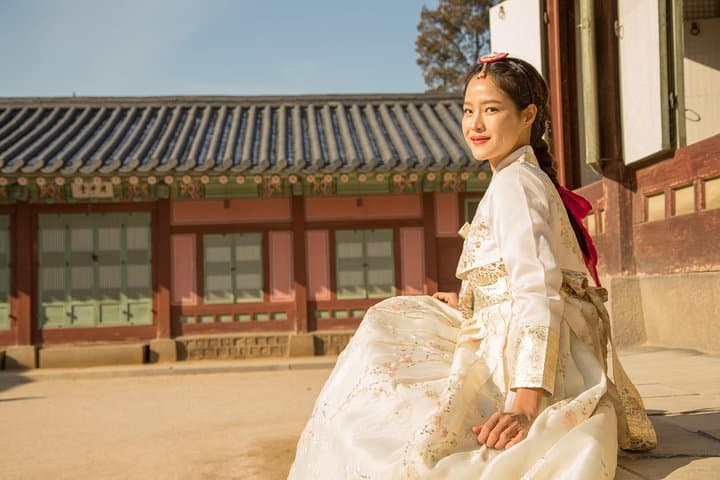
Plan for modest movement — sitting on stone or crossing courtyards is part of the experience — and respect palace rules about climbing walls or touching artifacts. Bring a small bag for your phone and ID; wear shoes that are easy to remove for traditional footwear. Timing your visit for early morning or late afternoon reduces crowds, sharpens light, and lets the palace feel less like a stage and more like a place that still remembers how people moved inside it.
easy.
2–4 hours.
Suitable for all fitness levels; requires light walking on paved and stepped surfaces
Yes — reservations secure your specific hanbok and styling slot; walk-ins may be available but sizes and styles are limited.
Yes — wearing hanbok often grants free or discounted palace entry at several Seoul palaces; check current palace policy on the day of your visit.
Most studios offer a range of sizes and both male and female styles, and staff assist with fit and modest adjustments.
Rental periods vary by studio — typical sessions run 2–4 hours to allow dressing, photos, and palace time; confirm at booking.
Gyeongbokgung was the main royal palace of the Joseon dynasty; hanbok proportions reflect Confucian-era ideals and practical responses to Korea’s seasons.
Stay on designated paths, avoid dragging hems across archaeological stone, and choose studios that handle garments with local textile-care practices to reduce wear.
yeshanbok operates guided outdoor trips and adventures with an emphasis on safety, stewardship, and memorable experiences.
You step out of a narrow studio into a courtyard of color: silk skirts whisper against stone, bronze hairpins catch the late-morning light, and the gate to Gyeongbokgung waits a short walk away.
You step out of a narrow studio into a courtyard of color: silk skirts whisper against stone, bronze hairpins catch the late-morning light, and the gate to Gyeongbokgung waits a short walk away.
Wearing a hanbok is as much about posture as fabric — the lines pull you upright, the sleeves ask for smaller, measured movements. The costumes echo Joseon-era tailoring while the palace ahead carries layers of history: Gyeongbokgung, rebuilt after invasion and colonial disruption, lays out carved eaves and reflective ponds that map centuries of Korean court life.
The garments themselves follow a long cultural arc. Hanbok shapes evolved for seasonal practicality and Confucian-era aesthetics; visiting in one links a modern walk through Seoul to centuries of ceremony and civic life.
Practicalities matter: most studios supply hair accessories and basic styling, and many outfits include guided routes for photos at palace gates and throne halls. Expect paved palace paths, shallow steps, and crowds; silk hems drag if it's wet, and wooden platforms creak under careful feet. Midday sun can be strong against pale fabric, while autumn light flatters deep indigo and crimson skirts.
Plan for modest movement — sitting on stone or crossing courtyards is part of the experience — and respect palace rules about climbing walls or touching artifacts. Bring a small bag for your phone and ID; wear shoes that are easy to remove for traditional footwear. Timing your visit for early morning or late afternoon reduces crowds, sharpens light, and lets the palace feel less like a stage and more like a place that still remembers how people moved inside it.