THE ADVENTURE COLLECTIVE® · Independent discovery and booking for outdoor travel

A private two-day transfer and guided visit from Goa to Hampi that covers the main Vijayanagara ruins, river viewpoints and royal complexes. Expect long road travel, short rugged walks among granite boulders, and an overnight budget stay in Hampi.
A private two-day transfer and guided visit from Goa to Hampi that covers the main Vijayanagara ruins, river viewpoints and royal complexes. Expect long road travel, short rugged walks among granite boulders, and an overnight budget stay in Hampi.
You arrive before sunrise after an early drive from Goa: the Tungabhadra river slips past low and cool, daring you to cross from the modern world into stones that still remember empire. Boulders rise like abandoned fortresses; pilgrims and langur monkeys move through temple courtyards as morning light cuts across carved pillars.
Verified experiences and guided adventures in the surrounding area.
Operated by Discover Activities · Hampi, Karnataka
You arrive before sunrise after an early drive from Goa: the Tungabhadra river slips past low and cool, daring you to cross from the modern world into stones that still remember empire. Boulders rise like abandoned fortresses; pilgrims and langur monkeys move through temple courtyards as morning light cuts across carved pillars.
Hampi was the heart of the Vijayanagara empire in the 14th–16th centuries and by 1500 CE was one of the world’s largest cities. The site sits on the Deccan plateau where laterite and granite weather into rounded, hulking forms — a landscape that shaped temple architecture, waterworks and market layouts. Local culture still echoes courtly patronage: festivals, temple rites and village trades continue alongside tourism.
This private, multi-day itinerary covers the essentials: Virupaksha Temple, Hampi Bazaar, the monolithic Ugra Narasimha, Krishna Temple and the royal enclosures, plus the Lotus Mahal, Elephant Stables and the stepped tanks. Expect lots of short walks on uneven, rocky ground, river viewpoints and an overnight in a budget private room in Hampi.
Practical guidance: the road from Goa is about 317 km and roughly an eight-hour drive with breaks; plan for early pickup. Bring sturdy shoes for uneven stone, sun protection, and 2–3 liters of water per person. Start major sightseeing early to avoid mid-day heat and use local guides at complex sites to get the most of inscriptions and hidden chambers. Respect temple spaces, stay on marked paths near fragile ruins, and carry small change for entry fees and local vendors.
easy.
2 days (approx. 48 hours).
Suitable for most fitness levels; must be able to manage repeated short walks on uneven, rocky terrain and steps.
The organized transfer covers about 317 km and typically takes around eight hours including rest stops.
Some site admissions are commonly charged locally; confirm with the tour operator whether entry fees are included in your booking.
Yes—this itinerary is listed as suitable for all fitness levels, but expect uneven ground; take breaks and avoid midday heat.
Many local guides speak English; Kannada is the regional language and Hindi is commonly understood in tourist areas.
Hampi was the capital of the Vijayanagara empire and one of the largest medieval cities in the world by the 16th century, with complex irrigation and market networks centered on river access.
Hampi is a UNESCO World Heritage Site; visitors should stick to marked paths, avoid climbing fragile carvings and support local conservation efforts by not littering and hiring licensed guides.
Discover Activities operates guided outdoor trips and adventures with an emphasis on safety, stewardship, and memorable experiences.
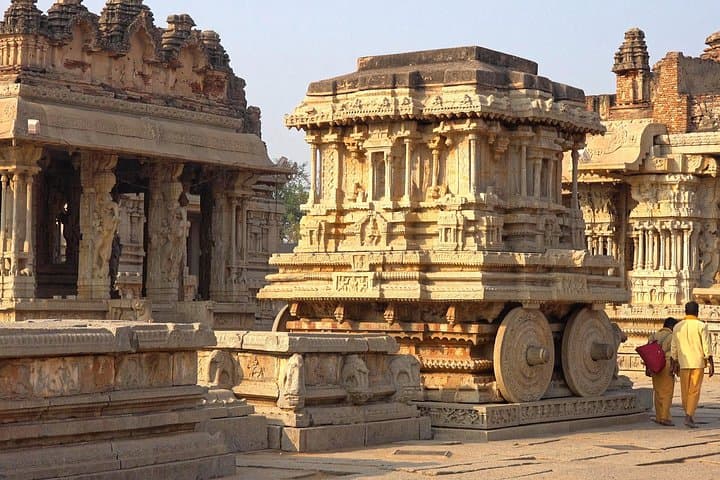
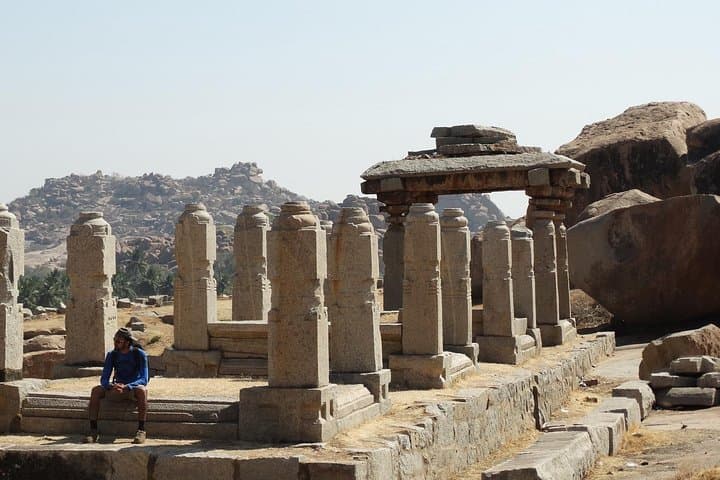
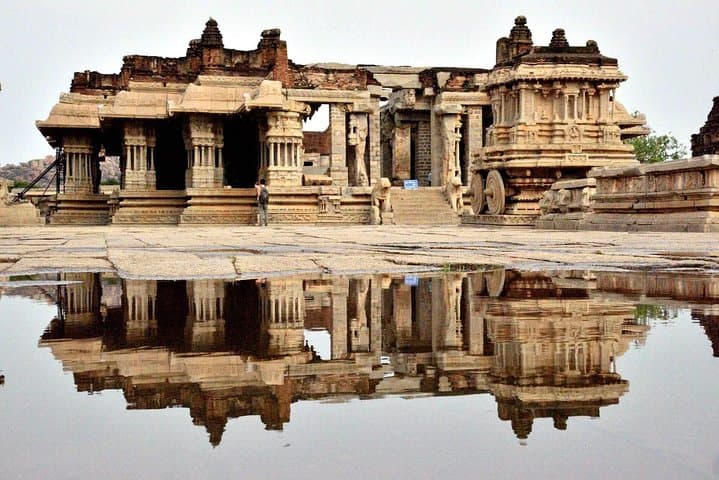
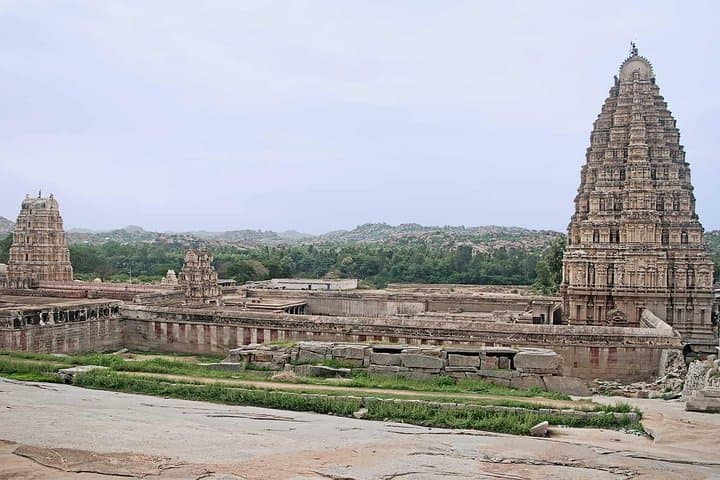
You arrive before sunrise after an early drive from Goa: the Tungabhadra river slips past low and cool, daring you to cross from the modern world into stones that still remember empire. Boulders rise like abandoned fortresses; pilgrims and langur monkeys move through temple courtyards as morning light cuts across carved pillars.
You arrive before sunrise after an early drive from Goa: the Tungabhadra river slips past low and cool, daring you to cross from the modern world into stones that still remember empire. Boulders rise like abandoned fortresses; pilgrims and langur monkeys move through temple courtyards as morning light cuts across carved pillars.
Hampi was the heart of the Vijayanagara empire in the 14th–16th centuries and by 1500 CE was one of the world’s largest cities. The site sits on the Deccan plateau where laterite and granite weather into rounded, hulking forms — a landscape that shaped temple architecture, waterworks and market layouts. Local culture still echoes courtly patronage: festivals, temple rites and village trades continue alongside tourism.
This private, multi-day itinerary covers the essentials: Virupaksha Temple, Hampi Bazaar, the monolithic Ugra Narasimha, Krishna Temple and the royal enclosures, plus the Lotus Mahal, Elephant Stables and the stepped tanks. Expect lots of short walks on uneven, rocky ground, river viewpoints and an overnight in a budget private room in Hampi.
Practical guidance: the road from Goa is about 317 km and roughly an eight-hour drive with breaks; plan for early pickup. Bring sturdy shoes for uneven stone, sun protection, and 2–3 liters of water per person. Start major sightseeing early to avoid mid-day heat and use local guides at complex sites to get the most of inscriptions and hidden chambers. Respect temple spaces, stay on marked paths near fragile ruins, and carry small change for entry fees and local vendors.