THE ADVENTURE COLLECTIVE® · Independent discovery and booking for outdoor travel

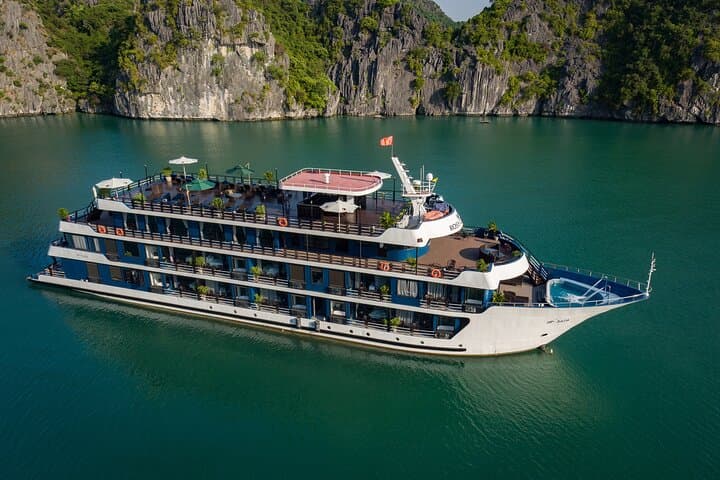
Spend two days cruising between Halong Bay and Lan Ha Bay aboard a luxury overnight ship. Enjoy kayaking, a cooking class, Tai Chi on deck, and private-cabin comfort while exploring dramatic karst islands and quiet lagoons.
Spend two days cruising between Halong Bay and Lan Ha Bay aboard a luxury overnight ship. Enjoy kayaking, a cooking class, Tai Chi on deck, and private-cabin comfort while exploring dramatic karst islands and quiet lagoons.
You step onto teak decking as limestone towers slide past like slow-moving sculptures, the sea smelling faintly of salt and grilled seafood. Morning mist peels off hidden coves and the sundeck hums with quiet activity—Tai Chi at dawn, a camera clicking at the bow, crew preparing a Vietnamese lunch. Over the next 36 hours the cruise threads between Halong Bay’s dramatic karst islands and the quieter lagoons of Lan Ha Bay, where kayaks slip into emerald water and bamboo boats rock gently at floating villages.
Verified experiences and guided adventures in the surrounding area.
Operated by Charm Tourist · Ha Long, Quang Ninh
You step onto teak decking as limestone towers slide past like slow-moving sculptures, the sea smelling faintly of salt and grilled seafood. Morning mist peels off hidden coves and the sundeck hums with quiet activity—Tai Chi at dawn, a camera clicking at the bow, crew preparing a Vietnamese lunch. Over the next 36 hours the cruise threads between Halong Bay’s dramatic karst islands and the quieter lagoons of Lan Ha Bay, where kayaks slip into emerald water and bamboo boats rock gently at floating villages.
Geologically this coastline is a classic karst landscape carved over millions of years, its limestone pillars and caves rising abruptly from the Gulf of Tonkin. Culturally, the region is defined by fishing communities and island settlements; Cat Ba Island carries a blend of maritime livelihoods and protected forest on its slopes. Recent years have added luxury overnight cruises and curated experiences—cooking classes, sunset parties, squid fishing—while film crews have used the bay’s cinematic cliffs.
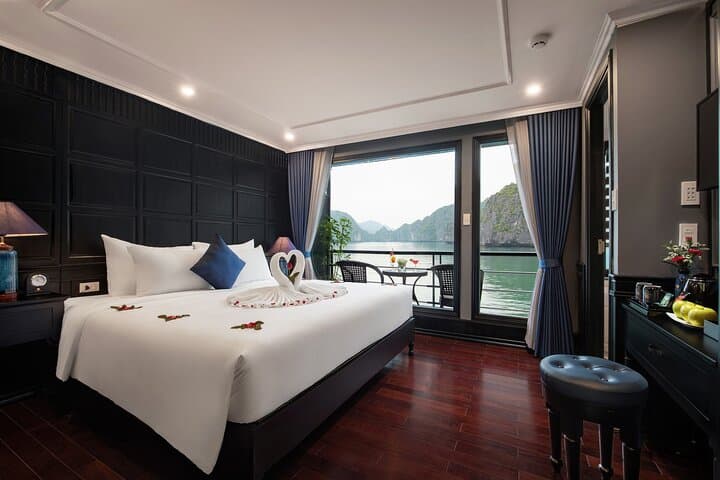
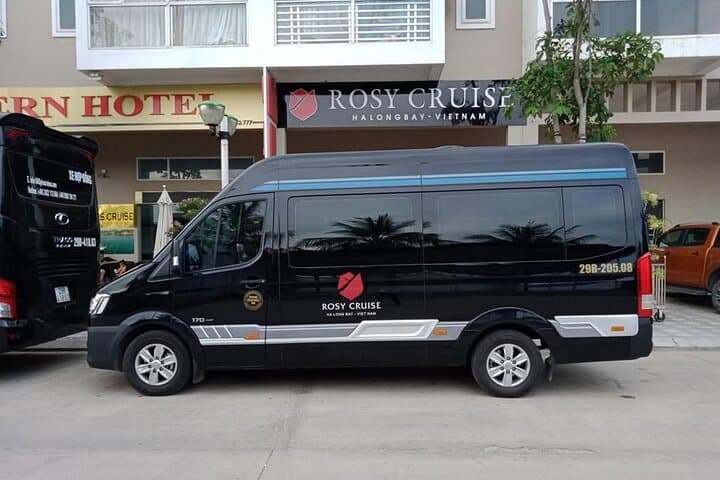
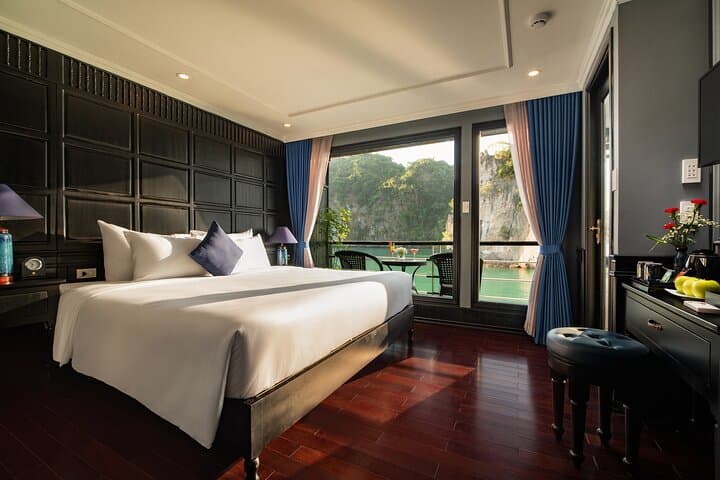
Practical guidance: pack a passport (required for boarding), casual layers for chilly mornings and hot afternoons, and reef-safe sunscreen. Opt for a balcony cabin if you value early-morning light and private views. Kayaking and swimming are typically calm but check weather and sea conditions before planning long paddles. Meals, most onboard activities, and an English-speaking guide are included; transfers from Hanoi or Tuan Chau Harbor are usually operated by limousine or coach. Expect easy mobility demands—stairs and small-boat transfers are part of embarkation—and plan travel time from Hanoi (roughly 2.5–3 hours by road). Respect local wildlife and avoid single-use plastics to help preserve the bay’s fragile marine habitats.
easy.
2 days (overnight).
Suitable for most fitness levels; you should be comfortable boarding small boats and climbing a few steps
Yes—advance registration requires full passport details and a valid passport is mandatory on embarkation day.
Most meals (lunch, dinner, breakfast) and standard onboard activities—kayaking, Tai Chi, cooking class—are included; check your booking for specifics.
Yes—kayaking and swimming are common in Lan Ha Bay’s calm lagoons; guides will brief you on safe entry points and tides.
Tipping is discretionary but customary; small tips for attentive service and guides are appreciated and can be pooled by staff.
Halong Bay’s karst towers formed over millions of years; the bay has long supported coastal fishing communities and is now a UNESCO-recognized landscape with evolving tourism.
Tourism places pressure on seagrass beds and local fisheries—choose operators that minimize anchors in shallow reefs, avoid single-use plastics, and support local communities.
Charm Tourist operates guided outdoor trips and adventures with an emphasis on safety, stewardship, and memorable experiences.
You step onto teak decking as limestone towers slide past like slow-moving sculptures, the sea smelling faintly of salt and grilled seafood. Morning mist peels off hidden coves and the sundeck hums with quiet activity—Tai Chi at dawn, a camera clicking at the bow, crew preparing a Vietnamese lunch. Over the next 36 hours the cruise threads between Halong Bay’s dramatic karst islands and the quieter lagoons of Lan Ha Bay, where kayaks slip into emerald water and bamboo boats rock gently at floating villages.
You step onto teak decking as limestone towers slide past like slow-moving sculptures, the sea smelling faintly of salt and grilled seafood. Morning mist peels off hidden coves and the sundeck hums with quiet activity—Tai Chi at dawn, a camera clicking at the bow, crew preparing a Vietnamese lunch. Over the next 36 hours the cruise threads between Halong Bay’s dramatic karst islands and the quieter lagoons of Lan Ha Bay, where kayaks slip into emerald water and bamboo boats rock gently at floating villages.
Geologically this coastline is a classic karst landscape carved over millions of years, its limestone pillars and caves rising abruptly from the Gulf of Tonkin. Culturally, the region is defined by fishing communities and island settlements; Cat Ba Island carries a blend of maritime livelihoods and protected forest on its slopes. Recent years have added luxury overnight cruises and curated experiences—cooking classes, sunset parties, squid fishing—while film crews have used the bay’s cinematic cliffs.
Practical guidance: pack a passport (required for boarding), casual layers for chilly mornings and hot afternoons, and reef-safe sunscreen. Opt for a balcony cabin if you value early-morning light and private views. Kayaking and swimming are typically calm but check weather and sea conditions before planning long paddles. Meals, most onboard activities, and an English-speaking guide are included; transfers from Hanoi or Tuan Chau Harbor are usually operated by limousine or coach. Expect easy mobility demands—stairs and small-boat transfers are part of embarkation—and plan travel time from Hanoi (roughly 2.5–3 hours by road). Respect local wildlife and avoid single-use plastics to help preserve the bay’s fragile marine habitats.