THE ADVENTURE COLLECTIVE® · Independent discovery and booking for outdoor travel

Take a full‑day small-group transfer from Vienna to Hallstatt for a concentrated taste of Alpine salt history, lakeside views, and a subterranean salt lake. This guide explains what to expect and how to plan your limited time in one of Austria’s most photographed villages.
Take a full‑day small-group transfer from Vienna to Hallstatt for a concentrated taste of Alpine salt history, lakeside views, and a subterranean salt lake. This guide explains what to expect and how to plan your limited time in one of Austria’s most photographed villages.
A narrow road unspools west from Vienna and the landscape changes from fields to folded mountains; after hours of travel the town of Hallstatt appears like a photograph stepping out of the lake. Visitors step ashore beneath steep roofs and narrow lanes, the lake holding back the sky and the mountains leaning in to listen.
Verified experiences and guided adventures in the surrounding area.
Operated by Super Tours Austria · Hallstatt, Upper Austria
A narrow road unspools west from Vienna and the landscape changes from fields to folded mountains; after hours of travel the town of Hallstatt appears like a photograph stepping out of the lake. Visitors step ashore beneath steep roofs and narrow lanes, the lake holding back the sky and the mountains leaning in to listen.
This place is older than most modern narratives: Hallstatt’s salt works reach back to the Bronze Age, and the town’s preserved miner—mummified by salt—offers a direct, quiet link to prehistoric daily life. Geologically, the village sits at the edge of Dachstein limestone, carved by glaciers and punctured by subterranean salt seams; the salt mine and its underground lake trace how geology shaped culture and economy here for millennia.
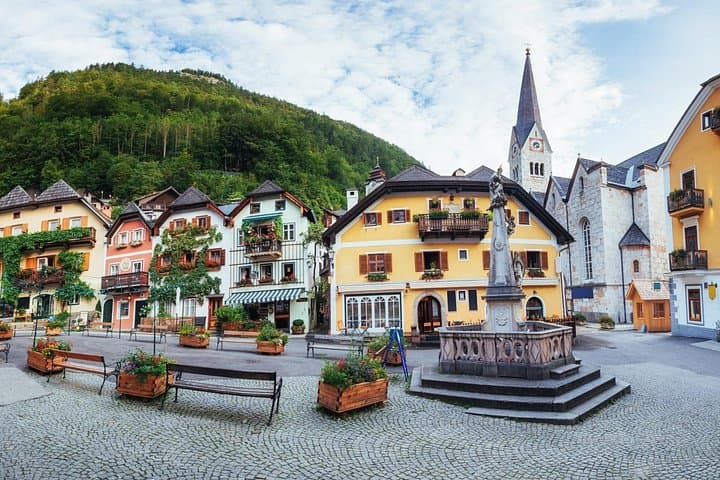
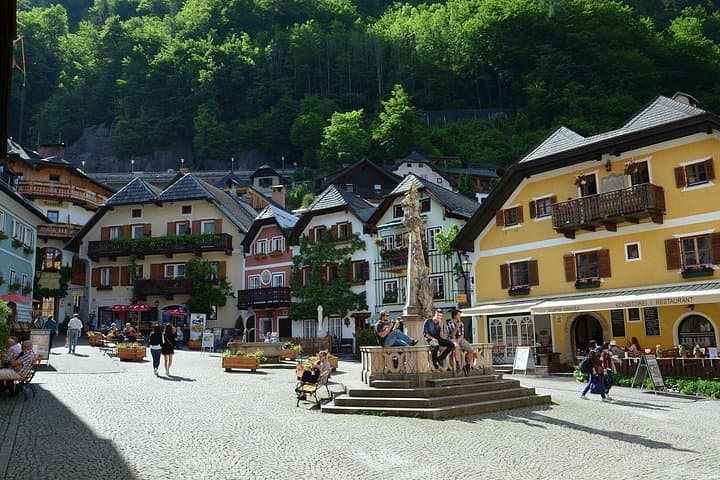
Culturally the town is compact: a main square, a 12th‑century parish church and the ossuary that records a practical response to limited burial space. The Hallstatt name even traveled to China, where a replica village highlighted the town’s iconic profile.
Practical guidance: the full outing is a long day (about 10–11 hours including transfer), with roughly three hours of free time in Hallstatt—enough for the salt mine visit or a quick lakeside walk, not both at a slow pace. Expect cobbled streets and steep steps; waterproof shoes and a light jacket are wise year‑round. If you plan to ride the funicular to the salt mine or book the subterranean tour, reserve spots early—especially in summer. Carry local cash for small vendors, and schedule quiet windows to enjoy the lake before buses arrive.
easy.
10–11 hours.
Suitable for travelers with basic mobility; expect periods of standing, short uphill walks and cobbled streets.
The transfer takes about 3.5 hours each way; total tour time is approximately 10–11 hours including hotel pickup and drop‑off.
Salt mine admission is typically an optional add‑on—check your booking details; you may need to reserve a separate slot at Salzwelten Hallstatt.
The tour listing notes wheelchair accessibility for transportation, but Hallstatt’s cobbled lanes and some attractions have steps; check specific accessibility needs with the operator.
Expect up to three hours of free time—enough for a short lakeside walk and quick visits, but limited for multiple attractions.
Hallstatt’s salt extraction dates to the Bronze Age and gave its name to the broader ‘Hallstatt culture’ of early Iron Age Europe; the town’s preserved miner is a direct link to that industrial past.
Heavy tourism pressures the lakeshore and infrastructure; visitors are encouraged to follow marked paths, take waste with them, and respect quiet hours to help protect water quality and local life.
Super Tours Austria operates guided outdoor trips and adventures with an emphasis on safety, stewardship, and memorable experiences.
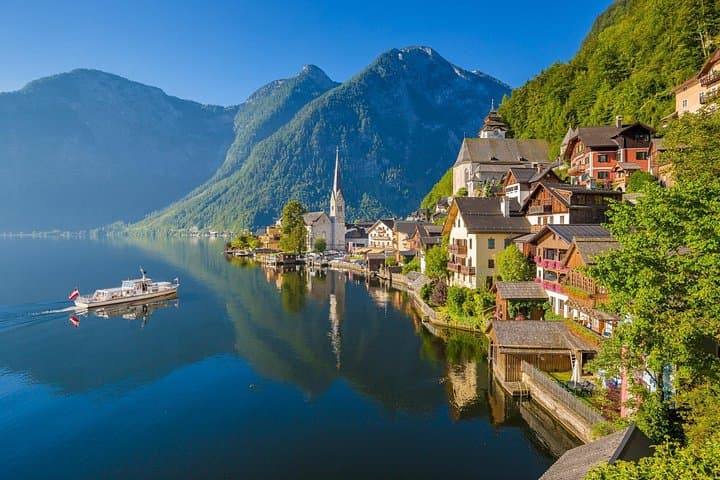
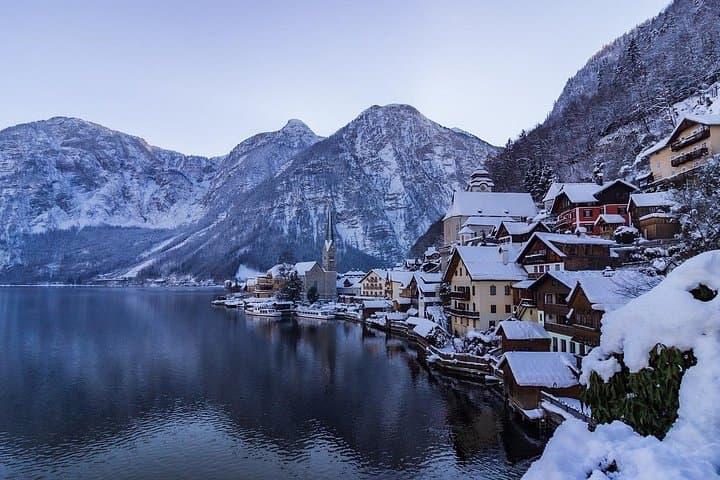
A narrow road unspools west from Vienna and the landscape changes from fields to folded mountains; after hours of travel the town of Hallstatt appears like a photograph stepping out of the lake. Visitors step ashore beneath steep roofs and narrow lanes, the lake holding back the sky and the mountains leaning in to listen.
A narrow road unspools west from Vienna and the landscape changes from fields to folded mountains; after hours of travel the town of Hallstatt appears like a photograph stepping out of the lake. Visitors step ashore beneath steep roofs and narrow lanes, the lake holding back the sky and the mountains leaning in to listen.
This place is older than most modern narratives: Hallstatt’s salt works reach back to the Bronze Age, and the town’s preserved miner—mummified by salt—offers a direct, quiet link to prehistoric daily life. Geologically, the village sits at the edge of Dachstein limestone, carved by glaciers and punctured by subterranean salt seams; the salt mine and its underground lake trace how geology shaped culture and economy here for millennia.
Culturally the town is compact: a main square, a 12th‑century parish church and the ossuary that records a practical response to limited burial space. The Hallstatt name even traveled to China, where a replica village highlighted the town’s iconic profile.
Practical guidance: the full outing is a long day (about 10–11 hours including transfer), with roughly three hours of free time in Hallstatt—enough for the salt mine visit or a quick lakeside walk, not both at a slow pace. Expect cobbled streets and steep steps; waterproof shoes and a light jacket are wise year‑round. If you plan to ride the funicular to the salt mine or book the subterranean tour, reserve spots early—especially in summer. Carry local cash for small vendors, and schedule quiet windows to enjoy the lake before buses arrive.