THE ADVENTURE COLLECTIVE® · Independent discovery and booking for outdoor travel

Spend two hours wandering Hallstatt’s snow-dusted Market Square with a private guide, mulled wine and krapfen in hand. Visit lakeside and hilltop churches illuminated for Advent and learn the salt-mining history that shaped this UNESCO village.
Spend two hours wandering Hallstatt’s snow-dusted Market Square with a private guide, mulled wine and krapfen in hand. Visit lakeside and hilltop churches illuminated for Advent and learn the salt-mining history that shaped this UNESCO village.
The Market Square in Hallstatt glows—strings of lights pooled on snow, wooden stalls hissing warm breath into the cold. You meet your guide by the central fountain, and the smell of spiced mulled wine and fresh krapfen pulls you into the evening. Lakeside roofs hold soft flurries while the frozen water shivers under distant mountain light, as if the lake itself dares you to stand and watch.
Verified experiences and guided adventures in the surrounding area.
Operated by Opatrip.com Austria · Hallstatt, Upper Austria
The Market Square in Hallstatt glows—strings of lights pooled on snow, wooden stalls hissing warm breath into the cold. You meet your guide by the central fountain, and the smell of spiced mulled wine and fresh krapfen pulls you into the evening. Lakeside roofs hold soft flurries while the frozen water shivers under distant mountain light, as if the lake itself dares you to stand and watch.
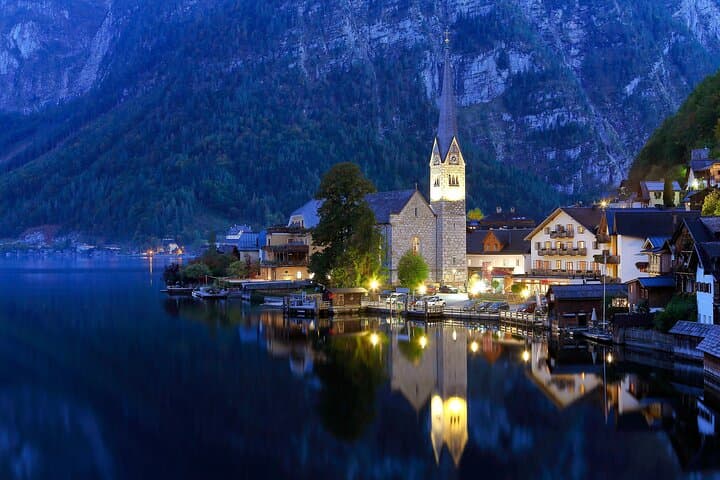
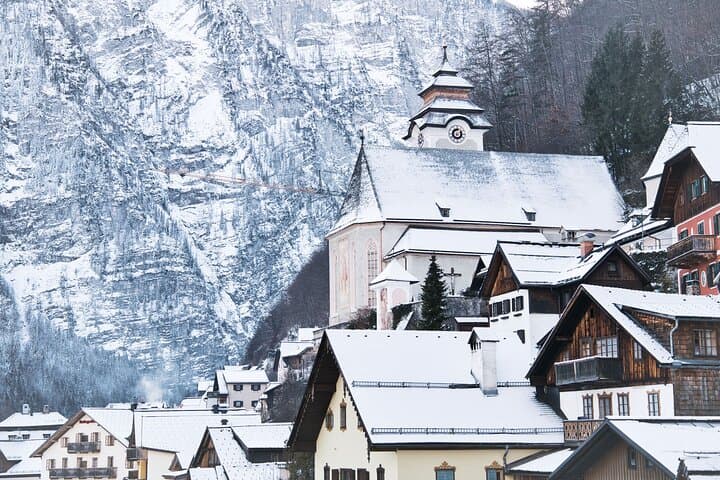
This short walk crosses centuries: Hallstatt’s salt mines shaped Alpine life here long before tourism, and the village’s compact stone buildings sit on limestone shelves carved by glaciers and time. You’ll move between two churches—the lakeside Evangelische Pfarrkirche with its terrace views and the baroque Pfarrkirche Mariä Himmelfahrt with nativity art—while a guide explains local Advent customs and the role of salt in Hallstatt’s economy. Expect references to the Beinhaus on the hill and the Skywalk viewpoint above town.
Practically: the tour is a 2‑hour private walk through compact cobbled streets and market stalls; no strenuous hiking required but concrete and stone can be icy. Wear warm, waterproof shoes and layered clothing, arrive a few minutes early to find the fountain, and carry a small amount of cash for extra market treats. Respect quiet inside churches, and expect some variation in stalls and program depending on date and crowds. The evening is light on logistics and heavy on atmosphere—an easy, sensory introduction to Hallstatt’s winter traditions.
easy.
2 hours.
Suitable for all fitness levels; the route is flat but includes cobbles and short steps.
The tour includes a warm drink and a pastry or suitable local alternative when the market stalls are operating; availability can vary by date.
Yes—this is a family-friendly walk, but keep children supervised near the lake and on steps.
Both churches are visited externally and internally when services or closures don’t interfere; some historic interiors have steps and limited wheelchair access.
Meet at Hallstatt’s Market Square near the central fountain; full refund if canceled at least 24 hours before the start time.
Hallstatt grew around Europe’s oldest salt mines; the village and surrounding Dachstein limestone shaped local trade and culture for millennia and are part of a UNESCO World Heritage area.
Hallstatt manages high seasonal visitation—stick to marked paths, avoid leaving waste at market stalls, and support local vendors who source products sustainably.
Opatrip.com Austria operates guided outdoor trips and adventures with an emphasis on safety, stewardship, and memorable experiences.

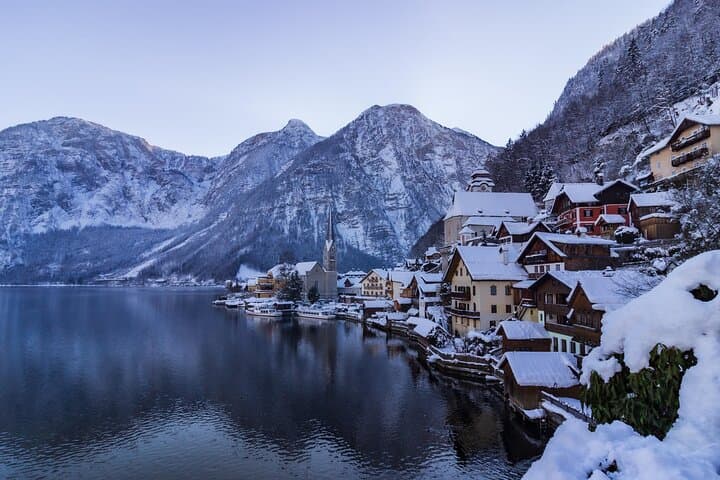
The Market Square in Hallstatt glows—strings of lights pooled on snow, wooden stalls hissing warm breath into the cold. You meet your guide by the central fountain, and the smell of spiced mulled wine and fresh krapfen pulls you into the evening. Lakeside roofs hold soft flurries while the frozen water shivers under distant mountain light, as if the lake itself dares you to stand and watch.
The Market Square in Hallstatt glows—strings of lights pooled on snow, wooden stalls hissing warm breath into the cold. You meet your guide by the central fountain, and the smell of spiced mulled wine and fresh krapfen pulls you into the evening. Lakeside roofs hold soft flurries while the frozen water shivers under distant mountain light, as if the lake itself dares you to stand and watch.
This short walk crosses centuries: Hallstatt’s salt mines shaped Alpine life here long before tourism, and the village’s compact stone buildings sit on limestone shelves carved by glaciers and time. You’ll move between two churches—the lakeside Evangelische Pfarrkirche with its terrace views and the baroque Pfarrkirche Mariä Himmelfahrt with nativity art—while a guide explains local Advent customs and the role of salt in Hallstatt’s economy. Expect references to the Beinhaus on the hill and the Skywalk viewpoint above town.
Practically: the tour is a 2‑hour private walk through compact cobbled streets and market stalls; no strenuous hiking required but concrete and stone can be icy. Wear warm, waterproof shoes and layered clothing, arrive a few minutes early to find the fountain, and carry a small amount of cash for extra market treats. Respect quiet inside churches, and expect some variation in stalls and program depending on date and crowds. The evening is light on logistics and heavy on atmosphere—an easy, sensory introduction to Hallstatt’s winter traditions.