THE ADVENTURE COLLECTIVE® · Independent discovery and booking for outdoor travel

Explore Haller Park’s reclaimed limestone quarries, giraffe platform, crocodile pens and wetlands on a compact half-day tour from Mombasa. Learn about the park’s rehabilitation history while enjoying accessible wildlife viewing and easy walking paths.
Explore Haller Park’s reclaimed limestone quarries, giraffe platform, crocodile pens and wetlands on a compact half-day tour from Mombasa. Learn about the park’s rehabilitation history while enjoying accessible wildlife viewing and easy walking paths.
You step out of the shuttle into warm, eucalyptus-scented air and the exposed limestone walls of a former quarry—here, nature has been given a second chance.
Verified experiences and guided adventures in the surrounding area.
Operated by ARP Travel Group · Mombasa, Mombasa County
You step out of the shuttle into warm, eucalyptus-scented air and the exposed limestone walls of a former quarry—here, nature has been given a second chance.
Haller Park began as a rehabilitation project by Bamburi Cement in the 1970s and is widely associated with conservationist René Haller’s work converting barren quarry into ponds, woodland and wildlife habitats. The terrain reads like coastal Kenya’s geology: weathered coral-limestone cutaways that collect runoff into ponds and scrubby forest that leads to grassy clearings where giraffes browse.
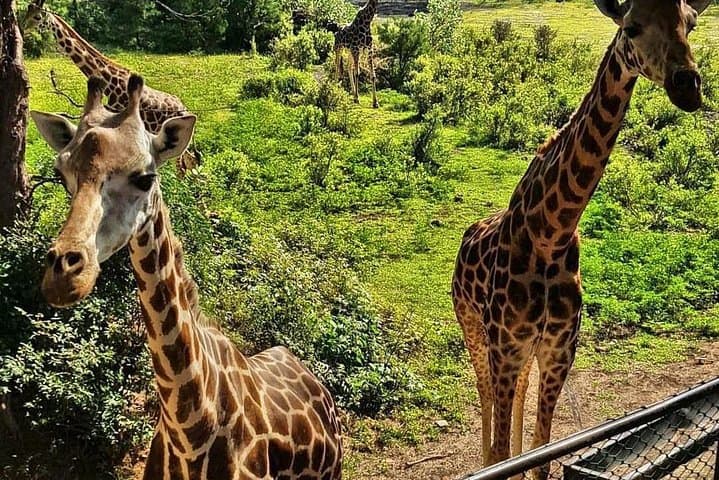
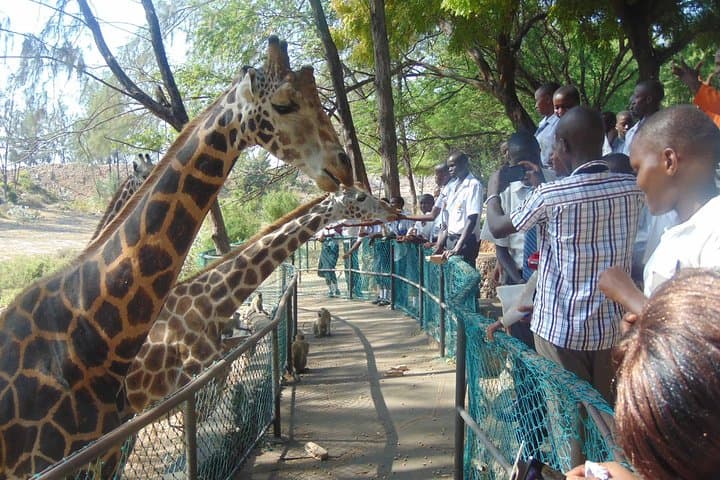
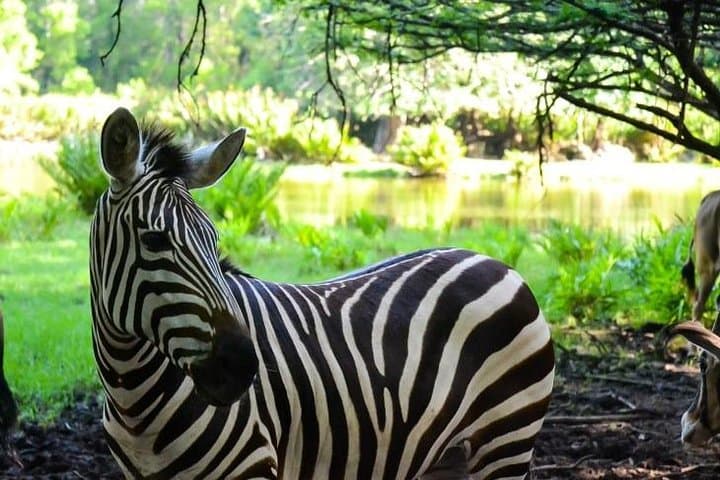
On a typical half-day visit you’ll move between distinct attractions: a giraffe viewing platform, crocodile pens and ponds with hippos, a compact reptile house and a small demonstration fish farm. Birdsong threads through the palms; buffalo and antelope may appear in the shade. The experience blends ecology and education—staff often point out restoration techniques and the park’s role in local ecotourism.
Practical side: expect 2–3 km of mostly flat walking on packed-earth and paved paths, some uneven sections and short steps. Allow about four hours including pickup and transfer from Mombasa hotels. Bring sun protection and at least 1–2 liters of water, comfortable closed-toe shoes, and a light rain layer in the long-rains season. Photography is easy from the giraffe platform but stay behind barriers and follow staff instructions around enclosures. Children require supervision and the tour’s physical demand is moderate—good for families and travelers wanting a compact wildlife encounter without a long drive inland.
moderate.
3–4 hours (including transfers).
Suitable for people with moderate fitness; involves standing and walking short distances on uneven ground.
Expect about 3–4 hours total including hotel pickup and drop-off; the park visit itself runs roughly two hours.
Yes—the giraffe platform, hippo pond and crocodile pens are designed for close, safe viewing from boardwalks and platforms.
Children are welcome but must be accompanied by an adult; some enclosures require strict supervision for safety.
Parts of the park have paved or leveled paths and the giraffe platform is reachable, but some areas include steps and uneven ground—check with the operator for specific accessibility needs.
Haller Park is the result of a rehabilitation effort that transformed Bamburi’s disused limestone quarries beginning in the 1970s, led by conservation initiatives focused on restoring coastal habitats.
The park demonstrates reclamation methods and supports local ecotourism; visitors should stick to paths and avoid feeding wildlife to minimize disturbance.
ARP Travel Group operates guided outdoor trips and adventures with an emphasis on safety, stewardship, and memorable experiences.
You step out of the shuttle into warm, eucalyptus-scented air and the exposed limestone walls of a former quarry—here, nature has been given a second chance.
You step out of the shuttle into warm, eucalyptus-scented air and the exposed limestone walls of a former quarry—here, nature has been given a second chance.
Haller Park began as a rehabilitation project by Bamburi Cement in the 1970s and is widely associated with conservationist René Haller’s work converting barren quarry into ponds, woodland and wildlife habitats. The terrain reads like coastal Kenya’s geology: weathered coral-limestone cutaways that collect runoff into ponds and scrubby forest that leads to grassy clearings where giraffes browse.
On a typical half-day visit you’ll move between distinct attractions: a giraffe viewing platform, crocodile pens and ponds with hippos, a compact reptile house and a small demonstration fish farm. Birdsong threads through the palms; buffalo and antelope may appear in the shade. The experience blends ecology and education—staff often point out restoration techniques and the park’s role in local ecotourism.
Practical side: expect 2–3 km of mostly flat walking on packed-earth and paved paths, some uneven sections and short steps. Allow about four hours including pickup and transfer from Mombasa hotels. Bring sun protection and at least 1–2 liters of water, comfortable closed-toe shoes, and a light rain layer in the long-rains season. Photography is easy from the giraffe platform but stay behind barriers and follow staff instructions around enclosures. Children require supervision and the tour’s physical demand is moderate—good for families and travelers wanting a compact wildlife encounter without a long drive inland.