THE ADVENTURE COLLECTIVE® · Independent discovery and booking for outdoor travel

Private transfers take hikers to Seongpanak, Hallasan’s eastern trailhead, dropping you into a steep volcanic ascent toward Korea’s highest summit. Know the pickup options, waiting-time limits, and seasonal trail conditions before you go.
Private transfers take hikers to Seongpanak, Hallasan’s eastern trailhead, dropping you into a steep volcanic ascent toward Korea’s highest summit. Know the pickup options, waiting-time limits, and seasonal trail conditions before you go.
A thin dawn light warms the volcanic ridgeline as a minivan eases up the road toward Seongpanak parking—drivers exchange a practiced nod with hikers tightening boots. The transfer deposits you at the eastern gateway to Hallasan, where the trailhead opens into old-growth firs before rising toward the crater-scraped summit.
Verified experiences and guided adventures in the surrounding area.
Operated by Jeju Travel Lucas · Jeju City, Jeju-do
A thin dawn light warms the volcanic ridgeline as a minivan eases up the road toward Seongpanak parking—drivers exchange a practiced nod with hikers tightening boots. The transfer deposits you at the eastern gateway to Hallasan, where the trailhead opens into old-growth firs before rising toward the crater-scraped summit.
Hallasan is the highest peak in South Korea (1,947 m), a dormant shield volcano that dominates Jeju Island. Its lava flows and parasitic cones shaped the island’s stony soils and scattered oreum (small volcanic cones) around the central massif. The mountain holds cultural weight for Jeju’s people, long a place for seasonal pilgrimage and local folklore tied to the mountain’s changing moods.
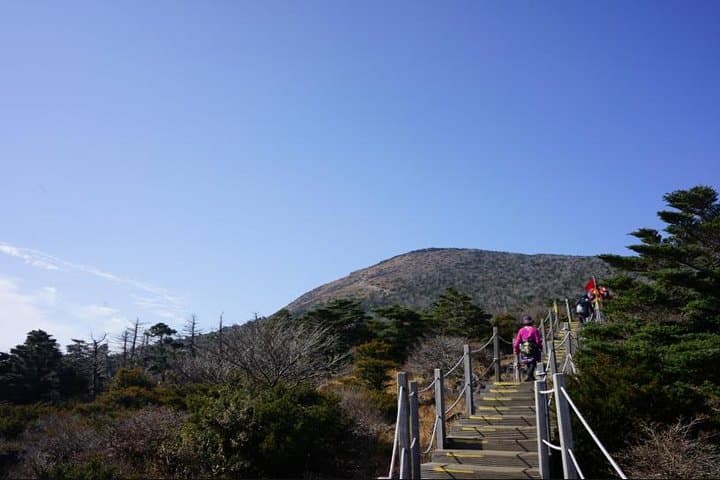
From Seongpanak the route climbs steadily over rocky steps and narrow ridgelines, passing montane forest, azalea meadows in late spring, and exposed wind-scoured sections above 1,200 m. Expect a physically demanding day for those continuing to Baengnokdam—the crater lake—with steep pitches and variable weather.
Practicalities matter: private transfers run as one-way or round-trip with up to eight hours waiting time for round trips; parking and fuel fees are typically included but extra pickup charges may apply for locations outside downtown Jeju City. Bring layered clothing, sturdy boots, and cash for incidental driver fees and extra waiting time. Aim for an early pickup to maximize daylight, check summit conditions with park rangers, and leave time for descent—Hallasan rewards grit with wide, wind-cut panoramas and a landscape that feels alive underfoot.
challenging.
8–9 hours.
Participants should have high aerobic fitness and experience with sustained uphill hiking; be comfortable on rocky, uneven trails.
Baseline pickups list old and new Jeju City; pickups outside downtown can incur additional charges—confirm exact pickup area and fee with your operator before booking.
Round-trip transfers include up to eight hours of waiting time at Seongpanak; additional waiting beyond that is typically charged per 30 minutes (about 10,000 KRW) payable to the driver.
Fuel and parking fees are generally included in the transfer, but local surcharges or extra driver fees for distant pickups may be added—verify on booking.
Yes, return transfer drivers may vary; if a return is required, confirm the exact pickup point at Seongpanak parking before leaving to avoid missed pickups.
Hallasan is a central feature of Jeju’s island identity and part of the Jeju Volcanic Island and Lava Tubes UNESCO site; locals historically regarded the mountain as sacred.
Hallasan is a protected national park—stay on marked trails, pack out waste, and follow ranger instructions to reduce erosion and protect fragile alpine plant communities.
Jeju Travel Lucas operates guided outdoor trips and adventures with an emphasis on safety, stewardship, and memorable experiences.
A thin dawn light warms the volcanic ridgeline as a minivan eases up the road toward Seongpanak parking—drivers exchange a practiced nod with hikers tightening boots. The transfer deposits you at the eastern gateway to Hallasan, where the trailhead opens into old-growth firs before rising toward the crater-scraped summit.
A thin dawn light warms the volcanic ridgeline as a minivan eases up the road toward Seongpanak parking—drivers exchange a practiced nod with hikers tightening boots. The transfer deposits you at the eastern gateway to Hallasan, where the trailhead opens into old-growth firs before rising toward the crater-scraped summit.
Hallasan is the highest peak in South Korea (1,947 m), a dormant shield volcano that dominates Jeju Island. Its lava flows and parasitic cones shaped the island’s stony soils and scattered oreum (small volcanic cones) around the central massif. The mountain holds cultural weight for Jeju’s people, long a place for seasonal pilgrimage and local folklore tied to the mountain’s changing moods.
From Seongpanak the route climbs steadily over rocky steps and narrow ridgelines, passing montane forest, azalea meadows in late spring, and exposed wind-scoured sections above 1,200 m. Expect a physically demanding day for those continuing to Baengnokdam—the crater lake—with steep pitches and variable weather.
Practicalities matter: private transfers run as one-way or round-trip with up to eight hours waiting time for round trips; parking and fuel fees are typically included but extra pickup charges may apply for locations outside downtown Jeju City. Bring layered clothing, sturdy boots, and cash for incidental driver fees and extra waiting time. Aim for an early pickup to maximize daylight, check summit conditions with park rangers, and leave time for descent—Hallasan rewards grit with wide, wind-cut panoramas and a landscape that feels alive underfoot.