THE ADVENTURE COLLECTIVE® · Independent discovery and booking for outdoor travel

Walk a 5 km self-guided audio tour of Halifax’s North End to hear survivor accounts, visit memorials and explore the Hydrostone district. Download on Wi‑Fi, follow the GPS prompts, and take 90–140 minutes to move through sites and stories from the 1917 explosion.
Walk a 5 km self-guided audio tour of Halifax’s North End to hear survivor accounts, visit memorials and explore the Hydrostone district. Download on Wi‑Fi, follow the GPS prompts, and take 90–140 minutes to move through sites and stories from the 1917 explosion.
You step out into a cold Atlantic breeze and the harbor’s edge seems to hold its breath—this is where a civilian life and industrial harbor collided in 1917.
Verified experiences and guided adventures in the surrounding area.
Operated by Tripvia Tours · Halifax, Nova Scotia
You step out into a cold Atlantic breeze and the harbor’s edge seems to hold its breath—this is where a civilian life and industrial harbor collided in 1917.
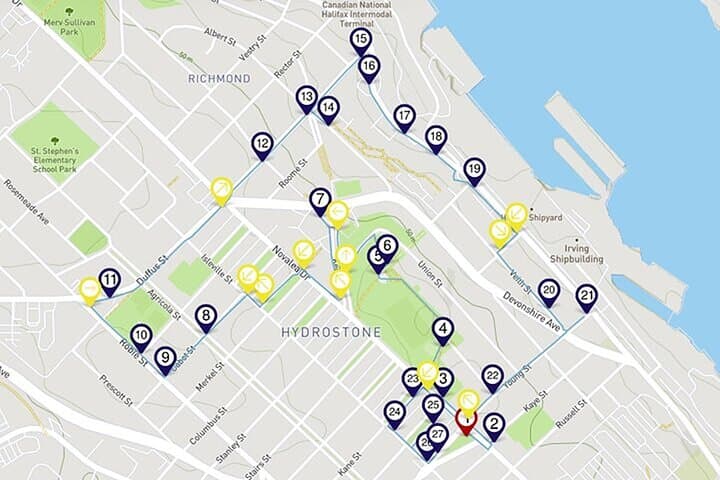
The self-guided audio route traces roughly 5 km across Halifax’s north end, from park viewpoints to the Hydrostone Market, weaving through memorials, staircases and streets that still show scars of that morning. The narrative folds in human stories—Ashpan Annie’s improbable survival, Vincent Coleman’s last warning—and places them against practical facts about the blast and the geography that amplified it: narrow harbour channels, ship traffic, and a shoreline that turned history into a tidal wave of consequence.
You’ll hear about the military use of these grounds before the explosion, the rebuilding influenced by early 20th-century town-planning ideas, and the Hydrostone’s Tudor-revival rowhouses built as part of the relief. Local culture comes through in monuments, memorial ceremonies and community resilience that still shapes Halifax’s identity.
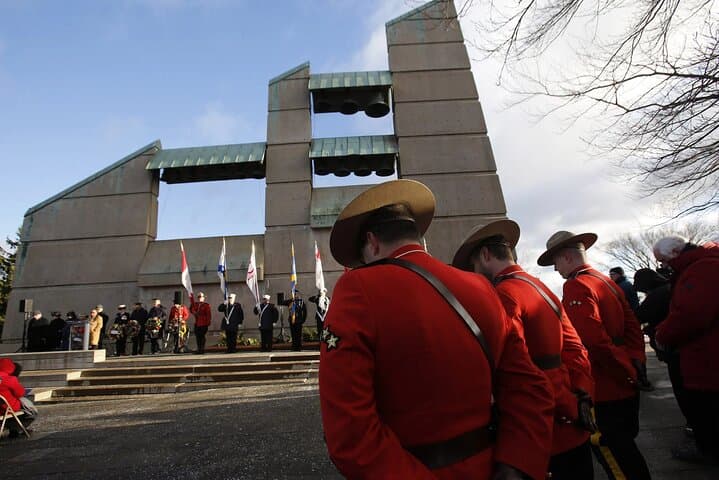
Practical guidance: expect paved streets, some cobblestone lanes and stair sections (Richmond Staircase) with an aggregate elevation gain of around 50–100 m; plan 90–140 minutes depending on stops. Download the tour on Wi‑Fi before you go, carry a charged phone and headphones, and allow time for reflection at the Memorial Bell Tower and the Hydrostone Market.
The route is wheelchair accessible in many sections but includes stairs; take weather-appropriate layers—Halifax weather changes fast—and give yourself time to read plaques and absorb the stories. This is history you can walk through, guided by voice, map and the city itself.
easy.
1.5–2.5 hours.
Moderate fitness for continuous walking with short climbs and stair sections; suitable for most walkers.
No—download the tour on Wi‑Fi before you go; the GPS map and commentary work offline once downloaded.
The main route is about 5 km and typically takes 90–140 minutes depending on stops; expect modest elevation changes and some stairs.
Many sections are wheelchair accessible, but there are staircases and uneven cobblestone lanes—consider alternate paths and check accessibility details for specific stops.
Yes—the audio tour is flexible; you can pause, restart and revisit any stop since it’s linked to GPS locations.
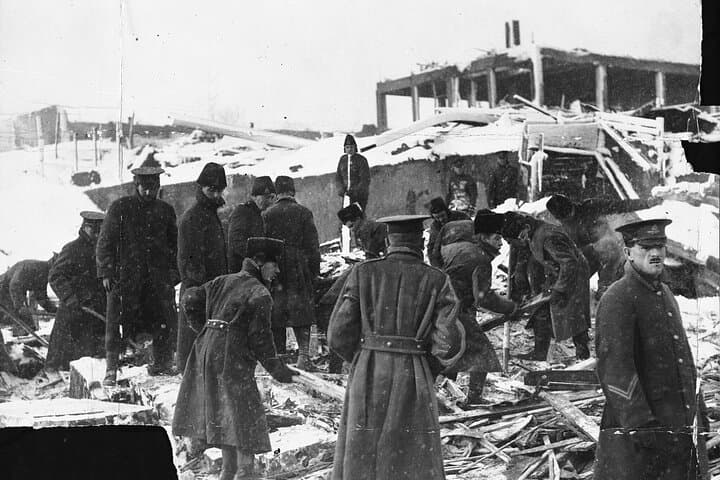
The 1917 Halifax Explosion occurred when SS Mont-Blanc collided in the Narrows, triggering a massive blast that killed thousands and reshaped the north end; rebuilding included international relief and new urban design ideas.
Many memorial sites are managed with respect for historic fabric—stay on paths, avoid touching fragile plaques, and support local museums and interpretive centers to help preserve these resources.
Tripvia Tours operates guided outdoor trips and adventures with an emphasis on safety, stewardship, and memorable experiences.

You step out into a cold Atlantic breeze and the harbor’s edge seems to hold its breath—this is where a civilian life and industrial harbor collided in 1917.
You step out into a cold Atlantic breeze and the harbor’s edge seems to hold its breath—this is where a civilian life and industrial harbor collided in 1917.
The self-guided audio route traces roughly 5 km across Halifax’s north end, from park viewpoints to the Hydrostone Market, weaving through memorials, staircases and streets that still show scars of that morning. The narrative folds in human stories—Ashpan Annie’s improbable survival, Vincent Coleman’s last warning—and places them against practical facts about the blast and the geography that amplified it: narrow harbour channels, ship traffic, and a shoreline that turned history into a tidal wave of consequence.
You’ll hear about the military use of these grounds before the explosion, the rebuilding influenced by early 20th-century town-planning ideas, and the Hydrostone’s Tudor-revival rowhouses built as part of the relief. Local culture comes through in monuments, memorial ceremonies and community resilience that still shapes Halifax’s identity.
Practical guidance: expect paved streets, some cobblestone lanes and stair sections (Richmond Staircase) with an aggregate elevation gain of around 50–100 m; plan 90–140 minutes depending on stops. Download the tour on Wi‑Fi before you go, carry a charged phone and headphones, and allow time for reflection at the Memorial Bell Tower and the Hydrostone Market.
The route is wheelchair accessible in many sections but includes stairs; take weather-appropriate layers—Halifax weather changes fast—and give yourself time to read plaques and absorb the stories. This is history you can walk through, guided by voice, map and the city itself.