THE ADVENTURE COLLECTIVE® · Independent discovery and booking for outdoor travel

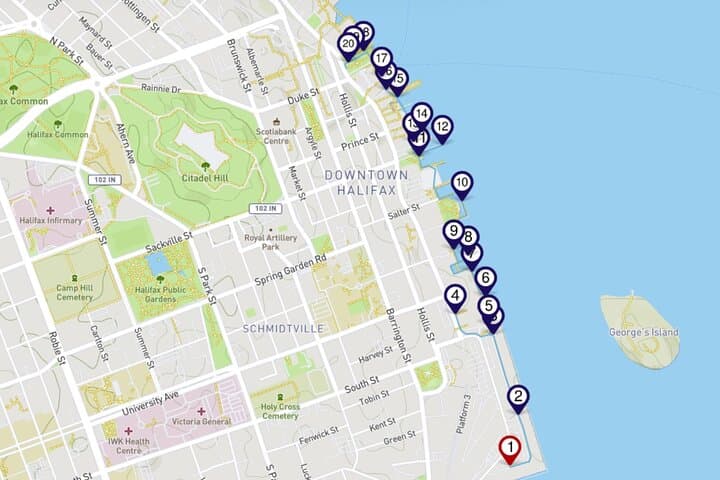
Walk the Halifax waterfront at your own pace with a GPS-driven audio guide that highlights the Farmers’ Market, CSS Acadia, Cable Wharf and public art. Download on Wi‑Fi, follow the live map and stop anywhere along the 2.5 km route.
Walk the Halifax waterfront at your own pace with a GPS-driven audio guide that highlights the Farmers’ Market, CSS Acadia, Cable Wharf and public art. Download on Wi‑Fi, follow the live map and stop anywhere along the 2.5 km route.
The harbor air cuts cool and salty across the boardwalk as your phone guides you past fishermen’s stalls, Edwardian ships and bright public art. Walkers move at their own pace — some pausing to listen, others detouring into the Farmers’ Market — while narration punctuates the waterfront’s stories.
Verified experiences and guided adventures in the surrounding area.
Operated by Tripvia Tours · Halifax, Nova Scotia
The harbor air cuts cool and salty across the boardwalk as your phone guides you past fishermen’s stalls, Edwardian ships and bright public art. Walkers move at their own pace — some pausing to listen, others detouring into the Farmers’ Market — while narration punctuates the waterfront’s stories.
This 2.5 km route runs along Halifax’s working harbor, where granite wharves meet reclaimed industrial lots. The tour explains the city’s maritime past (cable-laying wharves, the CSS Acadia, and the Dockyard’s role in Atlantic convoys) and points out surviving 19th- and early-20th-century structures that shaped the port. Geologically, the shoreline is bedrock and reclaimed tidelands; tides here are dramatic and change the view from waterline to mudflat within hours.
Culturally, the waterfront is both a market for local seafood and a gathering place for festivals and public art. The audio tour adds local voice: character sketches of historical figures, explanations of sculptures and quick trivia to sharpen attention.
Practical guidance: download the tour on Wi‑Fi before you start, charge your phone, and plan 60–120 minutes depending on stops. Wear sturdy walking shoes for uneven boardwalk boards and daytime sun protection. The route is flat and wheelchair accessible, but ferry stops and museum entrances may have separate access details. Peak daylight hours provide the best photo light; early morning offers quieter streets and a chance to hear gulls and harbor seals. Keep water, a light rain layer, and a portable battery—this is an urban outing that rewards curiosity and a bit of preparation.
easy.
60–120 minutes.
Suitable for all fitness levels; requires basic mobility for a flat, paved 2.5 km route with optional side visits.
No—download the tour and map on Wi‑Fi before you set out; GPS works offline once files are saved.
The boardwalk and many points are wheelchair accessible, though some historic buildings and ship exhibits may have separate access requirements.
Plan 60–120 minutes; the base route is 2.5 km, but time varies with stops, market browsing, or ferry detours.
Yes; attractions like the Maritime Museum and CSS Acadia are optional and may have separate admission and hours.
Halifax’s waterfront grew from 18th-century naval yards and transatlantic cables into a commercial port; many surviving buildings date to the late 19th and early 20th centuries.
The harbor’s intertidal zones are sensitive—stay on marked paths, pack out waste, and avoid disturbing seals or shorebirds to reduce local impact.
Tripvia Tours operates guided outdoor trips and adventures with an emphasis on safety, stewardship, and memorable experiences.

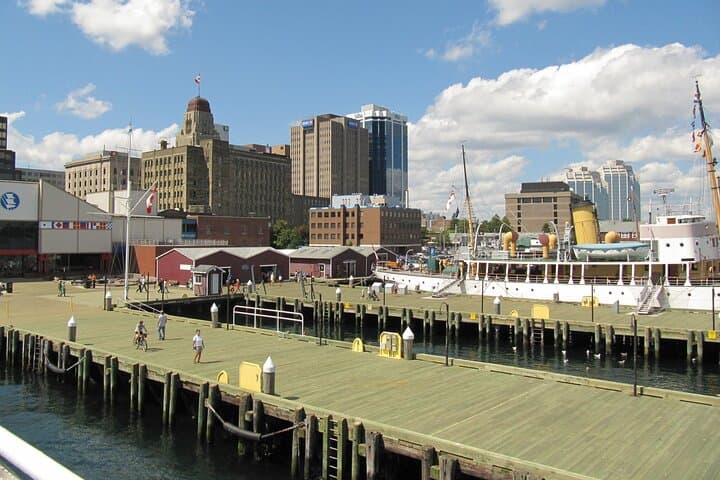

The harbor air cuts cool and salty across the boardwalk as your phone guides you past fishermen’s stalls, Edwardian ships and bright public art. Walkers move at their own pace — some pausing to listen, others detouring into the Farmers’ Market — while narration punctuates the waterfront’s stories.
The harbor air cuts cool and salty across the boardwalk as your phone guides you past fishermen’s stalls, Edwardian ships and bright public art. Walkers move at their own pace — some pausing to listen, others detouring into the Farmers’ Market — while narration punctuates the waterfront’s stories.
This 2.5 km route runs along Halifax’s working harbor, where granite wharves meet reclaimed industrial lots. The tour explains the city’s maritime past (cable-laying wharves, the CSS Acadia, and the Dockyard’s role in Atlantic convoys) and points out surviving 19th- and early-20th-century structures that shaped the port. Geologically, the shoreline is bedrock and reclaimed tidelands; tides here are dramatic and change the view from waterline to mudflat within hours.
Culturally, the waterfront is both a market for local seafood and a gathering place for festivals and public art. The audio tour adds local voice: character sketches of historical figures, explanations of sculptures and quick trivia to sharpen attention.
Practical guidance: download the tour on Wi‑Fi before you start, charge your phone, and plan 60–120 minutes depending on stops. Wear sturdy walking shoes for uneven boardwalk boards and daytime sun protection. The route is flat and wheelchair accessible, but ferry stops and museum entrances may have separate access details. Peak daylight hours provide the best photo light; early morning offers quieter streets and a chance to hear gulls and harbor seals. Keep water, a light rain layer, and a portable battery—this is an urban outing that rewards curiosity and a bit of preparation.