THE ADVENTURE COLLECTIVE® · Independent discovery and booking for outdoor travel

A brief, family-friendly camel ride that places you beside the Great Pyramid and the Sphinx from the Pyramids Panorama. Ideal as a photographic stop or a quick desert experience for travelers short on time.
A brief, family-friendly camel ride that places you beside the Great Pyramid and the Sphinx from the Pyramids Panorama. Ideal as a photographic stop or a quick desert experience for travelers short on time.
The camel pads forward on warm sand, forcing a slow, swinging rhythm that matches the heartbeat of the plateau. In half an hour from the Pyramids Panorama viewpoint a rider gets eye-level with the Great Pyramid and the Sphinx, with swept dunes and limestone blocks framed against an open desert sky.
Verified experiences and guided adventures in the surrounding area.
Operated by santaclausbazaar · Giza, Giza Governorate
The camel pads forward on warm sand, forcing a slow, swinging rhythm that matches the heartbeat of the plateau. In half an hour from the Pyramids Panorama viewpoint a rider gets eye-level with the Great Pyramid and the Sphinx, with swept dunes and limestone blocks framed against an open desert sky.
This short outing sits inside the broader Giza necropolis, an area shaped by ancient builders and riverine geology: Nile-borne silt raised floodplains that ancient Egyptians exploited to quarry and move massive limestone blocks. Riders glimpse monuments born of that labor—Khufu’s Great Pyramid, Khafre’s complex and the nearby Sphinx—while local guides and camel handlers share practical, living knowledge of the site and its surroundings.
Expect an easy, family-friendly camel experience rather than a long trek. The ride lasts about 30 minutes and follows relatively flat sand and compacted tracks around the panoramic viewpoint; there’s no archaeological entry included, but views are immediate and photographic. Camels rise and recline with a deliberate motion—briefly jarring for first-timers—so plan accordingly if you’re traveling with small children or mobility concerns.
Practical notes: travel light, protect electronics from sand, and schedule the ride for cooler morning or late-afternoon hours when light is best and heat is low. Tipping camel handlers is customary; confirm wheelchair access and infant policies when booking. This is a concise, sensory introduction to Giza—short on time but big on perspective.
easy.
30 minutes.
Minimal fitness required; suitable for most ages and mobility levels with assistance
The advertised ride is 30 minutes long and follows a short loop around the Panorama viewpoint; it does not include entry into the pyramids complex.
Yes—children can ride, but infants are typically required to sit on an adult’s lap; confirm age policies with the operator when booking.
The provider lists wheelchair-accessible options for transport and surfaces, but mounting a camel usually requires assistance; check specific accessibility arrangements beforehand.
Tipping is customary; a small tip (local currency) for the handler and guide is appreciated and supports local livelihoods.
The Giza Plateau hosts monuments from Egypt’s Fourth Dynasty (c. 2600–2500 BCE), including the Great Pyramid of Khufu and the Sphinx, central to ancient funerary and royal practices.
High visitor numbers and informal trails can erode fragile desert surfaces; stick to established paths, avoid climbing monuments and follow local guide instructions to reduce impact.
santaclausbazaar operates guided outdoor trips and adventures with an emphasis on safety, stewardship, and memorable experiences.


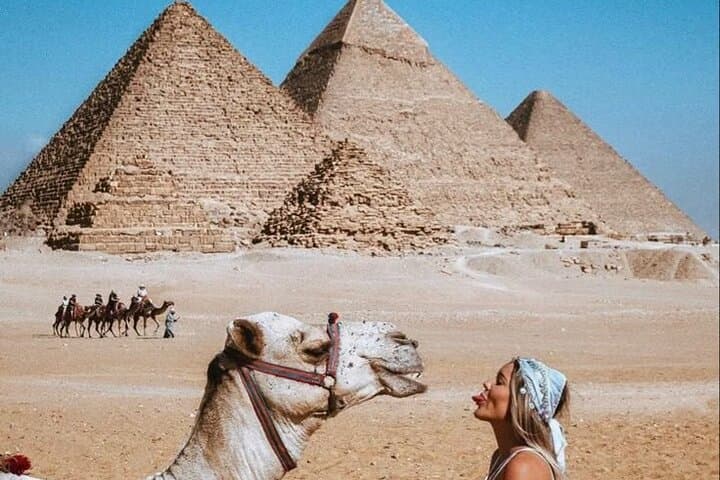
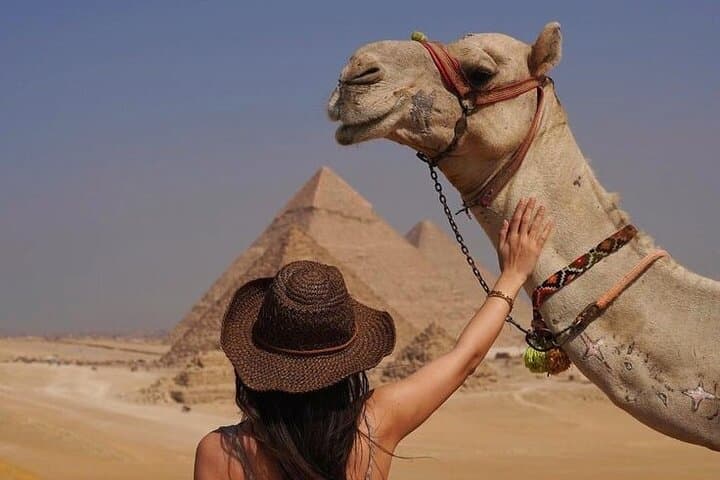
The camel pads forward on warm sand, forcing a slow, swinging rhythm that matches the heartbeat of the plateau. In half an hour from the Pyramids Panorama viewpoint a rider gets eye-level with the Great Pyramid and the Sphinx, with swept dunes and limestone blocks framed against an open desert sky.
The camel pads forward on warm sand, forcing a slow, swinging rhythm that matches the heartbeat of the plateau. In half an hour from the Pyramids Panorama viewpoint a rider gets eye-level with the Great Pyramid and the Sphinx, with swept dunes and limestone blocks framed against an open desert sky.
This short outing sits inside the broader Giza necropolis, an area shaped by ancient builders and riverine geology: Nile-borne silt raised floodplains that ancient Egyptians exploited to quarry and move massive limestone blocks. Riders glimpse monuments born of that labor—Khufu’s Great Pyramid, Khafre’s complex and the nearby Sphinx—while local guides and camel handlers share practical, living knowledge of the site and its surroundings.
Expect an easy, family-friendly camel experience rather than a long trek. The ride lasts about 30 minutes and follows relatively flat sand and compacted tracks around the panoramic viewpoint; there’s no archaeological entry included, but views are immediate and photographic. Camels rise and recline with a deliberate motion—briefly jarring for first-timers—so plan accordingly if you’re traveling with small children or mobility concerns.
Practical notes: travel light, protect electronics from sand, and schedule the ride for cooler morning or late-afternoon hours when light is best and heat is low. Tipping camel handlers is customary; confirm wheelchair access and infant policies when booking. This is a concise, sensory introduction to Giza—short on time but big on perspective.