THE ADVENTURE COLLECTIVE® · Independent discovery and booking for outdoor travel

Spend a half day traversing Whitehorse backcountry on lightweight snowshoes, following routes once used by trappers and gold-seekers. This guided tour includes transfers, equipment, snacks, and a chance to spot spruce grouse, snowshoe hare and other quiet northern wildlife.
Spend a half day traversing Whitehorse backcountry on lightweight snowshoes, following routes once used by trappers and gold-seekers. This guided tour includes transfers, equipment, snacks, and a chance to spot spruce grouse, snowshoe hare and other quiet northern wildlife.
A hush arrives before you step out: the town still behind you, breath fogging in the early light, and a guide tightening bindings on lightweight modern snowshoes. The trail ahead is a ribbon cut through white—spruce and birch lining a corridor of compressed snow, wind having brushed sculpted ripples across the surface. You move deliberately; each step sinks and lifts, a small methodical negotiation with the land. The Yukon feels patient here, as if the rivers and ridgelines are waiting to see which way you'll choose.
Verified experiences and guided adventures in the surrounding area.
Operated by Arctic Range Adventure · Whitehorse, Yukon
A hush arrives before you step out: the town still behind you, breath fogging in the early light, and a guide tightening bindings on lightweight modern snowshoes. The trail ahead is a ribbon cut through white—spruce and birch lining a corridor of compressed snow, wind having brushed sculpted ripples across the surface. You move deliberately; each step sinks and lifts, a small methodical negotiation with the land. The Yukon feels patient here, as if the rivers and ridgelines are waiting to see which way you'll choose.
This short outing follows footsteps older than roads. Gold-seekers, trappers and First Nations people moved through these valleys long before guided tours began; place names still carry stories of survival and trade. Geologically, the region is a mosaic of glacially scoured bedrock and sediment-filled basins, which creates open ridgelines and frozen lake bowls that frame wide northern skies. Wildlife keeps its distance—spruce grouse and snowshoe hare are the most common glimpses—while coyotes and foxes slip through the forest edges if you listen closely.
The cultural mood around Whitehorse is practical and self-reliant: an understanding that beauty and risk share the same geography. Local guides teach a respectful pace—observe, photograph, then move on—so the landscape remains as it was found. That ethic extends to conservation: stay on established tracks, pack out waste, and avoid approaching wildlife.
Practical guidance: the half-day tour runs about 3–4 hours door-to-door with hotel pickup and drop-off. Guides outfit you with modern snowshoes and poles, and provide a warm beverage and snack; you need only sensible footwear and layering. Trails vary from flat lakeshore walks to gentle uphill sections with short descents—expect modest elevation change but uneven, snowy terrain. Trails can be windy and exposed on ridgelines; windproof outer layers and eye protection make the difference between a crisp photo session and a cold cut-short.
Timing matters. Mid-morning offers soft, directional light that flatters snow texture and makes wildlife easier to spot; late-afternoon winter light can turn the landscape raw and cinematic but colder. Safety is straightforward: follow the guide, keep a steady pace, and let the group set the rhythm. The experience is less about speed and more about presence—learning to read tracks, hearing the forest creak, and feeling the land respond underfoot.
For photographers and first-timers alike, this is accessible Yukon backcountry—an easy, focused way to feel the north without committing to a multi-day expedition. You leave with a handful of snapshots, warmer hands, and a clearer sense of why people kept coming north over centuries: the landscape has a way of asking questions, and snowshoeing is how you answer them.
easy.
3–4 hours.
Suitable for people in average walking fitness; able to be on your feet for several hours on snow-covered, uneven terrain.
The experience is about 3–4 hours total, including hotel pickup and drop-off; the guided snowshoeing portion is typically 2–3 hours.
No experience is necessary—guides provide instruction on fitting and technique and the routes are suitable for beginners.
Layered clothing, insulated waterproof boots, warm gloves, and a hat; bring a windproof outer layer and sunglasses for glare off the snow.
Children in good walking condition can usually participate—check age restrictions with the operator and notify them when booking.
No—wildlife is occasional and often distant; spruce grouse, snowshoe hares and foxes are among species sometimes seen.
You can cancel for a full refund at least 24 hours before departure; operators may cancel if weather is poor or if there are insufficient travelers.
Trails mimic routes used by gold prospectors, trappers and Indigenous peoples—transport and survival routes shaped local place names and navigation techniques.
Guides emphasize staying on established tracks, packing out waste, and minimizing noise to protect wildlife and fragile winter vegetation.
Arctic Range Adventure operates guided outdoor trips and adventures with an emphasis on safety, stewardship, and memorable experiences.
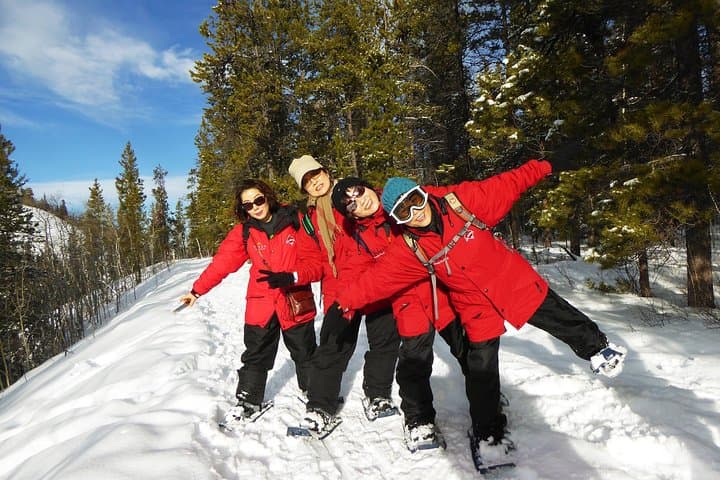
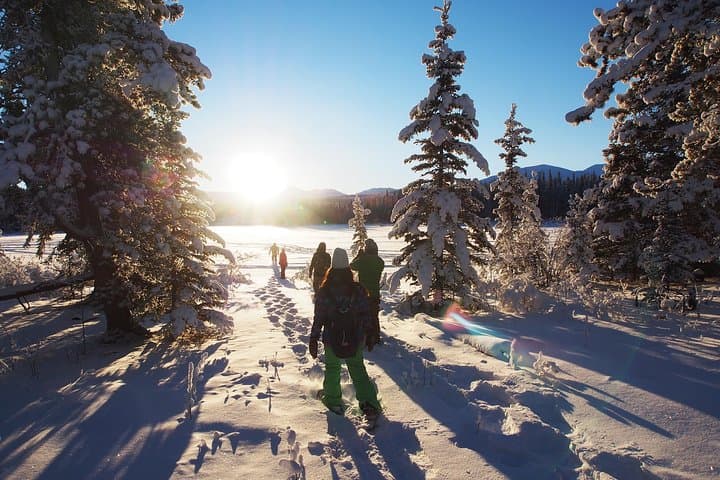
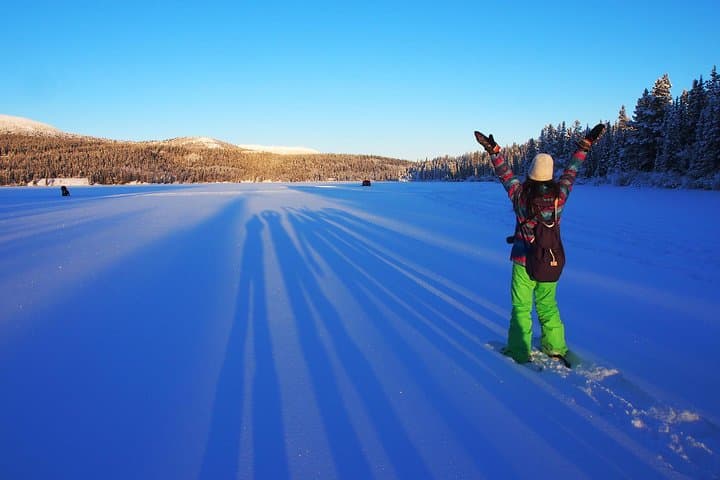
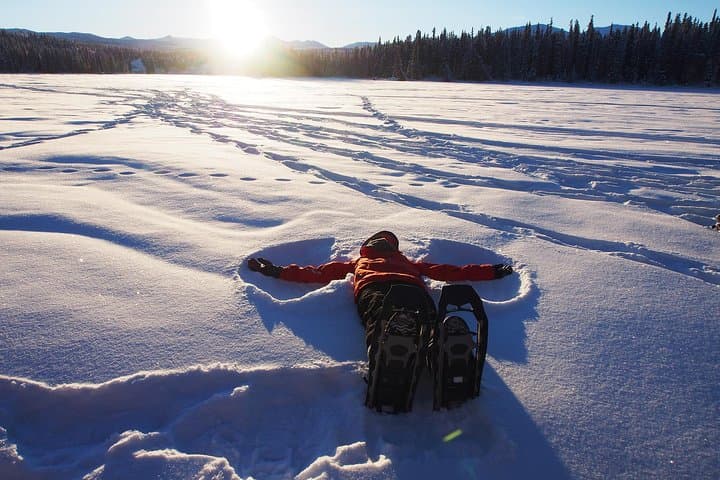
A hush arrives before you step out: the town still behind you, breath fogging in the early light, and a guide tightening bindings on lightweight modern snowshoes. The trail ahead is a ribbon cut through white—spruce and birch lining a corridor of compressed snow, wind having brushed sculpted ripples across the surface. You move deliberately; each step sinks and lifts, a small methodical negotiation with the land. The Yukon feels patient here, as if the rivers and ridgelines are waiting to see which way you'll choose.
A hush arrives before you step out: the town still behind you, breath fogging in the early light, and a guide tightening bindings on lightweight modern snowshoes. The trail ahead is a ribbon cut through white—spruce and birch lining a corridor of compressed snow, wind having brushed sculpted ripples across the surface. You move deliberately; each step sinks and lifts, a small methodical negotiation with the land. The Yukon feels patient here, as if the rivers and ridgelines are waiting to see which way you'll choose.
This short outing follows footsteps older than roads. Gold-seekers, trappers and First Nations people moved through these valleys long before guided tours began; place names still carry stories of survival and trade. Geologically, the region is a mosaic of glacially scoured bedrock and sediment-filled basins, which creates open ridgelines and frozen lake bowls that frame wide northern skies. Wildlife keeps its distance—spruce grouse and snowshoe hare are the most common glimpses—while coyotes and foxes slip through the forest edges if you listen closely.
The cultural mood around Whitehorse is practical and self-reliant: an understanding that beauty and risk share the same geography. Local guides teach a respectful pace—observe, photograph, then move on—so the landscape remains as it was found. That ethic extends to conservation: stay on established tracks, pack out waste, and avoid approaching wildlife.
Practical guidance: the half-day tour runs about 3–4 hours door-to-door with hotel pickup and drop-off. Guides outfit you with modern snowshoes and poles, and provide a warm beverage and snack; you need only sensible footwear and layering. Trails vary from flat lakeshore walks to gentle uphill sections with short descents—expect modest elevation change but uneven, snowy terrain. Trails can be windy and exposed on ridgelines; windproof outer layers and eye protection make the difference between a crisp photo session and a cold cut-short.
Timing matters. Mid-morning offers soft, directional light that flatters snow texture and makes wildlife easier to spot; late-afternoon winter light can turn the landscape raw and cinematic but colder. Safety is straightforward: follow the guide, keep a steady pace, and let the group set the rhythm. The experience is less about speed and more about presence—learning to read tracks, hearing the forest creak, and feeling the land respond underfoot.
For photographers and first-timers alike, this is accessible Yukon backcountry—an easy, focused way to feel the north without committing to a multi-day expedition. You leave with a handful of snapshots, warmer hands, and a clearer sense of why people kept coming north over centuries: the landscape has a way of asking questions, and snowshoeing is how you answer them.