THE ADVENTURE COLLECTIVE® · Independent discovery and booking for outdoor travel

Step off Strand Road into Yangon’s energetic marketplace life—banana carts, tea shops and a short hop on the Circle Line train give a concentrated look at daily Burmese living. This half-day walk pairs colonial architecture with neighborhood markets and a stop at Koe Htat Gyi Pagoda.
Step off Strand Road into Yangon’s energetic marketplace life—banana carts, tea shops and a short hop on the Circle Line train give a concentrated look at daily Burmese living. This half-day walk pairs colonial architecture with neighborhood markets and a stop at Koe Htat Gyi Pagoda.
You meet on Strand Road, the air thick with diesel, jasmine and the distant clatter of trishaws; the Yangon River waits like a wide ribbon daring the city’s commuters to cross. From the jetty the tour pushes into the working pulse of Yangon—banana-laden trishaws, a patchwork of market stalls, and a teashop where conversations spill over cups of sweet milk tea.
Verified experiences and guided adventures in the surrounding area.
Operated by Asian Tour Myanmar · Yangon, Yangon Region
You meet on Strand Road, the air thick with diesel, jasmine and the distant clatter of trishaws; the Yangon River waits like a wide ribbon daring the city’s commuters to cross. From the jetty the tour pushes into the working pulse of Yangon—banana-laden trishaws, a patchwork of market stalls, and a teashop where conversations spill over cups of sweet milk tea.
Yangon’s streets hold visible layers of history: British-era brick facades near the Strand, post-war wooden townhouses, and the modern bustle of Yangon's Circle Line, opened in 1961 to bind neighborhoods into a single loop. Geologically flat and river-fed, the city’s life orbits waterways and parks; People’s Park offers an urban pause with its white-elephant fountain and canopy bridges.
Culturally, pagodas and palmists are woven into daily decision-making—Koe Htat Gyi’s sitting Buddha and nearby Buddhist-supply shops underline religion’s everyday role. The Circle Line train is less a tourist spectacle than a lived artery; a short 15-minute hop gives a credible slice of local routine.
Practical guidance: wear comfortable shoes for 8–10 km of mixed pavement and packed-market alleys, bring small local currency for vendors and trishaws, and dress respectfully for pagoda visits (shoulders and legs covered). Expect heat and humidity—start early to avoid the hottest hours, carry water, and keep valuables secure in crowded markets. The guide’s English narration helps navigate bargaining and offers context, but be ready for sensory overload: scents, bargaining calls, and the city’s steady, human rhythm.
easy.
5 hours.
Light walking fitness recommended; suitable for most travelers who can handle several short walks and boarding a local train.
Yes—this is family-friendly and physically easy, but keep younger children close in crowded markets and on the Circle Line train.
You won’t need your passport during the tour, but booking requires passport details; carry a photocopy if you want to keep ID on you.
Yes—the itinerary includes a short ride on local buses and a 15-minute segment on the Circle Line train to experience authentic local travel.
No—refreshments at a local tea shop are part of the visit but food and drinks are paid on-site, so bring cash for snacks.
Yangon retains strong British colonial architecture near Strand Road and a distinctly local urban fabric; the Circle Line, opened in 1961, connects old neighborhoods and remains an everyday transit route.
Support small vendors to keep market economies resilient, avoid single-use plastics when possible, and respect religious sites by following signage and local protocols.
Asian Tour Myanmar operates guided outdoor trips and adventures with an emphasis on safety, stewardship, and memorable experiences.
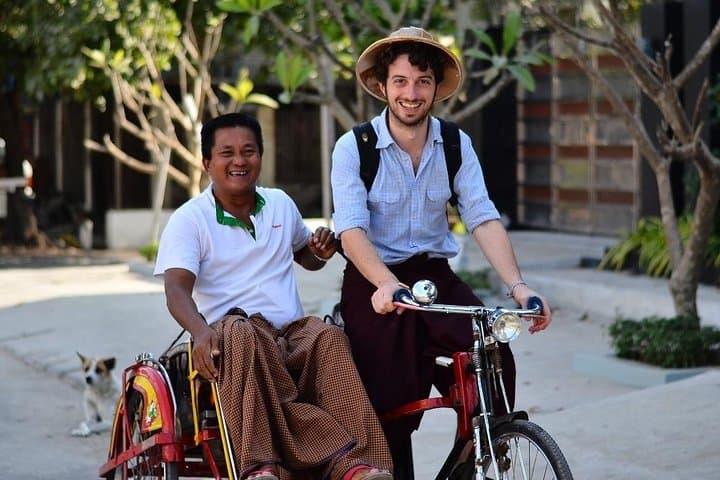


You meet on Strand Road, the air thick with diesel, jasmine and the distant clatter of trishaws; the Yangon River waits like a wide ribbon daring the city’s commuters to cross. From the jetty the tour pushes into the working pulse of Yangon—banana-laden trishaws, a patchwork of market stalls, and a teashop where conversations spill over cups of sweet milk tea.
You meet on Strand Road, the air thick with diesel, jasmine and the distant clatter of trishaws; the Yangon River waits like a wide ribbon daring the city’s commuters to cross. From the jetty the tour pushes into the working pulse of Yangon—banana-laden trishaws, a patchwork of market stalls, and a teashop where conversations spill over cups of sweet milk tea.
Yangon’s streets hold visible layers of history: British-era brick facades near the Strand, post-war wooden townhouses, and the modern bustle of Yangon's Circle Line, opened in 1961 to bind neighborhoods into a single loop. Geologically flat and river-fed, the city’s life orbits waterways and parks; People’s Park offers an urban pause with its white-elephant fountain and canopy bridges.
Culturally, pagodas and palmists are woven into daily decision-making—Koe Htat Gyi’s sitting Buddha and nearby Buddhist-supply shops underline religion’s everyday role. The Circle Line train is less a tourist spectacle than a lived artery; a short 15-minute hop gives a credible slice of local routine.
Practical guidance: wear comfortable shoes for 8–10 km of mixed pavement and packed-market alleys, bring small local currency for vendors and trishaws, and dress respectfully for pagoda visits (shoulders and legs covered). Expect heat and humidity—start early to avoid the hottest hours, carry water, and keep valuables secure in crowded markets. The guide’s English narration helps navigate bargaining and offers context, but be ready for sensory overload: scents, bargaining calls, and the city’s steady, human rhythm.