THE ADVENTURE COLLECTIVE® · Independent discovery and booking for outdoor travel

Set out from Telegraph Cove into Johnstone Strait for a three-hour search for orcas, humpbacks and other marine life aboard a semi-covered cruiser. This tour blends local natural history, on-board education and a whale-sightings guarantee for an efficient, family-friendly marine adventure.
Set out from Telegraph Cove into Johnstone Strait for a three-hour search for orcas, humpbacks and other marine life aboard a semi-covered cruiser. This tour blends local natural history, on-board education and a whale-sightings guarantee for an efficient, family-friendly marine adventure.
Morning fog lifts off Johnstone Strait as the Ocean Magic II slips from Telegraph Cove—salty spray prickles your face and the boat’s bow cuts the current that pushes between Vancouver Island and the mainland. In three hours you cross channels where orcas, humpbacks and porpoises patrol feeding lanes; the ocean feels alive, a moving theatre where guides read the whales’ cues and the wind writes the coastline’s history.
Verified experiences and guided adventures in the surrounding area.
Operated by Prince of Whales Whale & Marine Wildlife Adventures · Telegraph Cove, British Columbia
Morning fog lifts off Johnstone Strait as the Ocean Magic II slips from Telegraph Cove—salty spray prickles your face and the boat’s bow cuts the current that pushes between Vancouver Island and the mainland. In three hours you cross channels where orcas, humpbacks and porpoises patrol feeding lanes; the ocean feels alive, a moving theatre where guides read the whales’ cues and the wind writes the coastline’s history.
The region’s geology is raw: glacially carved channels, rocky islets of the Broughton Archipelago and steep forested shores shaped by ice and tectonics over millennia. Telegraph Cove began as a telegraph and fishing settlement in the early 20th century and today remains a small gateway village where Indigenous presence and maritime culture are part of every skiff and dock. Local guides mix natural history, Indigenous context and identification of marine life, making sightings more than spectacle—an education in the region’s ecology.
Practical guidance: dress in layers and expect wind off the Strait; even summer mornings can be cool. The boat provides semi-covered seating and onboard restrooms, plus hot drinks and educational materials. Bring binoculars, a waterproof jacket and a camera with a zoom lens. Tours run about three hours with a whale-sightings guarantee policy—if you don’t see whales, operators often offer a complimentary return. Seas can be choppy; if you’re prone to motion sickness, take precautions before boarding. Plan transport and parking in Telegraph Cove or nearby Port McNeill and arrive early for check-in and briefing.
easy.
3 hours.
Minimal fitness required—able to step aboard small vessels and stand on deck for observation periods.
Tours run about three hours from Telegraph Cove, combining transit through Johnstone Strait with guided wildlife viewing and educational commentary on marine ecology.
Common sightings include resident and transient orcas, humpback whales, Dall’s porpoise, sea lions and a variety of seabirds, though sightings are never guaranteed.
The tour is family-friendly and rated easy; infants must sit on laps. There is some movement while boarding and on deck—contact the operator about specific mobility needs.
Full refunds are available if you cancel at least 24 hours prior; the operator offers a whale-sightings guarantee with complimentary return trips under certain conditions if whales aren’t seen.
Telegraph Cove began as an early telegraph relay and commercial fishing float community in the early 1900s and retains a working-maritime character tied to Indigenous and settler histories.
Operators follow guidelines to minimize disturbance to whales and migratory routes; visitors should avoid noise and sudden approaches to wildlife and support local marine conservation initiatives.
Prince of Whales Whale & Marine Wildlife Adventures operates guided outdoor trips and adventures with an emphasis on safety, stewardship, and memorable experiences.
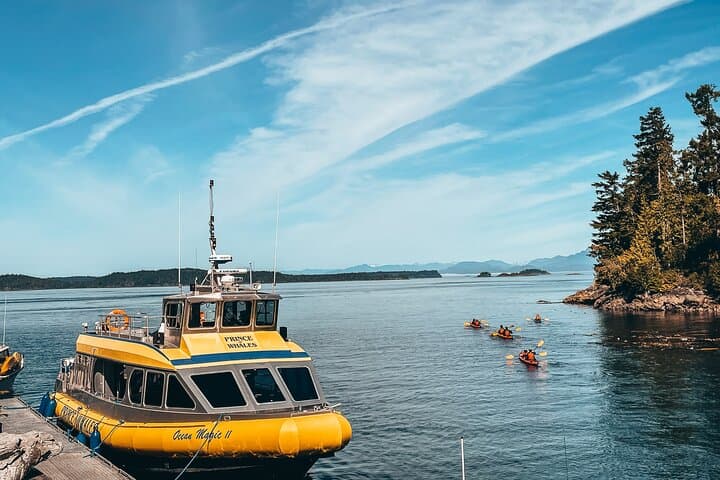
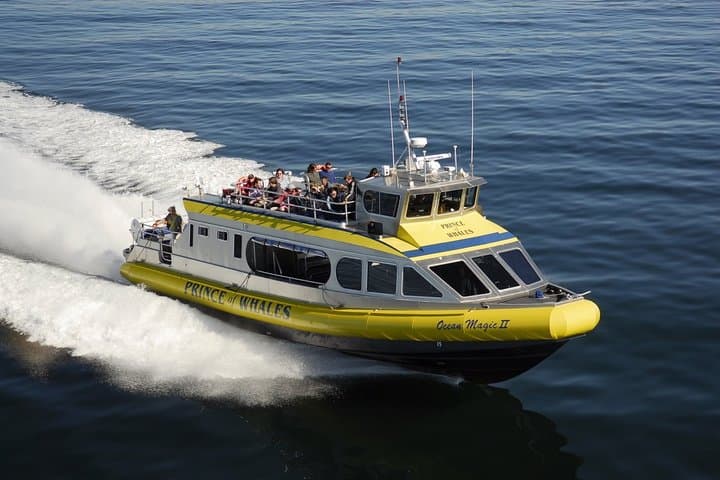
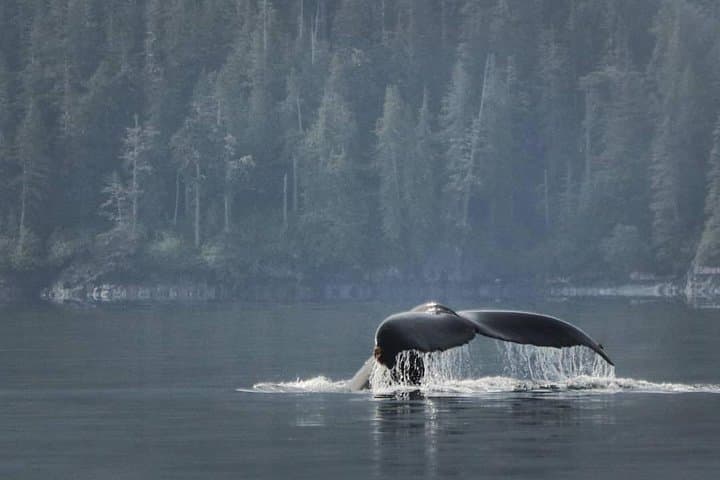
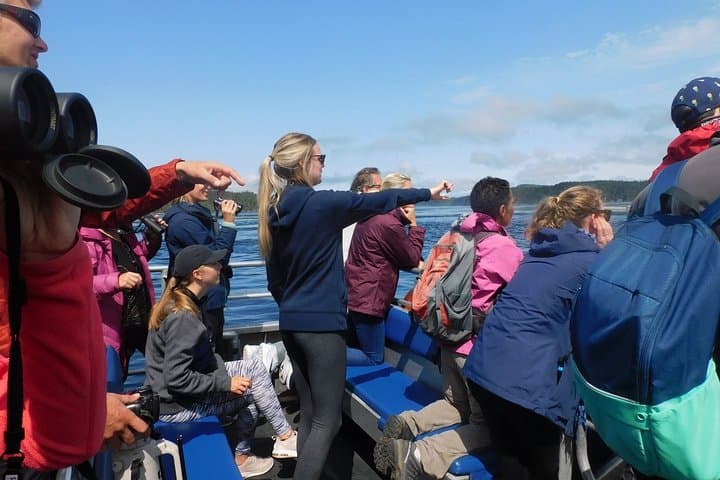
Morning fog lifts off Johnstone Strait as the Ocean Magic II slips from Telegraph Cove—salty spray prickles your face and the boat’s bow cuts the current that pushes between Vancouver Island and the mainland. In three hours you cross channels where orcas, humpbacks and porpoises patrol feeding lanes; the ocean feels alive, a moving theatre where guides read the whales’ cues and the wind writes the coastline’s history.
Morning fog lifts off Johnstone Strait as the Ocean Magic II slips from Telegraph Cove—salty spray prickles your face and the boat’s bow cuts the current that pushes between Vancouver Island and the mainland. In three hours you cross channels where orcas, humpbacks and porpoises patrol feeding lanes; the ocean feels alive, a moving theatre where guides read the whales’ cues and the wind writes the coastline’s history.
The region’s geology is raw: glacially carved channels, rocky islets of the Broughton Archipelago and steep forested shores shaped by ice and tectonics over millennia. Telegraph Cove began as a telegraph and fishing settlement in the early 20th century and today remains a small gateway village where Indigenous presence and maritime culture are part of every skiff and dock. Local guides mix natural history, Indigenous context and identification of marine life, making sightings more than spectacle—an education in the region’s ecology.
Practical guidance: dress in layers and expect wind off the Strait; even summer mornings can be cool. The boat provides semi-covered seating and onboard restrooms, plus hot drinks and educational materials. Bring binoculars, a waterproof jacket and a camera with a zoom lens. Tours run about three hours with a whale-sightings guarantee policy—if you don’t see whales, operators often offer a complimentary return. Seas can be choppy; if you’re prone to motion sickness, take precautions before boarding. Plan transport and parking in Telegraph Cove or nearby Port McNeill and arrive early for check-in and briefing.