THE ADVENTURE COLLECTIVE® · Independent discovery and booking for outdoor travel

Spend a half-day chasing three of Ubud’s best waterfalls—Tegenungan, Kanto Lampo and Tibumana—on a private tour with hotel pickup. Perfect for swimmers and photographers seeking dramatic cascades without the long trek.
Spend a half-day chasing three of Ubud’s best waterfalls—Tegenungan, Kanto Lampo and Tibumana—on a private tour with hotel pickup. Perfect for swimmers and photographers seeking dramatic cascades without the long trek.
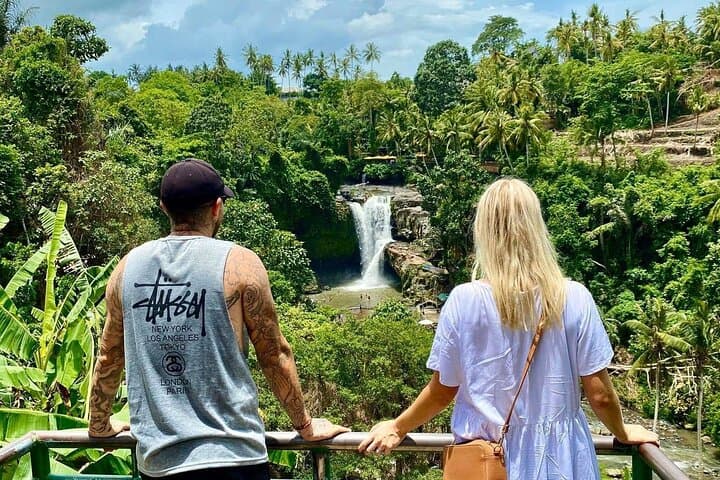
The van hums away from Ubud before sunrise, rice paddies sliding by like pages in a travel journal. By the time you step onto the trail at Tegenungan, mist has braided itself through the trees and the waterfall is already asserting itself—a broad curtain of water plunging into a turquoise pool that dares you to get close. Guides call the route a half-day, but the pace feels measured: long enough to stand under rock-sprayed air and short enough to leave the road noise behind.
Verified experiences and guided adventures in the surrounding area.
Operated by Bali Exotic Trip · Ubud, Bali
The van hums away from Ubud before sunrise, rice paddies sliding by like pages in a travel journal. By the time you step onto the trail at Tegenungan, mist has braided itself through the trees and the waterfall is already asserting itself—a broad curtain of water plunging into a turquoise pool that dares you to get close. Guides call the route a half-day, but the pace feels measured: long enough to stand under rock-sprayed air and short enough to leave the road noise behind.
Tegenungan, Kanto Lampo and Tibumana sit within the folded volcanic landscape east of Ubud. Geologically, these falls are the work of Bali’s volcanic past—streams carving channels through lava-derived rock and layered alluvium, finding weak seams and dropping where the bedrock shifts. Culturally, water is never merely a backdrop here; the island’s subak irrigation tradition and Hindu practices treat springs and falls as living resources. Temples and small shrines near many cascades mark centuries of reverence for water that feeds rice terraces downstream.
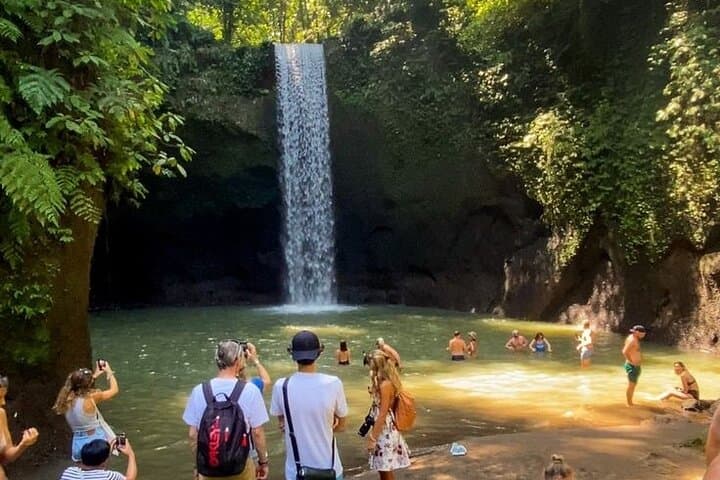
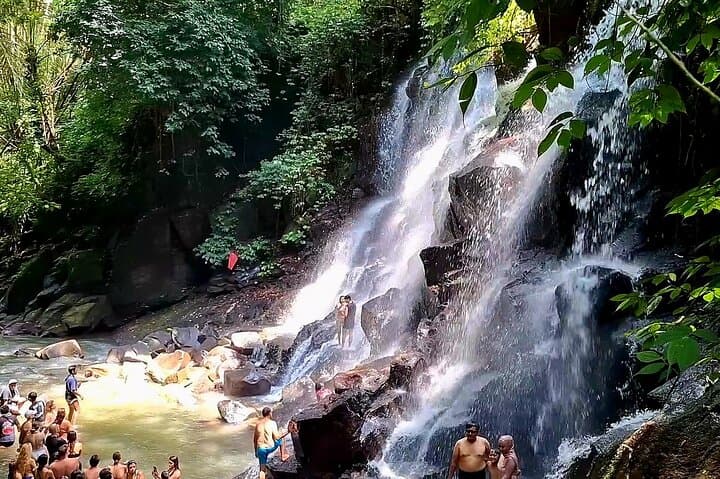
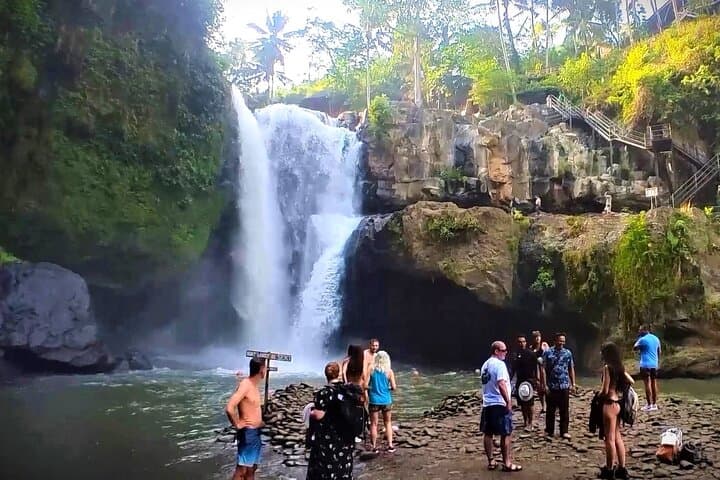
Each stop has a distinct character: Tegenungan arrives with cinematic volume and a stair-lined viewpoint; Kanto Lampo is photo-friendly, its multi-tiered flow spilling over smooth black rock you can scramble on; Tibumana feels quieter, the water spilling into a shallow, swim-ready basin under a canopy of mossy trees. Local guides often time visits to avoid midday crowds, slipping in local stories about the falls—tales of offerings, seasonal changes in flow, and the families who tend the access paths.
Practical guidance: the tour runs about six hours with hotel pickup included from Ubud and surrounding areas. Expect short hikes and uneven rock steps—good balance and waterproof footwear help. Bring swimwear and a towel for dips at clear pools, plus a lightweight rain layer if you travel during the wet season. Entrance fees are typically covered on this tour, but carry small local cash for tips, snacks, or a coconut after the swim.
Respect and safety matter. Stay on marked paths near edges, avoid stepping on slippery algae, and use biodegradable sunscreen to protect aquatic life. If you want cleaner photos and calmer water, book the earliest pickup possible—morning light softens the falls and the crowds are still at breakfast. For a quick, efficient taste of Bali’s wet places, this half-day loop delivers memorable water, local context, and just enough adventure to leave you planning a return visit.
moderate.
5–6 hours.
Moderate fitness; able to manage short hikes, staircases and uneven, wet rock surfaces.
Swimming is permitted at Tegenungan and Tibumana in designated pool areas; Kanto Lampo has shallow spots but currents and slippery rocks mean caution is required—follow your guide’s advice.
This tour lists admissions to Tegenungan, Kanto Lampo and Tibumana as included, but carry small cash for local vendors or optional extras.
Tegenungan and the others are within roughly 20–40 minutes’ drive of central Ubud depending on traffic; total tour time including transfers is about six hours.
Yes—children who can handle stairs and wet terrain can join; infant seats are available on request but it’s not wheelchair accessible.
Light, breathable clothing with swimwear underneath, water-friendly shoes, and a dry change of clothes; bring sun protection and insect repellent.
Falls are often more dramatic after rain, but slippery trails increase risk; the operator has a 24-hour cancellation window for full refunds, and guides will adjust plans for safety.
Water features in Bali are integral to the subak irrigation system and Hindu ritual practices; many cascades have nearby shrines and local folklore tied to water spirits.
Stick to paths, avoid using non-biodegradable sunscreen in pools, and support local guides and warungs to keep tourism benefits in the community.
Bali Exotic Trip operates guided outdoor trips and adventures with an emphasis on safety, stewardship, and memorable experiences.
The van hums away from Ubud before sunrise, rice paddies sliding by like pages in a travel journal. By the time you step onto the trail at Tegenungan, mist has braided itself through the trees and the waterfall is already asserting itself—a broad curtain of water plunging into a turquoise pool that dares you to get close. Guides call the route a half-day, but the pace feels measured: long enough to stand under rock-sprayed air and short enough to leave the road noise behind.
The van hums away from Ubud before sunrise, rice paddies sliding by like pages in a travel journal. By the time you step onto the trail at Tegenungan, mist has braided itself through the trees and the waterfall is already asserting itself—a broad curtain of water plunging into a turquoise pool that dares you to get close. Guides call the route a half-day, but the pace feels measured: long enough to stand under rock-sprayed air and short enough to leave the road noise behind.
Tegenungan, Kanto Lampo and Tibumana sit within the folded volcanic landscape east of Ubud. Geologically, these falls are the work of Bali’s volcanic past—streams carving channels through lava-derived rock and layered alluvium, finding weak seams and dropping where the bedrock shifts. Culturally, water is never merely a backdrop here; the island’s subak irrigation tradition and Hindu practices treat springs and falls as living resources. Temples and small shrines near many cascades mark centuries of reverence for water that feeds rice terraces downstream.
Each stop has a distinct character: Tegenungan arrives with cinematic volume and a stair-lined viewpoint; Kanto Lampo is photo-friendly, its multi-tiered flow spilling over smooth black rock you can scramble on; Tibumana feels quieter, the water spilling into a shallow, swim-ready basin under a canopy of mossy trees. Local guides often time visits to avoid midday crowds, slipping in local stories about the falls—tales of offerings, seasonal changes in flow, and the families who tend the access paths.
Practical guidance: the tour runs about six hours with hotel pickup included from Ubud and surrounding areas. Expect short hikes and uneven rock steps—good balance and waterproof footwear help. Bring swimwear and a towel for dips at clear pools, plus a lightweight rain layer if you travel during the wet season. Entrance fees are typically covered on this tour, but carry small local cash for tips, snacks, or a coconut after the swim.
Respect and safety matter. Stay on marked paths near edges, avoid stepping on slippery algae, and use biodegradable sunscreen to protect aquatic life. If you want cleaner photos and calmer water, book the earliest pickup possible—morning light softens the falls and the crowds are still at breakfast. For a quick, efficient taste of Bali’s wet places, this half-day loop delivers memorable water, local context, and just enough adventure to leave you planning a return visit.