THE ADVENTURE COLLECTIVE® · Independent discovery and booking for outdoor travel

Spend a focused morning at the David Sheldrick Wildlife Trust observing rescued baby elephants, learning about rehabilitation efforts, and visiting nearby artisan workshops. This half‑day tour pairs close-up wildlife viewing with cultural stops and practical conservation insights.
Spend a focused morning at the David Sheldrick Wildlife Trust observing rescued baby elephants, learning about rehabilitation efforts, and visiting nearby artisan workshops. This half‑day tour pairs close-up wildlife viewing with cultural stops and practical conservation insights.
You arrive on a crisp Nairobi morning and the city loosens its grip: traffic thins, and the horizon opens toward the short grasslands that edge the national park. By 10:45 the vehicle pulls into the simple compound of the David Sheldrick Wildlife Trust, and the room hums with the quiet impatience of infant elephants and the low, patient chatter of their keepers.
Verified experiences and guided adventures in the surrounding area.
Operated by Kenya Bush Expeditions Tour and Travel · Nairobi, Nairobi County
You arrive on a crisp Nairobi morning and the city loosens its grip: traffic thins, and the horizon opens toward the short grasslands that edge the national park. By 10:45 the vehicle pulls into the simple compound of the David Sheldrick Wildlife Trust, and the room hums with the quiet impatience of infant elephants and the low, patient chatter of their keepers.
Founded in 1977, the orphanage rehabilitates young elephants rescued from poaching, human–wildlife conflict, or abandonment; it’s part rescue, part conservation classroom. Geologically the area sits on the Nairobi Plateau—old volcanic soils that support scrub and acacia gallery belts where elephants once roamed in larger herds. Culturally, the visit ties into Kenya’s conservation story: local rangers, keepers and artisans (you’ll likely visit a woodcraft shop and Kazuri bead workshop) who make livelihoods from sustainable tourism.
Expect a structured morning: hotel pickup at 9:30, arrival and a guided presentation at 11:00 featuring feeding and supervised close contact with the youngsters, then a short shopping stop and lunch at Nairobi Mamba Village before a mid‑afternoon drop-off.
Practical guidance: arrive with lightweight, sun‑blocking layers, a charged camera and modest expectations—interactions are supervised and brief. Bring cash for handicrafts and tip in local currency if service impresses.
This half‑day balances emotion and education: you’ll leave with the smell of elephant hair on your clothes, a clearer sense of rehabilitation work, and concrete ways to support conservation beyond the visit.
easy.
5 hours.
Minimal fitness required; mostly short walks and standing during the presentation
Supervised close contact is sometimes permitted during the presentation, but touching is controlled by keepers to protect animal welfare—follow their instructions closely.
Adoption is separate and arranged directly through the David Sheldrick Wildlife Trust; the tour provides information but does not include adoption fees.
Yes, hotel pickup and drop‑off are standard options—confirm pickup details and timing at booking.
Yes, children are welcome but must be accompanied by an adult; infants are typically required to sit on an adult’s lap during transport.
The Sheldrick orphanage began in 1977 as part of Kenya’s broader anti‑poaching and wildlife rehabilitation movement and now focuses on rescue, rehabilitation and release.
Visits directly support funded rehabilitation programs; visitors should follow rules to minimize stress on animals and favor locally made goods to benefit community livelihoods.
Kenya Bush Expeditions Tour and Travel operates guided outdoor trips and adventures with an emphasis on safety, stewardship, and memorable experiences.
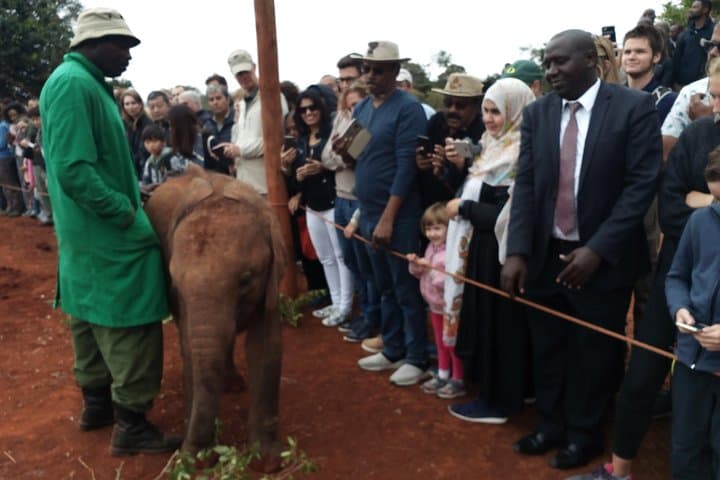


You arrive on a crisp Nairobi morning and the city loosens its grip: traffic thins, and the horizon opens toward the short grasslands that edge the national park. By 10:45 the vehicle pulls into the simple compound of the David Sheldrick Wildlife Trust, and the room hums with the quiet impatience of infant elephants and the low, patient chatter of their keepers.
You arrive on a crisp Nairobi morning and the city loosens its grip: traffic thins, and the horizon opens toward the short grasslands that edge the national park. By 10:45 the vehicle pulls into the simple compound of the David Sheldrick Wildlife Trust, and the room hums with the quiet impatience of infant elephants and the low, patient chatter of their keepers.
Founded in 1977, the orphanage rehabilitates young elephants rescued from poaching, human–wildlife conflict, or abandonment; it’s part rescue, part conservation classroom. Geologically the area sits on the Nairobi Plateau—old volcanic soils that support scrub and acacia gallery belts where elephants once roamed in larger herds. Culturally, the visit ties into Kenya’s conservation story: local rangers, keepers and artisans (you’ll likely visit a woodcraft shop and Kazuri bead workshop) who make livelihoods from sustainable tourism.
Expect a structured morning: hotel pickup at 9:30, arrival and a guided presentation at 11:00 featuring feeding and supervised close contact with the youngsters, then a short shopping stop and lunch at Nairobi Mamba Village before a mid‑afternoon drop-off.
Practical guidance: arrive with lightweight, sun‑blocking layers, a charged camera and modest expectations—interactions are supervised and brief. Bring cash for handicrafts and tip in local currency if service impresses.
This half‑day balances emotion and education: you’ll leave with the smell of elephant hair on your clothes, a clearer sense of rehabilitation work, and concrete ways to support conservation beyond the visit.