THE ADVENTURE COLLECTIVE® · Independent discovery and booking for outdoor travel

A small-group, half-day glacier hike that gets you deeper onto Falljökull than most tours—guided, gear-provided, and driven from Skaftafell for maximum ice time. Expect crampons, crevasses, and a hands-on primer in glacier travel.
A small-group, half-day glacier hike that gets you deeper onto Falljökull than most tours—guided, gear-provided, and driven from Skaftafell for maximum ice time. Expect crampons, crevasses, and a hands-on primer in glacier travel.
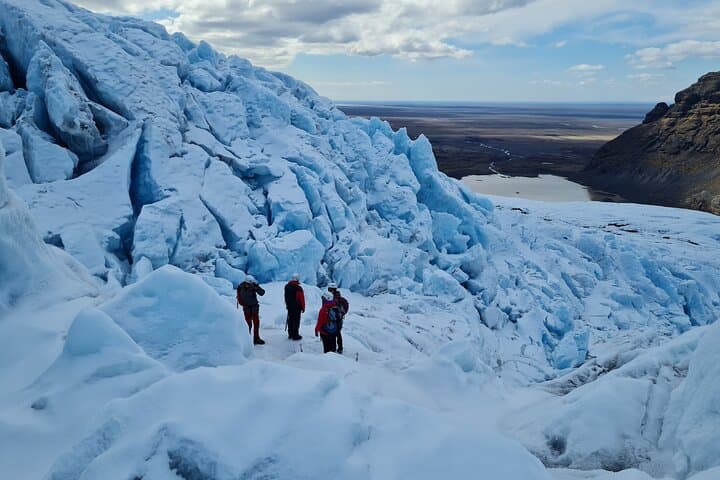
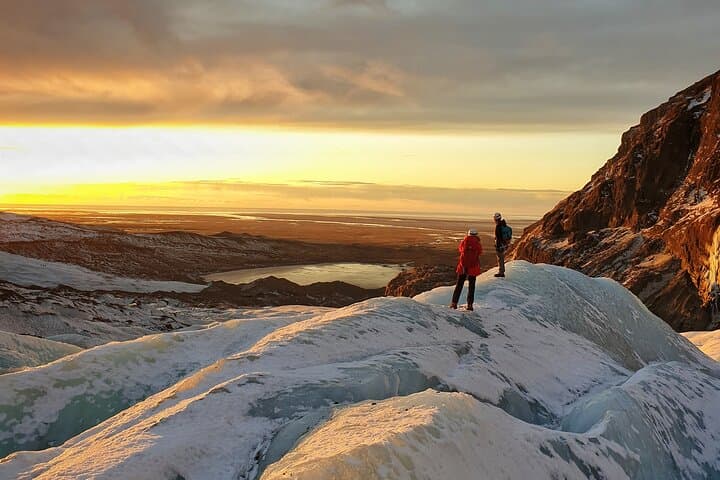
You step out of the 4x4 onto a field of blue-white that breathes and shifts beneath your boots. Wind carves thin threads along the ice and the guide’s voice—calm, practiced—cuts through the hush with instructions and stories. This is Falljökull, an outlet of Vatnajökull, Europe’s largest ice cap, and for the next four hours the glacier will set the pace: slow, deliberate, uncompromising.
Verified experiences and guided adventures in the surrounding area.
Operated by Melrakki Adventures · Skaftafell, Suðurland
You step out of the 4x4 onto a field of blue-white that breathes and shifts beneath your boots. Wind carves thin threads along the ice and the guide’s voice—calm, practiced—cuts through the hush with instructions and stories. This is Falljökull, an outlet of Vatnajökull, Europe’s largest ice cap, and for the next four hours the glacier will set the pace: slow, deliberate, uncompromising.
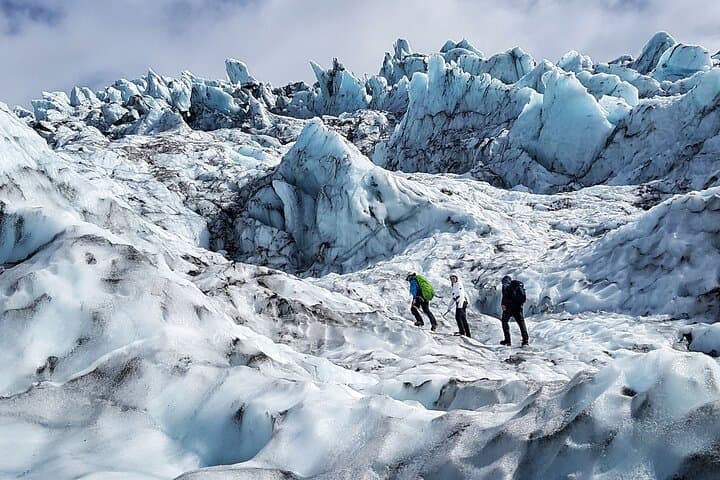
The ice here is not a flat sheet but a stitched landscape of crevasses, moulins and seracs. Geologically, Vatnajökull is a living ledger of Iceland’s volcanic heart: ash layers record eruptions and melt patterns record warming summers. Falljökull itself is an extension of that record—an accessible façade of a far larger ice system that has carved the Öræfi valley and fed nearby glacial rivers for millennia.
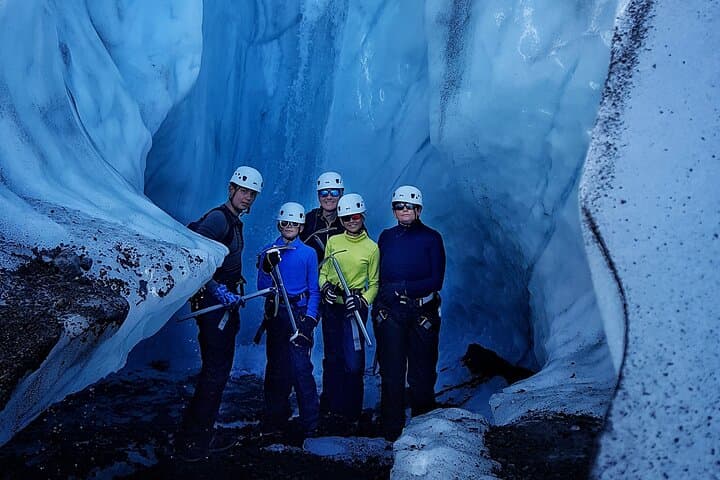
Culturally, Skaftafell sits where farmers once coped with shifting ice and volcanic ash; place names still speak of eruptions and long winters. Guides on this small-group tour mix that local memory with technical know-how: crampon fitting, safe ice travel, and explanations of how meltwater carves tunnels underfoot. The group never exceeds eight, which keeps the rhythm intimate and the stops frequent—more time to study crevasse teeth, listen to the faint roar of trapped water, and frame photographs.
Practicalities matter here. The operator drives you to the glacier in a 4x4, saving energy for the hard part: moving on crampons over uneven ice. Helmets, harnesses, crampons and ice axes are provided, and guides teach basic technique before you set off. Expect roughly 4–4.5 hours total, with about two to three hours actively on the glacier depending on conditions.
For planning: arrive at Skaftafell Terminal 10 minutes early with layered clothing and sturdy, crampon-compatible boots. Summer evenings (June–August) offer longer light and a quieter experience when day-trippers thin out; shoulder seasons bring sharper contrasts and more dramatic textures but shorter windows of daylight. The environment is fragile—follow your guide, avoid stepping on snow bridges and respect posted conservation zones. Glacier travel carries objective risks: weather can change fast and tours may cancel in poor conditions for safety.
This is not a scramble for speed but a measured exploration. You’ll come away with hands-on glacier skills, a clearer sense of how Iceland’s ice and fire interact, and photographs of otherworldly crevasses that look almost alive. If you want to feel the glacier moving underfoot and learn why these ice rivers matter, this half-day from Skaftafell is hard to beat.
moderate.
4–4.5 hours.
Moderate fitness; you should be comfortable walking uneven terrain for several hours and managing short uphill sections on crampons
You need moderate fitness: comfortable walking for a few hours on uneven icy terrain; guides keep pace manageable and stop frequently.
No—guides provide instruction on crampons and ice axe technique; prior experience helps but is not required.
Helmets, harness, crampons, ice axe, and a certified guide are included; you must bring appropriate boots and clothing.
Age limits depend on operator policy—bookings ask for age bands; contact the operator if traveling with minors to confirm suitability.
The operator may cancel for safety with full refund if done at least 24 hours prior or in case of poor weather; always have flexible plans.
Meet at Skaftafell Terminal Tour Center (outside the national park). Arrive 10 minutes early to check in and get geared up.
Vatnajökull and its outlet glaciers like Falljökull have shaped southern Iceland for millennia; nearby place names reflect historic eruptions and glacial advance/retreat cycles.
Glaciers are retreating rapidly; stay on designated routes, avoid fragile snow bridges, and follow guide instructions to minimize impact.
Melrakki Adventures operates guided outdoor trips and adventures with an emphasis on safety, stewardship, and memorable experiences.
You step out of the 4x4 onto a field of blue-white that breathes and shifts beneath your boots. Wind carves thin threads along the ice and the guide’s voice—calm, practiced—cuts through the hush with instructions and stories. This is Falljökull, an outlet of Vatnajökull, Europe’s largest ice cap, and for the next four hours the glacier will set the pace: slow, deliberate, uncompromising.
You step out of the 4x4 onto a field of blue-white that breathes and shifts beneath your boots. Wind carves thin threads along the ice and the guide’s voice—calm, practiced—cuts through the hush with instructions and stories. This is Falljökull, an outlet of Vatnajökull, Europe’s largest ice cap, and for the next four hours the glacier will set the pace: slow, deliberate, uncompromising.
The ice here is not a flat sheet but a stitched landscape of crevasses, moulins and seracs. Geologically, Vatnajökull is a living ledger of Iceland’s volcanic heart: ash layers record eruptions and melt patterns record warming summers. Falljökull itself is an extension of that record—an accessible façade of a far larger ice system that has carved the Öræfi valley and fed nearby glacial rivers for millennia.
Culturally, Skaftafell sits where farmers once coped with shifting ice and volcanic ash; place names still speak of eruptions and long winters. Guides on this small-group tour mix that local memory with technical know-how: crampon fitting, safe ice travel, and explanations of how meltwater carves tunnels underfoot. The group never exceeds eight, which keeps the rhythm intimate and the stops frequent—more time to study crevasse teeth, listen to the faint roar of trapped water, and frame photographs.
Practicalities matter here. The operator drives you to the glacier in a 4x4, saving energy for the hard part: moving on crampons over uneven ice. Helmets, harnesses, crampons and ice axes are provided, and guides teach basic technique before you set off. Expect roughly 4–4.5 hours total, with about two to three hours actively on the glacier depending on conditions.
For planning: arrive at Skaftafell Terminal 10 minutes early with layered clothing and sturdy, crampon-compatible boots. Summer evenings (June–August) offer longer light and a quieter experience when day-trippers thin out; shoulder seasons bring sharper contrasts and more dramatic textures but shorter windows of daylight. The environment is fragile—follow your guide, avoid stepping on snow bridges and respect posted conservation zones. Glacier travel carries objective risks: weather can change fast and tours may cancel in poor conditions for safety.
This is not a scramble for speed but a measured exploration. You’ll come away with hands-on glacier skills, a clearer sense of how Iceland’s ice and fire interact, and photographs of otherworldly crevasses that look almost alive. If you want to feel the glacier moving underfoot and learn why these ice rivers matter, this half-day from Skaftafell is hard to beat.