THE ADVENTURE COLLECTIVE® · Independent discovery and booking for outdoor travel

Board a speedboat from Puno for a half-day on Lake Titicaca to visit the reed-built Uros Floating Islands. Witness totora construction, meet island residents, and take optional totora-boat rides for an up-close cultural experience.
Board a speedboat from Puno for a half-day on Lake Titicaca to visit the reed-built Uros Floating Islands. Witness totora construction, meet island residents, and take optional totora-boat rides for an up-close cultural experience.
The engine thumps as the speedboat slips away from Puno’s dock and the high plain opens into the broad, bright surface of Lake Titicaca. Wind pushes across the water, ruffling clumps of totora reeds that fringe the islands; the islands themselves rise like stitched rafts, their edges soft with bundled reeds and the low houses of the Uros community.
Verified experiences and guided adventures in the surrounding area.
Operated by Giant Trip · Puno, Puno
The engine thumps as the speedboat slips away from Puno’s dock and the high plain opens into the broad, bright surface of Lake Titicaca. Wind pushes across the water, ruffling clumps of totora reeds that fringe the islands; the islands themselves rise like stitched rafts, their edges soft with bundled reeds and the low houses of the Uros community.
Lake Titicaca sits at roughly 3,812 m (12,507 ft), the world’s highest navigable lake. Geologically, the lake fills an Andean basin carved by ancient tectonics and glacial action. Culturally, the Uros are an Aymara-speaking people whose reed-engineering predates colonial borders; they built floating islands from layers of totora to create safe, mobile settlements long before modern boats arrived. On the tour, island leaders demonstrate how fresh totora is layered and anchored, and artisans display woven handicrafts and small reed boats.
Expect a 30–45 minute speedboat crossing each way and about two hours ashore. The visit combines light walking on uneven reed surfaces, close-up craft demonstrations, and optional short rides in traditional totora boats (small local fee). Guides usually explain island life in English and Spanish and can help arrange a souvenir passport stamp.
Practical notes: altitude and strong sun are the dominant concerns — move slowly, hydrate, and layer clothing for sharp wind on the water. Carry small bills for artisan purchases and the optional totora-boat ride. The whole excursion fits into a half-day window and offers immediate cultural access with minimal physical demand, ideal for travelers wanting a compact, hands-on encounter with one of Peru’s most singular communities.
easy.
4 hours.
Suitable for most fitness levels; requires short walks on uneven, sometimes slippery reed surfaces and basic mobility for boarding a boat.
The speedboat crossing takes about 30–45 minutes each way from Puno, depending on weather and routing.
Yes; the tour is described as easy and suitable for most fitness levels, but boarding boats and walking on uneven reed islands requires basic mobility.
No regular meals are included; there’s a short stop at the dock where you can buy snacks and bottled water, and vendors on the islands may sell small refreshments.
Yes—totora boat rides are usually available for a small local fee (about 15 PEN) and some islands offer souvenir passport stamps.
The Uros built floating reed islands centuries ago using bundled totora to create autonomous settlements on the lake; their craft and language reflect long-standing Aymara traditions adapted to high-altitude lacustrine life.
Totora harvesting is renewable when managed, but increasing tourism puts pressure on reed beds and waste management; choose operators who support local communities and low-impact visits.
Giant Trip operates guided outdoor trips and adventures with an emphasis on safety, stewardship, and memorable experiences.

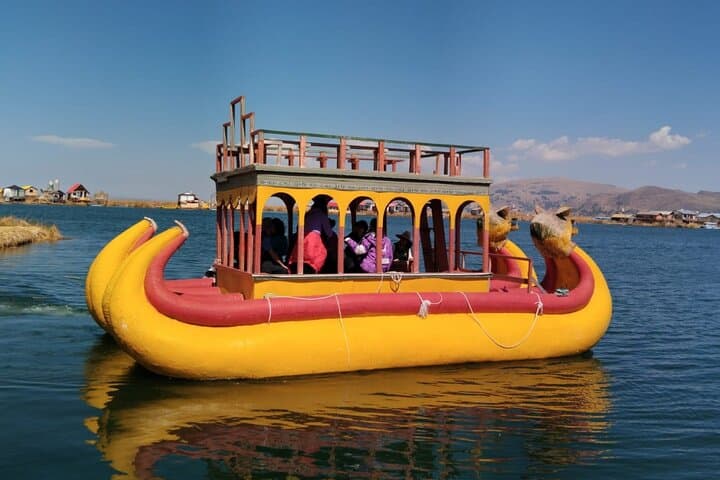


The engine thumps as the speedboat slips away from Puno’s dock and the high plain opens into the broad, bright surface of Lake Titicaca. Wind pushes across the water, ruffling clumps of totora reeds that fringe the islands; the islands themselves rise like stitched rafts, their edges soft with bundled reeds and the low houses of the Uros community.
The engine thumps as the speedboat slips away from Puno’s dock and the high plain opens into the broad, bright surface of Lake Titicaca. Wind pushes across the water, ruffling clumps of totora reeds that fringe the islands; the islands themselves rise like stitched rafts, their edges soft with bundled reeds and the low houses of the Uros community.
Lake Titicaca sits at roughly 3,812 m (12,507 ft), the world’s highest navigable lake. Geologically, the lake fills an Andean basin carved by ancient tectonics and glacial action. Culturally, the Uros are an Aymara-speaking people whose reed-engineering predates colonial borders; they built floating islands from layers of totora to create safe, mobile settlements long before modern boats arrived. On the tour, island leaders demonstrate how fresh totora is layered and anchored, and artisans display woven handicrafts and small reed boats.
Expect a 30–45 minute speedboat crossing each way and about two hours ashore. The visit combines light walking on uneven reed surfaces, close-up craft demonstrations, and optional short rides in traditional totora boats (small local fee). Guides usually explain island life in English and Spanish and can help arrange a souvenir passport stamp.
Practical notes: altitude and strong sun are the dominant concerns — move slowly, hydrate, and layer clothing for sharp wind on the water. Carry small bills for artisan purchases and the optional totora-boat ride. The whole excursion fits into a half-day window and offers immediate cultural access with minimal physical demand, ideal for travelers wanting a compact, hands-on encounter with one of Peru’s most singular communities.