THE ADVENTURE COLLECTIVE® · Independent discovery and booking for outdoor travel

Spend a focused half-day exploring Ubud’s highlights: a thunderous waterfall, an archaeological cave temple, sculpted rice terraces and a lively monkey sanctuary. This private tour packs picture-perfect stops with short walks and local insights—great for travelers wanting maximum discovery in minimal time.
Spend a focused half-day exploring Ubud’s highlights: a thunderous waterfall, an archaeological cave temple, sculpted rice terraces and a lively monkey sanctuary. This private tour packs picture-perfect stops with short walks and local insights—great for travelers wanting maximum discovery in minimal time.
You step out of an air-conditioned car and the island exhales: warm, humid air, the distant rumble of a 20m drop, and the scent of wet stone and rice-field earth. This private half-day tour threads four of central Bali’s most visited sites—Tegenungan Waterfall, Goa Gajah, Tegalalang Rice Terrace and the Sacred Monkey Forest—into a compact 6–7 hour loop that keeps walking light but encounters rich culture and landscape.
Verified experiences and guided adventures in the surrounding area.
Operated by Bali Day Tour · Ubud, Bali
You step out of an air-conditioned car and the island exhales: warm, humid air, the distant rumble of a 20m drop, and the scent of wet stone and rice-field earth. This private half-day tour threads four of central Bali’s most visited sites—Tegenungan Waterfall, Goa Gajah, Tegalalang Rice Terrace and the Sacred Monkey Forest—into a compact 6–7 hour loop that keeps walking light but encounters rich culture and landscape.
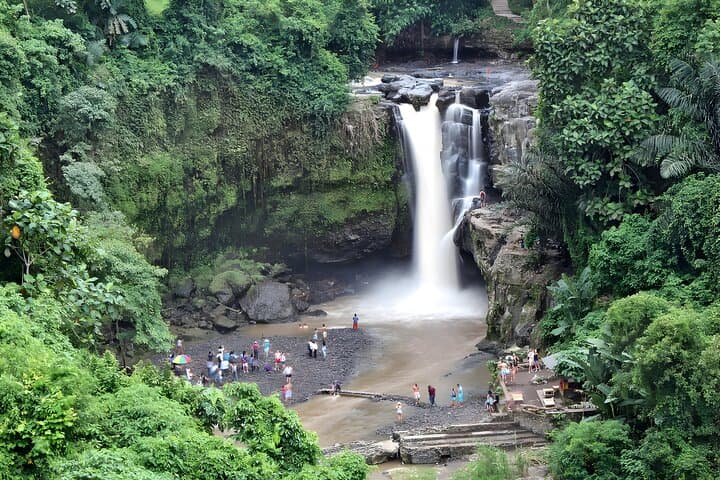
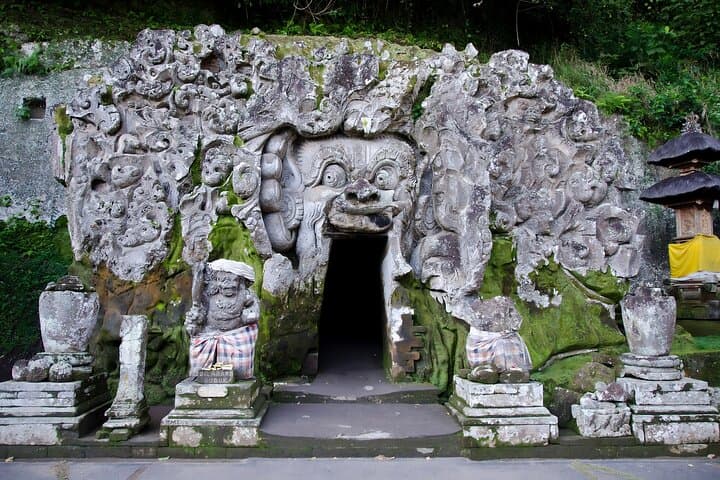
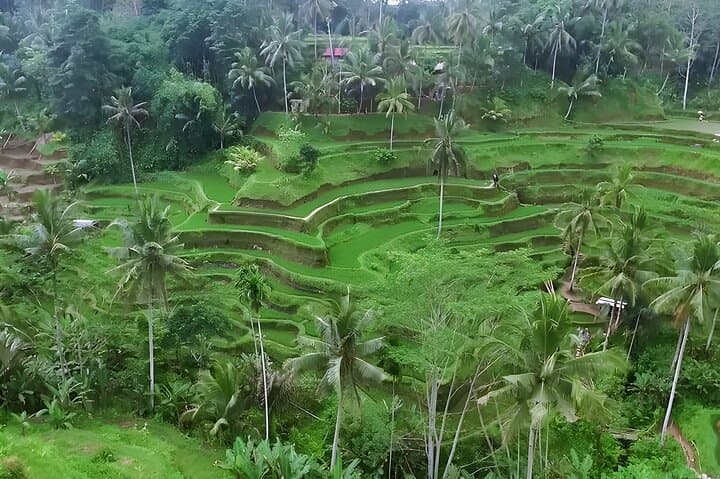
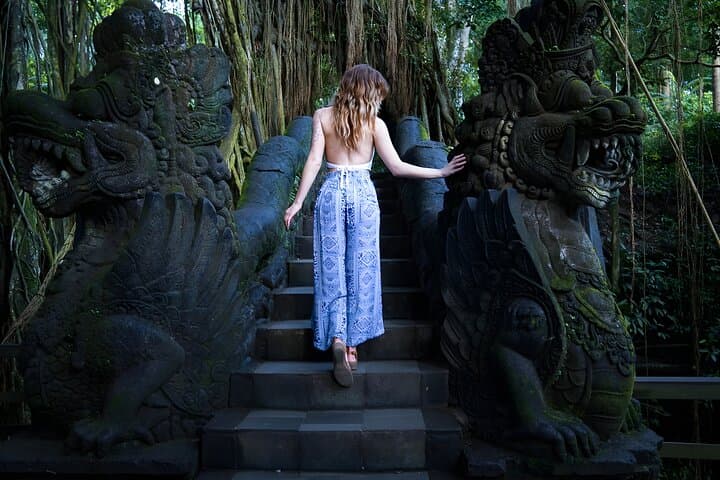
Tegenungan sits on the Petanu river and demands attention with a steep stair descent (~100–150 steps) and a thunderous plunge into a rocky gorge. Goa Gajah, a tenth-century archaeological site, offers carved rock faces, bathing pools and a small meditation cave—short, stepped paths require respectful dress. Tegalalang’s high roadside vantage gives panoramic views across terraced paddies carved along shallow slopes; walking here ranges from paved viewpoints to muddy farm tracks (0.5–2 km of gentle trails). The Monkey Forest in Padangtegal is a shaded, 27-acre sanctuary where long-tailed macaques patrol temple ruins and mossed statues.
Geology here is volcanic—fertile volcanic soil shapes the terraces and feeds the lush growth that frames temple stones. Culturally, each stop ties into Balinese Hindu ritual life: offerings, temple gates, rice-irrigation history.
Practical guidance: wear grippy shoes for stairs and slick rock, bring 1–2 liters of water, insect repellent and cash for small entrance fees or offerings. Keep cameras and loose items secure around macaques. Expect frequent photo stops, short walks, and a relaxed private pace—ideal for travelers who want a concentrated, accessible taste of Ubud’s landscape and culture.
easy.
6–7 hours.
Suitable for travelers of average fitness; involves short walks, stair descents and standing during viewpoints.
Yes—hotel or villa pickup and drop-off in Ubud is included; pickup from neighboring towns may be available but confirm when booking.
All listed entrance tickets are included; Indonesian set menu lunch is included if that option is selected—vegetarian options available with advance notice.
The tour is family-friendly but involves stair descents and uneven ground; those with mobility concerns should notify the operator for pacing and assistance.
You can observe and feed macaques in designated areas but avoid direct eye contact, keep food sealed, and don’t carry loose bags or sunglasses.
Tegalalang’s terraces use traditional subak irrigation systems with roots in 9th-century agrarian practice; Goa Gajah dates to around the 9th–11th century and reflects ancient Balinese ritual life.
The Monkey Forest is managed by the Padangtegal village council with active conservation and waste-management programs; visitors are asked to respect offerings and avoid feeding wildlife outside designated areas.
Bali Day Tour operates guided outdoor trips and adventures with an emphasis on safety, stewardship, and memorable experiences.
You step out of an air-conditioned car and the island exhales: warm, humid air, the distant rumble of a 20m drop, and the scent of wet stone and rice-field earth. This private half-day tour threads four of central Bali’s most visited sites—Tegenungan Waterfall, Goa Gajah, Tegalalang Rice Terrace and the Sacred Monkey Forest—into a compact 6–7 hour loop that keeps walking light but encounters rich culture and landscape.
You step out of an air-conditioned car and the island exhales: warm, humid air, the distant rumble of a 20m drop, and the scent of wet stone and rice-field earth. This private half-day tour threads four of central Bali’s most visited sites—Tegenungan Waterfall, Goa Gajah, Tegalalang Rice Terrace and the Sacred Monkey Forest—into a compact 6–7 hour loop that keeps walking light but encounters rich culture and landscape.
Tegenungan sits on the Petanu river and demands attention with a steep stair descent (~100–150 steps) and a thunderous plunge into a rocky gorge. Goa Gajah, a tenth-century archaeological site, offers carved rock faces, bathing pools and a small meditation cave—short, stepped paths require respectful dress. Tegalalang’s high roadside vantage gives panoramic views across terraced paddies carved along shallow slopes; walking here ranges from paved viewpoints to muddy farm tracks (0.5–2 km of gentle trails). The Monkey Forest in Padangtegal is a shaded, 27-acre sanctuary where long-tailed macaques patrol temple ruins and mossed statues.
Geology here is volcanic—fertile volcanic soil shapes the terraces and feeds the lush growth that frames temple stones. Culturally, each stop ties into Balinese Hindu ritual life: offerings, temple gates, rice-irrigation history.
Practical guidance: wear grippy shoes for stairs and slick rock, bring 1–2 liters of water, insect repellent and cash for small entrance fees or offerings. Keep cameras and loose items secure around macaques. Expect frequent photo stops, short walks, and a relaxed private pace—ideal for travelers who want a concentrated, accessible taste of Ubud’s landscape and culture.