THE ADVENTURE COLLECTIVE® · Independent discovery and booking for outdoor travel

Spend a half day from Mostar at Kravica Waterfalls: a 25‑meter travertine cascade with swim‑ready pools, short riverside walks, and easy access from the Herzegovina countryside. Ideal for swimmers and day‑trip planners seeking refreshing scenery close to town.
Spend a half day from Mostar at Kravica Waterfalls: a 25‑meter travertine cascade with swim‑ready pools, short riverside walks, and easy access from the Herzegovina countryside. Ideal for swimmers and day‑trip planners seeking refreshing scenery close to town.
A sudden blue opening breaks through olive groves as the road drops toward Kravica: the Trebižat River gathers itself and tumbles over a 25‑meter limestone escarpment, spilling into a ring of turquoise pools that dare you to step in.
Verified experiences and guided adventures in the surrounding area.
Operated by Fortuna Trade Tours Mostar d.o.o. · Ljubuški, Herzegovina-Neretva Canton
A sudden blue opening breaks through olive groves as the road drops toward Kravica: the Trebižat River gathers itself and tumbles over a 25‑meter limestone escarpment, spilling into a ring of turquoise pools that dare you to step in.
The falls owe their shape to travertine deposition—calcium‑rich water building cascades and natural dams over centuries. The area sits in Herzegovina, where Ottoman and Austro‑Hungarian histories met the agricultural rhythms of karst country; nearby villages still grow tobacco and grapes on terraced slopes. Local culture favors simple seasonal foodstuffs—cheeses and grilled meats—that pair well with a picnic by the pools.
On the ground, expect well‑worn stone paths, a short stair descent to the main viewing platform and a sandy, rocky shoreline for swimming. Water is cool even in summer; currents near the base are gentle but uneven. The site fits neatly into a half‑day loop from Mostar—about a 40–50 minute drive each way—leaving roughly two hours to explore, swim, or follow short riverside paths upstream.
Practical guidance: arrive early or late afternoon to avoid mid‑day crowds and to find shade; bring a towel, water shoes, and biodegradable sunscreen; carry small change for local vendors and the park entrance (often included on organized tours). The visit is low‑impact but popular—respect posted signs, pack out trash, and keep noise down to preserve the clear pools and nesting birds.
easy.
5 hours (including transport).
Suitable for most fitness levels; short walks and stair descents required
Organized half‑day trips typically include transport from Mostar and about 1.5–2 hours at the falls within a 4–5 hour total window.
Yes—there are designated swimming areas in the natural pools; water remains cool and depth varies, so use caution and shoes for entry.
Some tours include the park entrance fee; check your booking details—independent visitors usually pay at the gate in cash or card where available.
Short riverside paths and lookouts run upstream and along the rim; these are informal trails suitable for light walking rather than long hikes.
Kravica sits on the Trebižat river system in Herzegovina; the falls formed through long‑term limestone deposition and have been a local landmark for generations.
High visitor numbers can strain fragile travertine and water quality—stick to marked paths, avoid soaps, and pack out waste to help preserve the pools.
Fortuna Trade Tours Mostar d.o.o. operates guided outdoor trips and adventures with an emphasis on safety, stewardship, and memorable experiences.
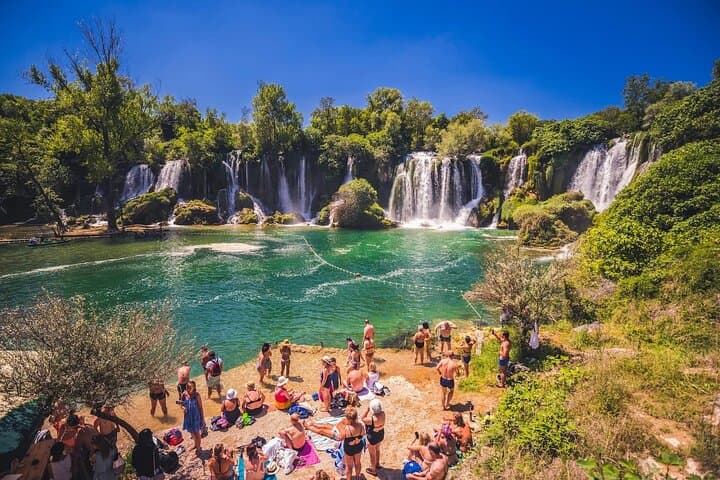
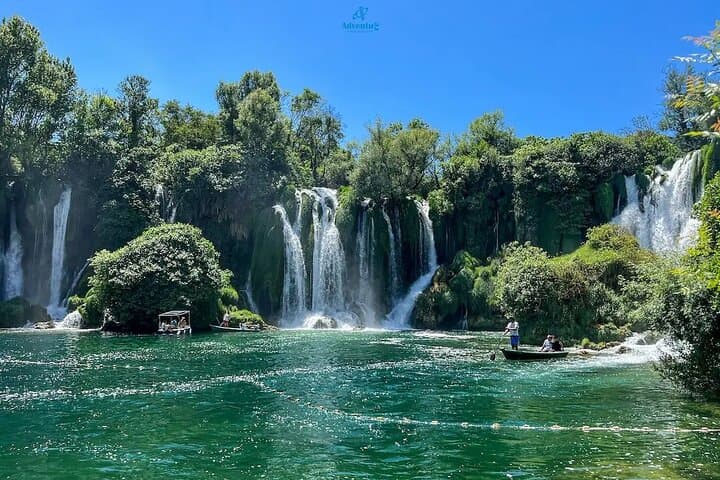
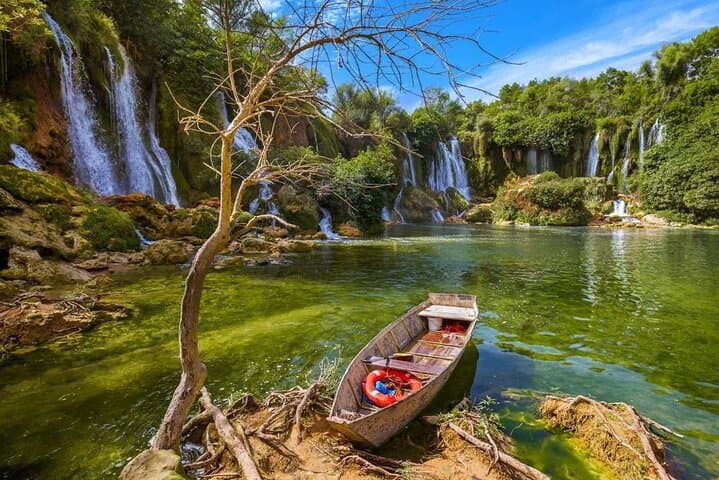
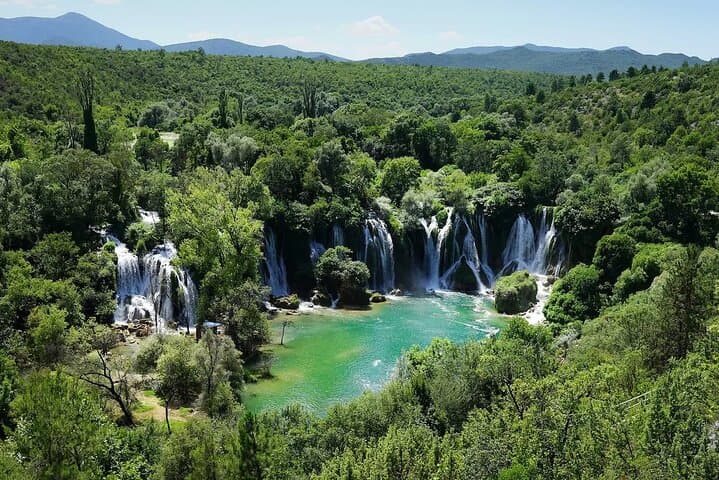
A sudden blue opening breaks through olive groves as the road drops toward Kravica: the Trebižat River gathers itself and tumbles over a 25‑meter limestone escarpment, spilling into a ring of turquoise pools that dare you to step in.
A sudden blue opening breaks through olive groves as the road drops toward Kravica: the Trebižat River gathers itself and tumbles over a 25‑meter limestone escarpment, spilling into a ring of turquoise pools that dare you to step in.
The falls owe their shape to travertine deposition—calcium‑rich water building cascades and natural dams over centuries. The area sits in Herzegovina, where Ottoman and Austro‑Hungarian histories met the agricultural rhythms of karst country; nearby villages still grow tobacco and grapes on terraced slopes. Local culture favors simple seasonal foodstuffs—cheeses and grilled meats—that pair well with a picnic by the pools.
On the ground, expect well‑worn stone paths, a short stair descent to the main viewing platform and a sandy, rocky shoreline for swimming. Water is cool even in summer; currents near the base are gentle but uneven. The site fits neatly into a half‑day loop from Mostar—about a 40–50 minute drive each way—leaving roughly two hours to explore, swim, or follow short riverside paths upstream.
Practical guidance: arrive early or late afternoon to avoid mid‑day crowds and to find shade; bring a towel, water shoes, and biodegradable sunscreen; carry small change for local vendors and the park entrance (often included on organized tours). The visit is low‑impact but popular—respect posted signs, pack out trash, and keep noise down to preserve the clear pools and nesting birds.