THE ADVENTURE COLLECTIVE® · Independent discovery and booking for outdoor travel

Spend a half day walking between Tongdosa’s ancient halls and two hillside hermitages, tasting temple bibimbap and seeing jangdoks stacked for traditional soybean paste. This practical cultural walk blends easy hiking with history and quiet mountain views.
Spend a half day walking between Tongdosa’s ancient halls and two hillside hermitages, tasting temple bibimbap and seeing jangdoks stacked for traditional soybean paste. This practical cultural walk blends easy hiking with history and quiet mountain views.
A cool mountain breeze meets the first stone steps as the group arrives at Tongdosa, the temple complex that opens into a courtyard of wooden halls and low-lying roofs. Walkways slope away toward cedars and mossy walls; prayer flags and incense linger in the air. The day is paced—walking, looking, eating—more pilgrimage than rush.
Verified experiences and guided adventures in the surrounding area.
Operated by Dorawayo experience activity · Yangsan, Gyeongsangnam-do
A cool mountain breeze meets the first stone steps as the group arrives at Tongdosa, the temple complex that opens into a courtyard of wooden halls and low-lying roofs. Walkways slope away toward cedars and mossy walls; prayer flags and incense linger in the air. The day is paced—walking, looking, eating—more pilgrimage than rush.
Tongdosa is one of Korea’s Three Jewel temples and guards Buddha’s sarira, a relic that shaped its role through the Goryeo and Joseon eras. The surrounding hills are folded low ridges of the Yeongnam range, granite outcrops softened by centuries of weather and pines. Seounam Hermitage offers a practical cultural vignette: rows of jangdoks—earthen crocks—stacked for doenjang (soybean paste), while Samyeongam’s stone steps and garden arrangements show traditional temple landscaping and austere monastic life.
Expect several short walks: 30–40 minutes from Tongdosa bus stop into the complex, roughly 30 minutes between Tongdosa and Seounam, another 30-minute hop to Samyeongam, and about an hour’s return walk to the bus terminal. A temple-provided vegan bibimbap is included—simple, salted, and grounding.
Practical guidance: wear supportive shoes for uneven stone and dirt paths, bring water, and dress modestly for sacred spaces. Mobile service is generally reliable but bring cash for small donations or the occasional market stall. The route is suitable for people with moderate fitness; hikers should allow extra time for photography and quiet pauses.
moderate.
5–6 hours.
Suitable for travelers with moderate fitness who can manage several short uphill sections and up to an hour of continuous walking.
The tour meets at Busan Nopo Terminal; public buses and direct shuttle options take about 30 minutes to Tongdosa bus stop, then a 30–40 minute walk into the temple complex.
Yes, the included bibimbap follows temple-style Buddhist cuisine—vegan-friendly and prepared with local seasonal vegetables.
Hermitage visits involve stone steps and uneven paths; travelers with significant mobility issues may find access difficult and should check in advance.
If the tour date ends in 2 or 7, the nearby Nopo country market is open and the schedule may include an extra 30 minutes for browsing.
Tongdosa is celebrated as one of Korea’s Three Jewels and houses relics (sarira) that elevated its status through the Silla and later dynasties, shaping regional pilgrimage routes.
Temples manage foot traffic on fragile stone and forest soils; visitors are asked to stay on paths, avoid single-use plastics, and consider small donations to temple upkeep.
Dorawayo experience activity operates guided outdoor trips and adventures with an emphasis on safety, stewardship, and memorable experiences.
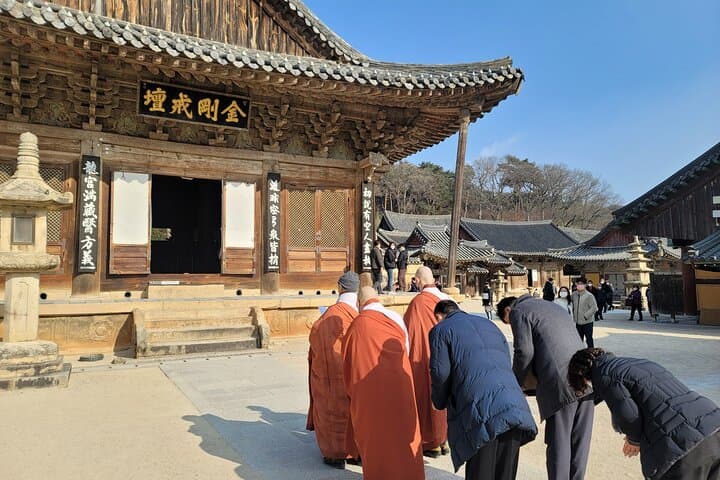
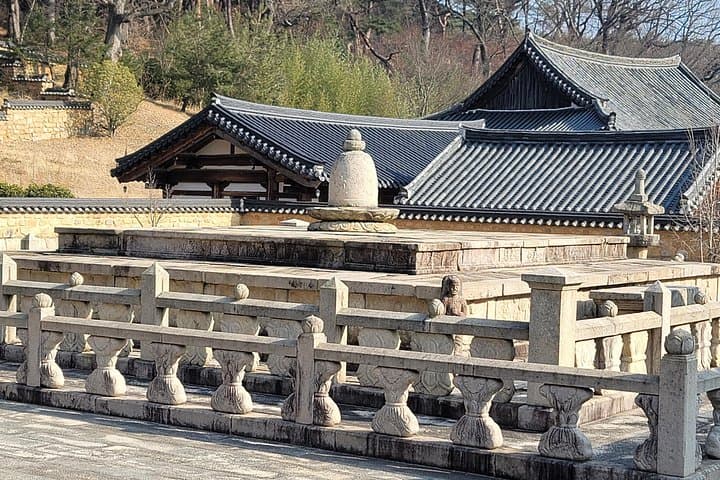
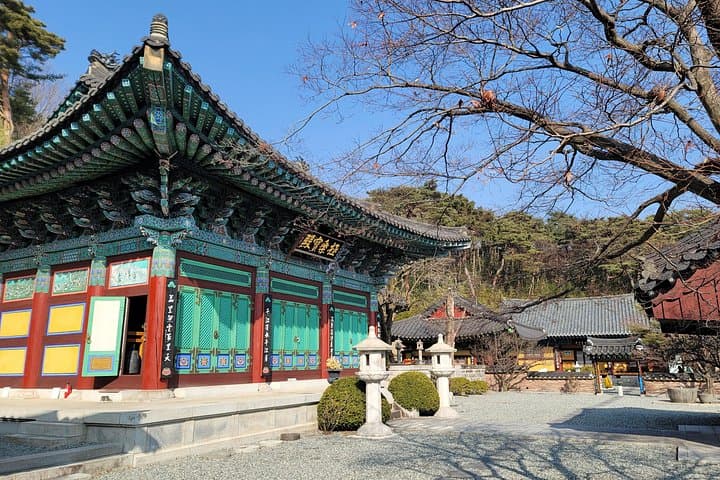
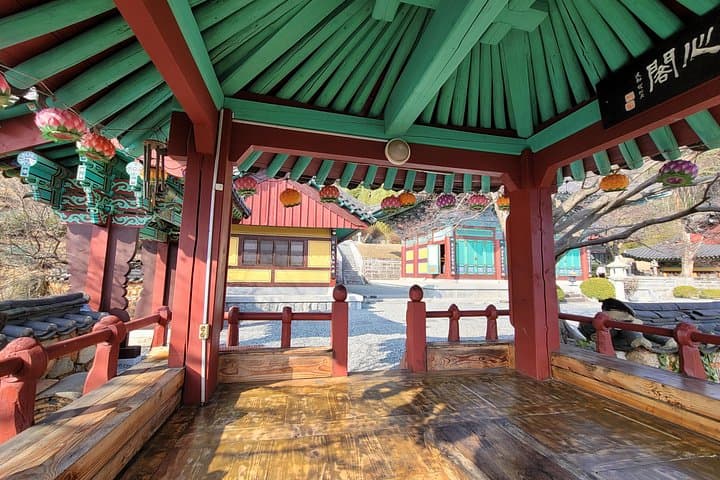
A cool mountain breeze meets the first stone steps as the group arrives at Tongdosa, the temple complex that opens into a courtyard of wooden halls and low-lying roofs. Walkways slope away toward cedars and mossy walls; prayer flags and incense linger in the air. The day is paced—walking, looking, eating—more pilgrimage than rush.
A cool mountain breeze meets the first stone steps as the group arrives at Tongdosa, the temple complex that opens into a courtyard of wooden halls and low-lying roofs. Walkways slope away toward cedars and mossy walls; prayer flags and incense linger in the air. The day is paced—walking, looking, eating—more pilgrimage than rush.
Tongdosa is one of Korea’s Three Jewel temples and guards Buddha’s sarira, a relic that shaped its role through the Goryeo and Joseon eras. The surrounding hills are folded low ridges of the Yeongnam range, granite outcrops softened by centuries of weather and pines. Seounam Hermitage offers a practical cultural vignette: rows of jangdoks—earthen crocks—stacked for doenjang (soybean paste), while Samyeongam’s stone steps and garden arrangements show traditional temple landscaping and austere monastic life.
Expect several short walks: 30–40 minutes from Tongdosa bus stop into the complex, roughly 30 minutes between Tongdosa and Seounam, another 30-minute hop to Samyeongam, and about an hour’s return walk to the bus terminal. A temple-provided vegan bibimbap is included—simple, salted, and grounding.
Practical guidance: wear supportive shoes for uneven stone and dirt paths, bring water, and dress modestly for sacred spaces. Mobile service is generally reliable but bring cash for small donations or the occasional market stall. The route is suitable for people with moderate fitness; hikers should allow extra time for photography and quiet pauses.