THE ADVENTURE COLLECTIVE® · Independent discovery and booking for outdoor travel

A brisk half-day ascent to Talamrout from Marrakech that combines panoramic High Atlas views with close-up Berber village life. Plan for steep stone tracks, rooftop lunch, and a guide-led route that highlights local culture and geology.
A brisk half-day ascent to Talamrout from Marrakech that combines panoramic High Atlas views with close-up Berber village life. Plan for steep stone tracks, rooftop lunch, and a guide-led route that highlights local culture and geology.
You leave Marrakech behind as the city’s heat folds into a cooler mountain air; roads climb switchbacks and the High Atlas opens like a rough, blue-tinged map. By the time you step out near Imlil, the trail narrows into a ribbon of stone and mule track that leads upward through terraced fields and stands of juniper. The mountain seems to breathe — wind pushing past you, a stream daring you to follow its voice downstream.
Verified experiences and guided adventures in the surrounding area.
Operated by Trek in Atlas · Imlil, Marrakech-Safi
You leave Marrakech behind as the city’s heat folds into a cooler mountain air; roads climb switchbacks and the High Atlas opens like a rough, blue-tinged map. By the time you step out near Imlil, the trail narrows into a ribbon of stone and mule track that leads upward through terraced fields and stands of juniper. The mountain seems to breathe — wind pushing past you, a stream daring you to follow its voice downstream.
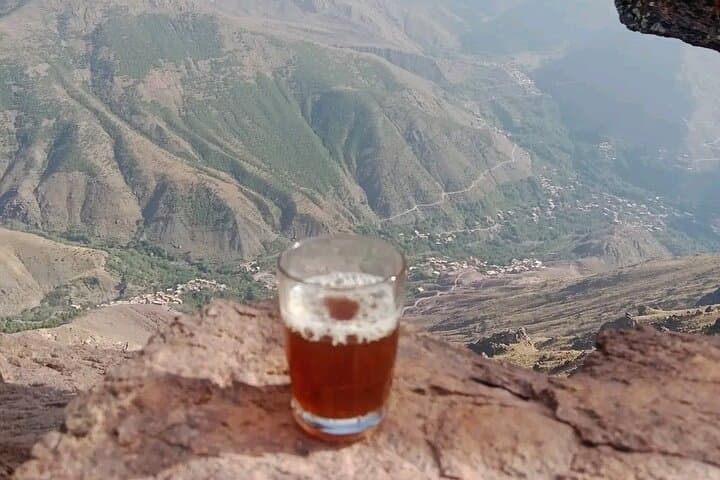
Geologically the High Atlas is young and rugged, driven up by tectonic collisions that left volcanic ridges, quartz veins and fragile scree slopes. Culturally the route threads through Berber villages where adobe homes and rooftop teas anchor daily life; mint tea is offered not just as refreshment but as ritual. Small chapels and shrine sites, and the shepherd tracks above, reflect a pastoral economy that’s endured for centuries.
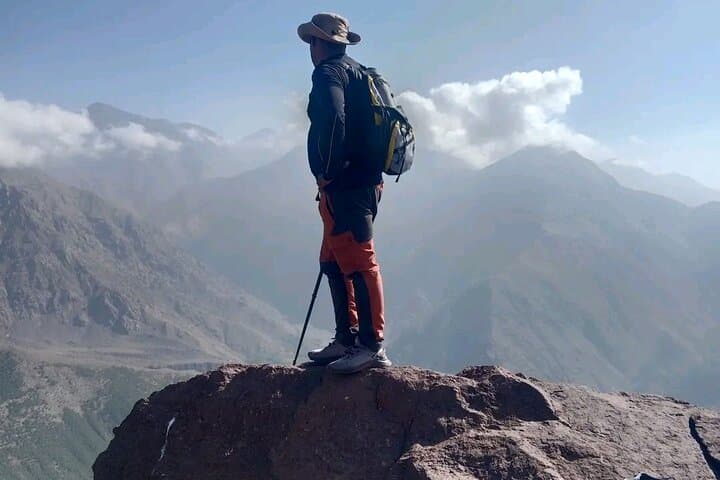
Expect a steady climb: rough stone paths, occasional steep pitches, river crossings after winter melts, and panoramic views over Ait Mezane and the Asni Valley. Guides point out local flora and may arrange a rooftop Berber lunch before the descent.
Practical guide: wear stiff-soled shoes, carry at least 1.5 L water, sun protection and a light shell for wind. Start early to avoid midday heat and allow time for the drive back to Marrakech. If you’re altitude-sensitive, move at a measured pace — the day rewards patience with clear summit views and close cultural encounters.
moderate.
6–8 hours.
Moderate fitness: able to handle sustained uphill walking and uneven terrain for 2–3 hours plus driving time.
The guided hike section is typically 2–3 hours round-trip; the full tour including drives is about 6–8 hours.
Children with hiking experience can join if closely supervised, but the route includes some steep and uneven sections.
A local guide provides navigation, cultural context and logistics (like lunch and pickup); independent hiking is possible but not recommended for first-time visitors.
Bring any dietary needs and a light snack; the included Berber lunch typically has local bread, tagine-style dishes, and mint tea.
The High Atlas has long been home to Amazigh (Berber) communities whose terraced agriculture and stone villages reflect centuries of mountain adaptation.
Trails are vulnerable to erosion and overuse; stay on marked paths, avoid open fires and support local guides to ensure tourism benefits communities.
Trek in Atlas operates guided outdoor trips and adventures with an emphasis on safety, stewardship, and memorable experiences.
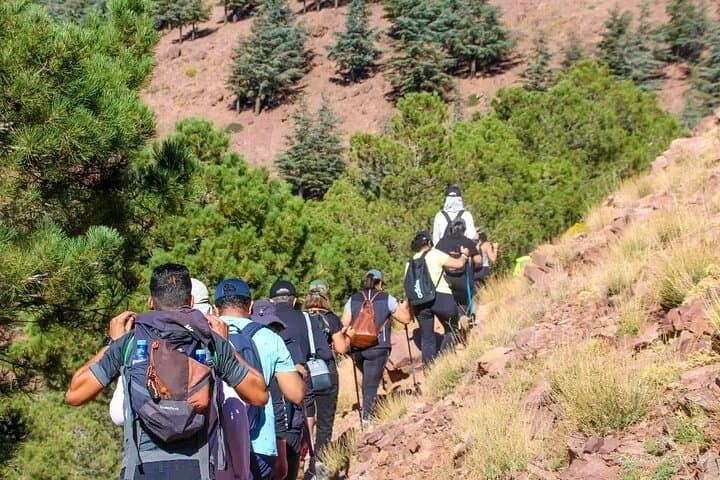
You leave Marrakech behind as the city’s heat folds into a cooler mountain air; roads climb switchbacks and the High Atlas opens like a rough, blue-tinged map. By the time you step out near Imlil, the trail narrows into a ribbon of stone and mule track that leads upward through terraced fields and stands of juniper. The mountain seems to breathe — wind pushing past you, a stream daring you to follow its voice downstream.
You leave Marrakech behind as the city’s heat folds into a cooler mountain air; roads climb switchbacks and the High Atlas opens like a rough, blue-tinged map. By the time you step out near Imlil, the trail narrows into a ribbon of stone and mule track that leads upward through terraced fields and stands of juniper. The mountain seems to breathe — wind pushing past you, a stream daring you to follow its voice downstream.
Geologically the High Atlas is young and rugged, driven up by tectonic collisions that left volcanic ridges, quartz veins and fragile scree slopes. Culturally the route threads through Berber villages where adobe homes and rooftop teas anchor daily life; mint tea is offered not just as refreshment but as ritual. Small chapels and shrine sites, and the shepherd tracks above, reflect a pastoral economy that’s endured for centuries.
Expect a steady climb: rough stone paths, occasional steep pitches, river crossings after winter melts, and panoramic views over Ait Mezane and the Asni Valley. Guides point out local flora and may arrange a rooftop Berber lunch before the descent.
Practical guide: wear stiff-soled shoes, carry at least 1.5 L water, sun protection and a light shell for wind. Start early to avoid midday heat and allow time for the drive back to Marrakech. If you’re altitude-sensitive, move at a measured pace — the day rewards patience with clear summit views and close cultural encounters.