THE ADVENTURE COLLECTIVE® · Independent discovery and booking for outdoor travel

Cross the Nile by motorboat, mount a camel and approach the austere St. Simeon Monastery on Aswan’s west bank. This half-day tour blends river travel, desert walking and Coptic history into a compact, accessible outing.
Cross the Nile by motorboat, mount a camel and approach the austere St. Simeon Monastery on Aswan’s west bank. This half-day tour blends river travel, desert walking and Coptic history into a compact, accessible outing.
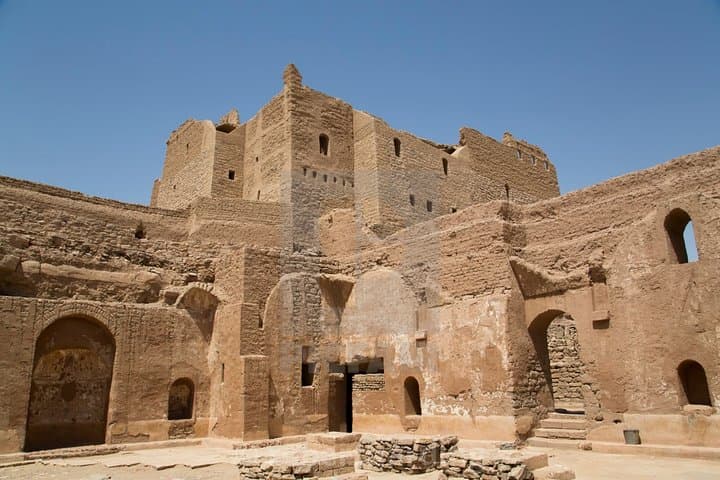
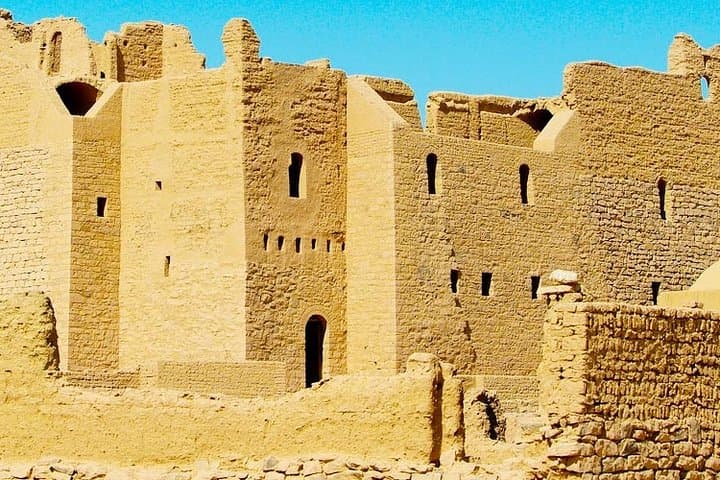
A warm morning breeze off the Nile carries the smell of sun-warmed sand as your motorboat cuts across Aswan’s west bank. You step ashore, swap the boat’s hum for the soft clack of camel hooves and follow a narrow track that threads between low, ochre hills toward the stone silhouette of St. Simeon (St. Hedra) Monastery. The building sits like a quiet watchtower — plain, stubborn, and oddly modern against the desert sky.
Verified experiences and guided adventures in the surrounding area.
Operated by Egypt Promotion Travel · Aswan, Aswan Governorate
A warm morning breeze off the Nile carries the smell of sun-warmed sand as your motorboat cuts across Aswan’s west bank. You step ashore, swap the boat’s hum for the soft clack of camel hooves and follow a narrow track that threads between low, ochre hills toward the stone silhouette of St. Simeon (St. Hedra) Monastery. The building sits like a quiet watchtower — plain, stubborn, and oddly modern against the desert sky.
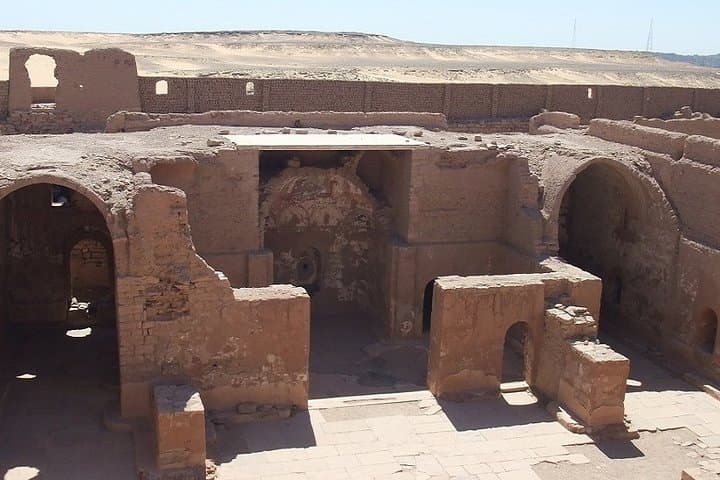
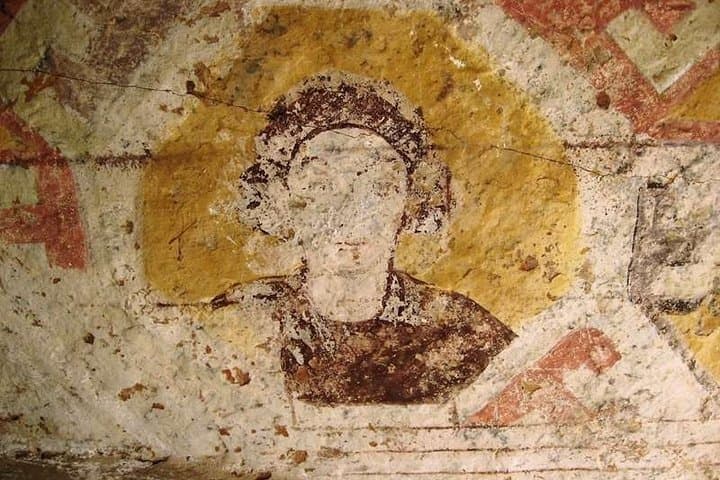
The monastery is an early Christian site with layers of Coptic history visible in battered walls and simple chapels. Geologically, the area is wind-carved sandstone and compacted desert gravel; expect loose sand underfoot and short rocky scrambles to viewpoints. The culture here is a blend of Nubian and Egyptian influences — boatmen, camel handlers, and local guides who have moved along the Nile for generations.
Practical guidance: this is a three-hour, half-day outing that combines a short boat transfer, a guided camel approach and a walk around the monastery complex. Operator vehicles are air-conditioned and bottled water is supplied, but bring sun protection, a light layer for early mornings, and sturdy shoes for sandy, uneven ground. Timing matters — early morning or late afternoon keep heat manageable and light flattering for photos. If mobility is restricted, check with the operator in advance; the tour notes wheelchair-accessible transport but desert terrain can be uneven. Bring cash for tips and small purchases, and leave no trace — the site is fragile and benefits from low-impact visits.
easy.
2–3 hours.
Suitable for people in basic fitness—short walks, boarding a camel, and standing during the visit are required.
The tour runs about three hours total, including boat transfer, camel approach and time at the monastery.
No special skill is needed—camels are handled by experienced local guides and rides are short and low-impact.
Children can join; the operator lists wheelchair-accessible transport, but the desert terrain and camel boarding may limit full accessibility—check details before booking.
Guides commonly speak English and Arabic; confirm language needs at booking if you require another language.
St. Simeon is a Coptic monastery reflecting early Christian monastic life on the Nile’s west bank; the complex preserves simple chapels and worn stone that speak to centuries of pilgrimage.
The site is fragile; stick to established paths, avoid touching fragile masonry and carry out any trash—local operators emphasize low-impact visits.
Egypt Promotion Travel operates guided outdoor trips and adventures with an emphasis on safety, stewardship, and memorable experiences.
A warm morning breeze off the Nile carries the smell of sun-warmed sand as your motorboat cuts across Aswan’s west bank. You step ashore, swap the boat’s hum for the soft clack of camel hooves and follow a narrow track that threads between low, ochre hills toward the stone silhouette of St. Simeon (St. Hedra) Monastery. The building sits like a quiet watchtower — plain, stubborn, and oddly modern against the desert sky.
A warm morning breeze off the Nile carries the smell of sun-warmed sand as your motorboat cuts across Aswan’s west bank. You step ashore, swap the boat’s hum for the soft clack of camel hooves and follow a narrow track that threads between low, ochre hills toward the stone silhouette of St. Simeon (St. Hedra) Monastery. The building sits like a quiet watchtower — plain, stubborn, and oddly modern against the desert sky.
The monastery is an early Christian site with layers of Coptic history visible in battered walls and simple chapels. Geologically, the area is wind-carved sandstone and compacted desert gravel; expect loose sand underfoot and short rocky scrambles to viewpoints. The culture here is a blend of Nubian and Egyptian influences — boatmen, camel handlers, and local guides who have moved along the Nile for generations.
Practical guidance: this is a three-hour, half-day outing that combines a short boat transfer, a guided camel approach and a walk around the monastery complex. Operator vehicles are air-conditioned and bottled water is supplied, but bring sun protection, a light layer for early mornings, and sturdy shoes for sandy, uneven ground. Timing matters — early morning or late afternoon keep heat manageable and light flattering for photos. If mobility is restricted, check with the operator in advance; the tour notes wheelchair-accessible transport but desert terrain can be uneven. Bring cash for tips and small purchases, and leave no trace — the site is fragile and benefits from low-impact visits.