THE ADVENTURE COLLECTIVE® · Independent discovery and booking for outdoor travel

See Morocco’s coastal wetlands and endangered northern bald ibis on a four-hour excursion from Agadir. This half-day trip mixes estuary viewpoints, dune scenery and focused wildlife viewing with practical guidance for timing and ethics.
See Morocco’s coastal wetlands and endangered northern bald ibis on a four-hour excursion from Agadir. This half-day trip mixes estuary viewpoints, dune scenery and focused wildlife viewing with practical guidance for timing and ethics.
A wind-swept shoreline rolls into view as the minivan slips away from Agadir—low dunes, salt flats and the braided mouth of the Souss River stretching to the Atlantic. The first stop is often the estuary viewpoint where flamingos paint the shallows and the northern bald ibis, rare and uncrowned, moves like a dark punctuation against the sky. The landscape here alternates between coarse sand, salt marsh and low shrub, formed where river and sea meet and shaped by steady Atlantic breezes.
Verified experiences and guided adventures in the surrounding area.
Operated by Agadir Tagesausfluge · Agadir, Souss-Massa
A wind-swept shoreline rolls into view as the minivan slips away from Agadir—low dunes, salt flats and the braided mouth of the Souss River stretching to the Atlantic. The first stop is often the estuary viewpoint where flamingos paint the shallows and the northern bald ibis, rare and uncrowned, moves like a dark punctuation against the sky. The landscape here alternates between coarse sand, salt marsh and low shrub, formed where river and sea meet and shaped by steady Atlantic breezes.
Souss Massa National Park was designated to protect this fragile coastal habitat and its endangered birds; its history is a modern conservation story tied to both local fishermen and international programs. Geologically, the park is young—dunes and silt deposited by the Souss and Atlantic currents—while culturally the villages nearby still orient around fishing and pastoral rhythms.
On a half-day tour from Agadir you’ll primarily observe from the road and designated viewpoints—some sectors remain vehicle-only to shield nesting birds. Listen for the sharp calls of waders and scan salt pans for scattered flocks; vegetation here is tough and purposeful, resisting wind and salt the way locals have learned to work the land.
Practical guidance: mornings and late afternoons bring the best light and most active birds; bring binoculars and a tele lens, sun protection, and a jacket for coastal wind. Respect restricted zones, follow your guide’s timing for stops, and support local conservation by sticking to paths and minimizing disturbance.
easy.
4 hours.
Suitable for all fitness levels—mostly vehicle-based with short, easy stops.
The park is one of the species’ strongholds and sightings are common from viewpoints, but wild animals can’t be guaranteed—timing and weather affect visibility.
No; certain sectors are vehicle-only or have restricted access to protect nesting and sensitive habitats—follow the guide’s directions.
Yes, the tour includes hotel and port pickup and drop-off within Agadir; confirm your pickup details at booking.
Yes—transportation and many viewing areas are wheelchair-accessible, but check specific access needs with the operator ahead of time.
The park was established to protect coastal wetlands and endangered species—conservation efforts here have focused on protecting the northern bald ibis.
Souss Massa’s protected zones limit foot traffic and emphasize vehicle- and viewpoint-based observation; visitors are asked to minimize disturbance and support local conservation initiatives.
Agadir Tagesausfluge operates guided outdoor trips and adventures with an emphasis on safety, stewardship, and memorable experiences.
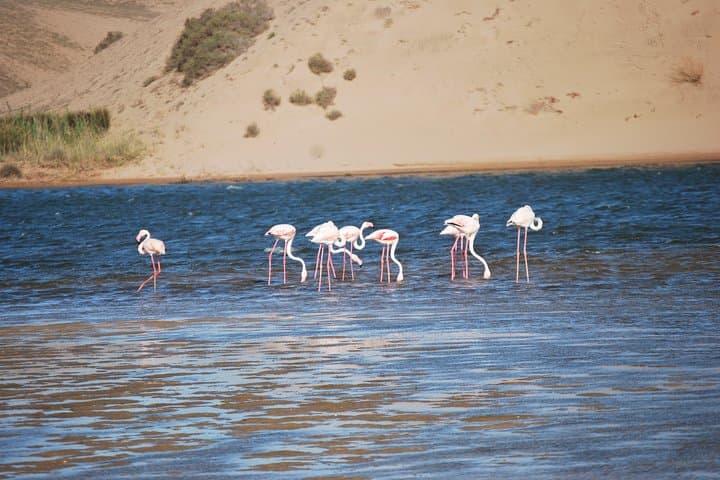
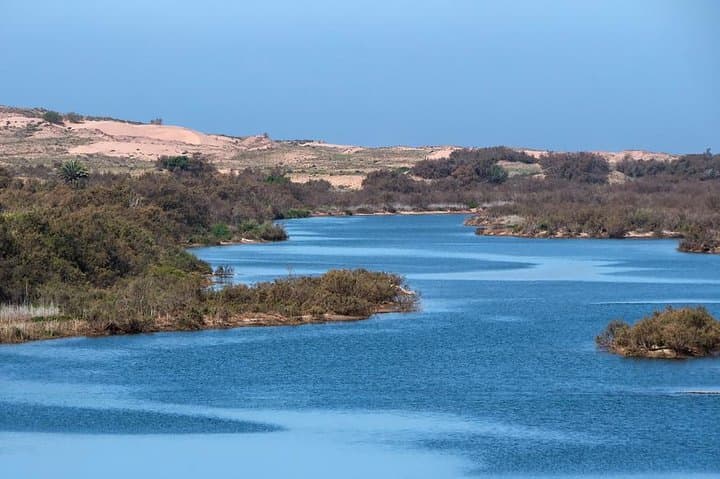
A wind-swept shoreline rolls into view as the minivan slips away from Agadir—low dunes, salt flats and the braided mouth of the Souss River stretching to the Atlantic. The first stop is often the estuary viewpoint where flamingos paint the shallows and the northern bald ibis, rare and uncrowned, moves like a dark punctuation against the sky. The landscape here alternates between coarse sand, salt marsh and low shrub, formed where river and sea meet and shaped by steady Atlantic breezes.
A wind-swept shoreline rolls into view as the minivan slips away from Agadir—low dunes, salt flats and the braided mouth of the Souss River stretching to the Atlantic. The first stop is often the estuary viewpoint where flamingos paint the shallows and the northern bald ibis, rare and uncrowned, moves like a dark punctuation against the sky. The landscape here alternates between coarse sand, salt marsh and low shrub, formed where river and sea meet and shaped by steady Atlantic breezes.
Souss Massa National Park was designated to protect this fragile coastal habitat and its endangered birds; its history is a modern conservation story tied to both local fishermen and international programs. Geologically, the park is young—dunes and silt deposited by the Souss and Atlantic currents—while culturally the villages nearby still orient around fishing and pastoral rhythms.
On a half-day tour from Agadir you’ll primarily observe from the road and designated viewpoints—some sectors remain vehicle-only to shield nesting birds. Listen for the sharp calls of waders and scan salt pans for scattered flocks; vegetation here is tough and purposeful, resisting wind and salt the way locals have learned to work the land.
Practical guidance: mornings and late afternoons bring the best light and most active birds; bring binoculars and a tele lens, sun protection, and a jacket for coastal wind. Respect restricted zones, follow your guide’s timing for stops, and support local conservation by sticking to paths and minimizing disturbance.