THE ADVENTURE COLLECTIVE® · Independent discovery and booking for outdoor travel

Cover the Louvre and Musée d’Orsay in one efficient half-day with a semi-private guide. This 5.5-hour experience pairs big-picture context with close looks at signature works while navigating security and crowds.
Cover the Louvre and Musée d’Orsay in one efficient half-day with a semi-private guide. This 5.5-hour experience pairs big-picture context with close looks at signature works while navigating security and crowds.
You step out from a narrow Parisian street and the museum façades take over: the Louvre’s stone face, once a fortress, looks like a city’s memory made solid, while across the Seine the Orsay’s clockface watches the river like a patient eye.
Verified experiences and guided adventures in the surrounding area.
Operated by Babylon Tours Paris · Paris, Île-de-France
You step out from a narrow Parisian street and the museum façades take over: the Louvre’s stone face, once a fortress, looks like a city’s memory made solid, while across the Seine the Orsay’s clockface watches the river like a patient eye.
This semi-private 5.5-hour tour threads two of Paris’s cultural anchors together — the Louvre’s sprawling collections of classical sculpture and Old Master painting, and Musée d’Orsay’s concentrated trove of 19th- and early-20th-century art housed in a converted Beaux-Arts train station. The Louvre’s layers reflect royal power and revolutionary change; Orsay’s galleries trace industrial-age Paris and the rise of Impressionism.
Expect long, museum-floor walking with frequent stops: marble staircases, narrow rooms where silence is enforced, and wide galleries where light from Orsay’s high windows pushes paint into motion. Local context matters — the Seine carved the city’s route, the quarries of Île-de-France supplied the stone that built royal wings, and Parisian café culture grew within sight of these institutions.
Practical guidance: bring a small bag that passes security, carry photo ID for any free-admission concessions, and wear shoes built for standing. The guide times highlights to avoid peak crowds where possible, but lines and security checks can still form. Hydrate, plan restroom stops between museums, and signal if you need quieter commentary in restricted rooms. For a condensed half-day, this tour balances big-picture storytelling with close looks at signature works.
easy.
5–6 hours.
Light walking and frequent standing; suitable for most fitness levels with basic mobility
Yes — the tour includes entrance to both the Louvre and Musée d’Orsay; the operator notes a €44 adult ticket rate included in price where applicable.
Infants and small children can use a stroller, but expect tight corridors and restricted rooms where space is limited.
Photography rules vary by room and artwork—non-flash photography is generally allowed, but your guide will advise you before entering restricted galleries.
The operator provides alternative visits if a museum opening is delayed more than one hour; refunds aren’t guaranteed for closures outside their control.
The Louvre began as a 12th-century fortress and evolved into a royal palace before becoming a public museum during the French Revolution; Musée d’Orsay occupies the former Gare d’Orsay, a 1900 train station repurposed to showcase 19th-century art.
Both museums maintain strict climate control and visitor rules to protect fragile works; minimizing touching, limiting bag size, and following signage helps preserve collections for future visitors.
Babylon Tours Paris operates guided outdoor trips and adventures with an emphasis on safety, stewardship, and memorable experiences.

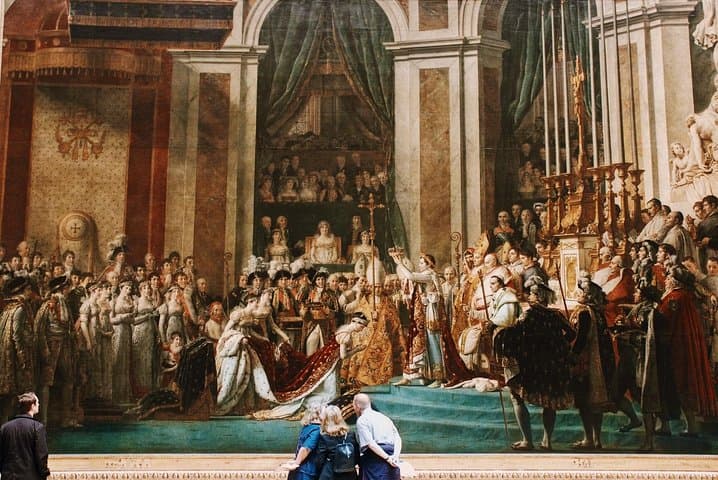


You step out from a narrow Parisian street and the museum façades take over: the Louvre’s stone face, once a fortress, looks like a city’s memory made solid, while across the Seine the Orsay’s clockface watches the river like a patient eye.
You step out from a narrow Parisian street and the museum façades take over: the Louvre’s stone face, once a fortress, looks like a city’s memory made solid, while across the Seine the Orsay’s clockface watches the river like a patient eye.
This semi-private 5.5-hour tour threads two of Paris’s cultural anchors together — the Louvre’s sprawling collections of classical sculpture and Old Master painting, and Musée d’Orsay’s concentrated trove of 19th- and early-20th-century art housed in a converted Beaux-Arts train station. The Louvre’s layers reflect royal power and revolutionary change; Orsay’s galleries trace industrial-age Paris and the rise of Impressionism.
Expect long, museum-floor walking with frequent stops: marble staircases, narrow rooms where silence is enforced, and wide galleries where light from Orsay’s high windows pushes paint into motion. Local context matters — the Seine carved the city’s route, the quarries of Île-de-France supplied the stone that built royal wings, and Parisian café culture grew within sight of these institutions.
Practical guidance: bring a small bag that passes security, carry photo ID for any free-admission concessions, and wear shoes built for standing. The guide times highlights to avoid peak crowds where possible, but lines and security checks can still form. Hydrate, plan restroom stops between museums, and signal if you need quieter commentary in restricted rooms. For a condensed half-day, this tour balances big-picture storytelling with close looks at signature works.