THE ADVENTURE COLLECTIVE® · Independent discovery and booking for outdoor travel

Walk the Muong Hoa valley on a half-day trek from Sapa to Ta Van. Experience sweeping terraced rice fields, streamside trails and village life among Black H’Mong and Red Dao communities.
Walk the Muong Hoa valley on a half-day trek from Sapa to Ta Van. Experience sweeping terraced rice fields, streamside trails and village life among Black H’Mong and Red Dao communities.
Morning fog lifts off the Muong Hoa valley like a curtain, revealing ribbed rice terraces that step down toward a glassy stream. On the trail from Sapa town you walk where local women still tend paddies and children run ahead along stonework paths; the Hoang Lien Son range, crowned by Fansipan, keeps a slow, watchful pace on the skyline.
Verified experiences and guided adventures in the surrounding area.
Operated by Daisy Tourist · Sapa, Lao Cai
Morning fog lifts off the Muong Hoa valley like a curtain, revealing ribbed rice terraces that step down toward a glassy stream. On the trail from Sapa town you walk where local women still tend paddies and children run ahead along stonework paths; the Hoang Lien Son range, crowned by Fansipan, keeps a slow, watchful pace on the skyline.
The terraces here are agricultural architecture—centuries of hand-built walls, irrigation channels and seed exchange among Black H’Mong and Red Dao communities. Geologically the Hoang Lien Son formed as the Indochina block was lifted, creating steep ridges and deep valleys that trap clouds and feed the valley’s microclimates. Cultural rhythm matters here: woven textiles, ritual silverwork and rice-planting calendars shape daily life in Lao Chai and Ta Van.
Practical guidance: expect 6–10 km of walking across uneven dirt and stone trails with roughly 200–400 m cumulative elevation change depending on route choices. Allow 3–4 hours of walking within a 6–7 hour half-day schedule including transfers and lunch. Trails can be muddy after rain; trekking poles and good soles help. Carry 1–2 liters of water, small local currency for snacks or crafts, and a lightweight rain shell. Move respectfully through villages—ask before photographing and buy locally if you can.
This half-day trek delivers landscape and culture in equal measure: close-up terrace work, streams that dare your balance, and the quiet domestic life of highland Vietnam—accessible, sensory, and immediately rewarding.
moderate.
6–7 hours.
Suitable for moderately fit travelers comfortable with several hours of walking on uneven trails and short hill sections.
The walking portion is typically 6–10 km and takes about 3–4 hours depending on pace and stops; total trip time including transfers and lunch is around 6–7 hours.
Many parts are family-friendly but expect uneven terrain and some stone steps—assess mobility and bring poles or request shorter route options if needed.
A licensed local guide is usually included with organized tours and is recommended for navigation, cultural context, and supporting local businesses; permits are not required for these village trails.
Vietnamese dong is standard for purchases; basic English is common in tourist areas, but learning a few Vietnamese phrases and carrying small bills helps in villages.
The Muong Hoa valley has been farmed by highland ethnic groups—primarily Black H’Mong and Red Dao—for generations, creating the terraces and cultural patterns seen today.
Trails and terraces are maintained by local communities; visitors can reduce impact by staying on paths, taking litter home, and supporting community-run stalls.
Daisy Tourist operates guided outdoor trips and adventures with an emphasis on safety, stewardship, and memorable experiences.

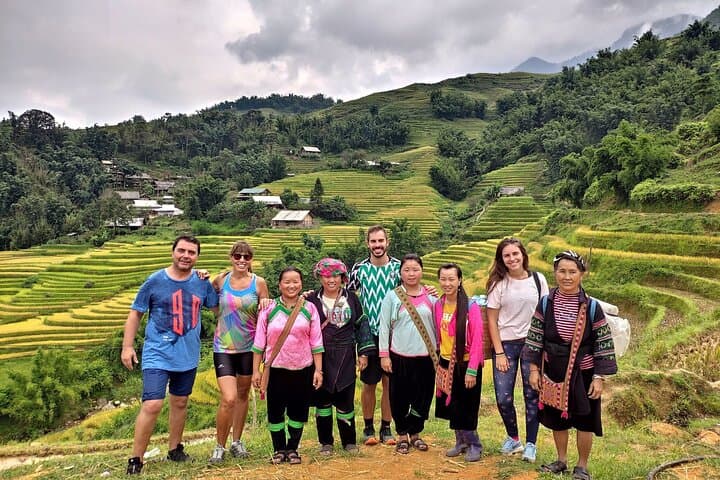
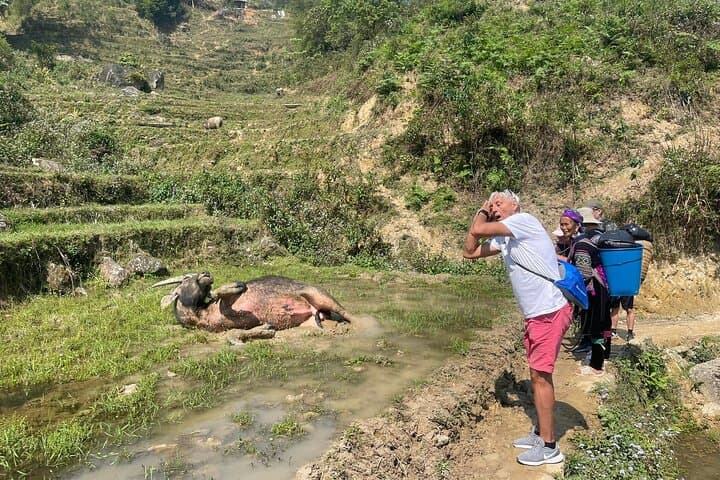

Morning fog lifts off the Muong Hoa valley like a curtain, revealing ribbed rice terraces that step down toward a glassy stream. On the trail from Sapa town you walk where local women still tend paddies and children run ahead along stonework paths; the Hoang Lien Son range, crowned by Fansipan, keeps a slow, watchful pace on the skyline.
Morning fog lifts off the Muong Hoa valley like a curtain, revealing ribbed rice terraces that step down toward a glassy stream. On the trail from Sapa town you walk where local women still tend paddies and children run ahead along stonework paths; the Hoang Lien Son range, crowned by Fansipan, keeps a slow, watchful pace on the skyline.
The terraces here are agricultural architecture—centuries of hand-built walls, irrigation channels and seed exchange among Black H’Mong and Red Dao communities. Geologically the Hoang Lien Son formed as the Indochina block was lifted, creating steep ridges and deep valleys that trap clouds and feed the valley’s microclimates. Cultural rhythm matters here: woven textiles, ritual silverwork and rice-planting calendars shape daily life in Lao Chai and Ta Van.
Practical guidance: expect 6–10 km of walking across uneven dirt and stone trails with roughly 200–400 m cumulative elevation change depending on route choices. Allow 3–4 hours of walking within a 6–7 hour half-day schedule including transfers and lunch. Trails can be muddy after rain; trekking poles and good soles help. Carry 1–2 liters of water, small local currency for snacks or crafts, and a lightweight rain shell. Move respectfully through villages—ask before photographing and buy locally if you can.
This half-day trek delivers landscape and culture in equal measure: close-up terrace work, streams that dare your balance, and the quiet domestic life of highland Vietnam—accessible, sensory, and immediately rewarding.