THE ADVENTURE COLLECTIVE® · Independent discovery and booking for outdoor travel

Spend a half-day on Tonle Sap Lake to watch floating villages, fish pens and waterbirds while learning how Cambodia’s largest freshwater system shapes local life. This three-hour boat outing from Siem Reap pairs cultural insight with birdwatching and easy access.
Spend a half-day on Tonle Sap Lake to watch floating villages, fish pens and waterbirds while learning how Cambodia’s largest freshwater system shapes local life. This three-hour boat outing from Siem Reap pairs cultural insight with birdwatching and easy access.
You push off from a low wooden jetty and the lake takes you: broad, brown, and restless, with boats trimming the horizon like insects on a pond. Stilt houses lean and straighten with the water’s mood; children wave from raised walkways while egrets quarter the surface for silver flashes. The open water dares you to slow down and watch a village that moves with the seasons.
Verified experiences and guided adventures in the surrounding area.
Operated by Asian Trails LTD · Siem Reap, Siem Reap Province
You push off from a low wooden jetty and the lake takes you: broad, brown, and restless, with boats trimming the horizon like insects on a pond. Stilt houses lean and straighten with the water’s mood; children wave from raised walkways while egrets quarter the surface for silver flashes. The open water dares you to slow down and watch a village that moves with the seasons.
Tonle Sap is not just a lake but a living hydraulic system — its flow reverses each year when the Mekong floods, swelling the basin and creating a vast, shallow wetland. That seasonal pulse shaped local architecture (stilt and floating homes), diets, and a fisheries economy that supports hundreds of thousands. The landscape is younger than the temples inland, but its ecology and culture are central to modern Cambodian life.
On a three-hour boat outing you’ll see floating schools, fish farms, and makeshift markets, and you’ll pass the tethered pens where fish are raised. Waterbirds are the show: openbills, storks and kingfishers hunt the shallows, while monitor lizards sun on exposed timbers. Guides explain fishing techniques and the social rhythms of lakeside communities.
Practical note: pick-up from Siem Reap is usually included for central hotels and the trip runs about three hours. In the dry months (roughly March–July) low water can limit village access; the wet season offers fuller channels and broader exploration. Bring sun protection, a waterproof case for cameras, modest clothing for visiting villages, and cash for small donations or local purchases. Move slowly, ask before photographing people, and you’ll see how the lake shapes life here.
easy.
3 hours.
Suitable for all fitness levels; requires boarding a small boat and standing occasionally for photos
The outing is approximately three hours; morning departures return before lunch and afternoon departures return late afternoon, depending on traffic and boat access.
No — during the dry season (roughly March–July) lower water can restrict boat access to some floating villages; operators adapt routes accordingly.
Yes; the activity is low-impact but requires getting on and off a small boat, so mobility limitations should be discussed when booking.
This half-day trip typically does not include meals; bring water and snacks, though some tours stop at floating restaurants for a separate purchase.
Tonle Sap’s seasonal flow reversal is driven by Mekong flood pulses; that hydrology created the floodplain fisheries and floating settlements vital to local culture.
The lake’s fisheries are under pressure from overfishing, habitat loss and upstream developments; responsible tours limit disturbance and support local communities.
Asian Trails LTD operates guided outdoor trips and adventures with an emphasis on safety, stewardship, and memorable experiences.
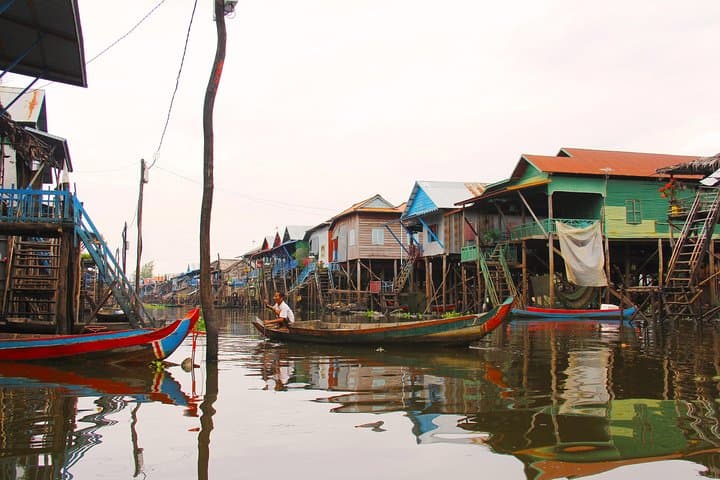
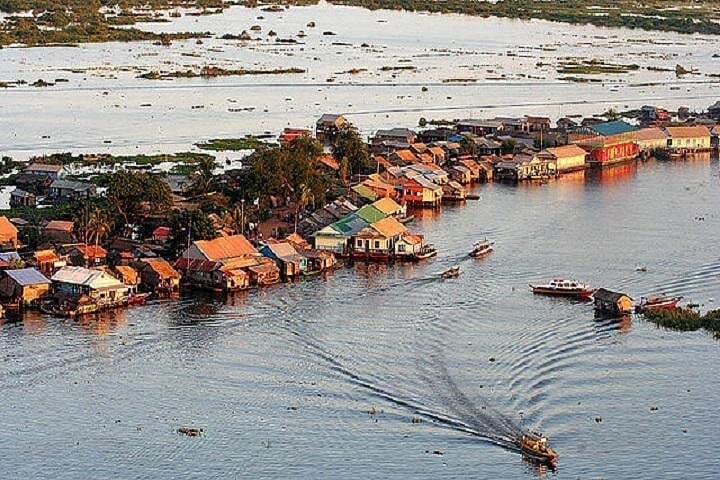
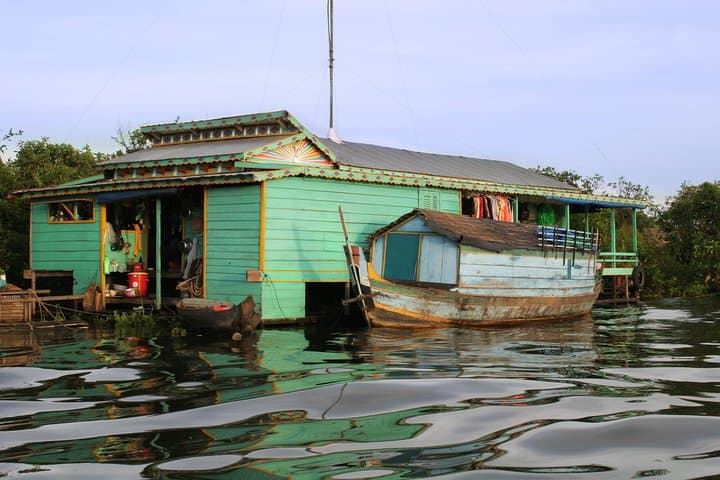
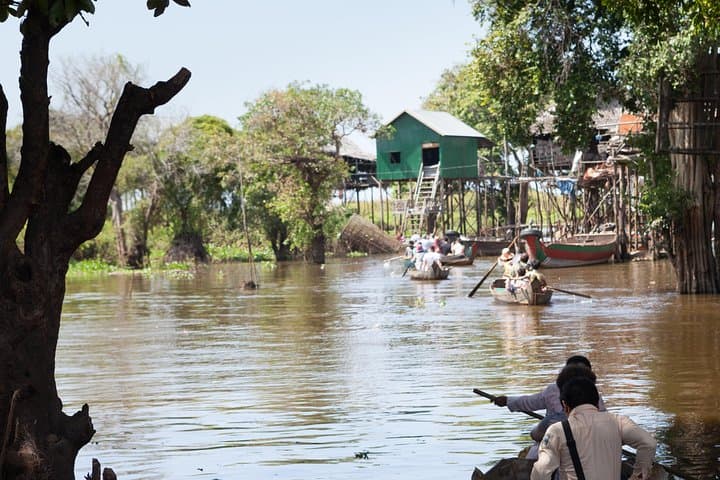
You push off from a low wooden jetty and the lake takes you: broad, brown, and restless, with boats trimming the horizon like insects on a pond. Stilt houses lean and straighten with the water’s mood; children wave from raised walkways while egrets quarter the surface for silver flashes. The open water dares you to slow down and watch a village that moves with the seasons.
You push off from a low wooden jetty and the lake takes you: broad, brown, and restless, with boats trimming the horizon like insects on a pond. Stilt houses lean and straighten with the water’s mood; children wave from raised walkways while egrets quarter the surface for silver flashes. The open water dares you to slow down and watch a village that moves with the seasons.
Tonle Sap is not just a lake but a living hydraulic system — its flow reverses each year when the Mekong floods, swelling the basin and creating a vast, shallow wetland. That seasonal pulse shaped local architecture (stilt and floating homes), diets, and a fisheries economy that supports hundreds of thousands. The landscape is younger than the temples inland, but its ecology and culture are central to modern Cambodian life.
On a three-hour boat outing you’ll see floating schools, fish farms, and makeshift markets, and you’ll pass the tethered pens where fish are raised. Waterbirds are the show: openbills, storks and kingfishers hunt the shallows, while monitor lizards sun on exposed timbers. Guides explain fishing techniques and the social rhythms of lakeside communities.
Practical note: pick-up from Siem Reap is usually included for central hotels and the trip runs about three hours. In the dry months (roughly March–July) low water can limit village access; the wet season offers fuller channels and broader exploration. Bring sun protection, a waterproof case for cameras, modest clothing for visiting villages, and cash for small donations or local purchases. Move slowly, ask before photographing people, and you’ll see how the lake shapes life here.