THE ADVENTURE COLLECTIVE® · Independent discovery and booking for outdoor travel

Spend four hours weaving through Yala’s leopard country, Bundala’s lagoons and Udawalawe’s elephant plains. This guided half-day safari pairs high-density wildlife viewing with experienced local guides and private transport.
Spend four hours weaving through Yala’s leopard country, Bundala’s lagoons and Udawalawe’s elephant plains. This guided half-day safari pairs high-density wildlife viewing with experienced local guides and private transport.
The jeep grinds along a red-earth track and the scrub opens like a stage: a line of elephants drifts across a low ridge, a flock of flamingoes punctuates the saltpan light, and a leopard silhouette haunts the acacia beyond.
Verified experiences and guided adventures in the surrounding area.
Operated by Safari in Sri Lanka · Tissamaharama, Southern Province
The jeep grinds along a red-earth track and the scrub opens like a stage: a line of elephants drifts across a low ridge, a flock of flamingoes punctuates the saltpan light, and a leopard silhouette haunts the acacia beyond.
This half-day safari threads three of southern Sri Lanka’s most ecological contrasting parks — Bundala’s coastal lagoons, Yala’s dry woodland and leopard country, and Udawalawe’s elephant-rich plains. The geology shifts from coastal sediments and salt flats to ancient metamorphic outcrops and iron-rich laterite that color the roads. Culturally the route skirts paddy fields, small temples, and colonial-era tanks (man-made reservoirs) that have shaped local life for centuries.
Wildlife here is conspicuous and often bold; birds test the wind, elephants test your nerves, and predators test patience. Guides are licensed and familiar with animal movements and park rules; entrance fees are separate and support park management. Historic land use — from irrigation works to post-war tourism growth — informs why each park protects different communities of species today.
Practical guidance: book an early slot for cooler light and higher activity; bring binoculars and a long lens, and keep water and sun protection within reach. Sit low, avoid rapid movements, and let the guide position the vehicle for photos while respecting wildlife distances. Expect gravel roads and occasional dust; the converted safari jeeps offer raised sightlines and shade but not full suspension comfort.
In four hours you’ll see distinct ecosystems and compact, high-density wildlife viewing — a sharp, efficient taste of Sri Lanka’s southern wilds.
easy.
4 hours.
Suitable for most fitness levels—expect extended sitting and occasional bumpy vehicle travel.
Entrance fees are typically paid separately; the tour lists one attraction included but additional parks may require extra fees at the gate.
Yala and Udawalawe have high densities of leopards and elephants respectively, but sightings cannot be guaranteed—guides maximize chances using local knowledge.
Infants are allowed but must sit on an adult’s lap; the vehicle is a safari jeep with raised seating and limited child restraints.
Light, neutral-colored clothing, closed shoes, sun protection and a light layer for early mornings are recommended.
The southern parks grew from colonial-era hunting reserves and mid-20th-century irrigation projects; many tanks and trails still follow ancient agricultural lines.
Park entrance fees and licensed guides fund anti-poaching and habitat management; stick to guidelines to reduce disturbance and support local conservation-driven livelihoods.
Safari in Sri Lanka operates guided outdoor trips and adventures with an emphasis on safety, stewardship, and memorable experiences.
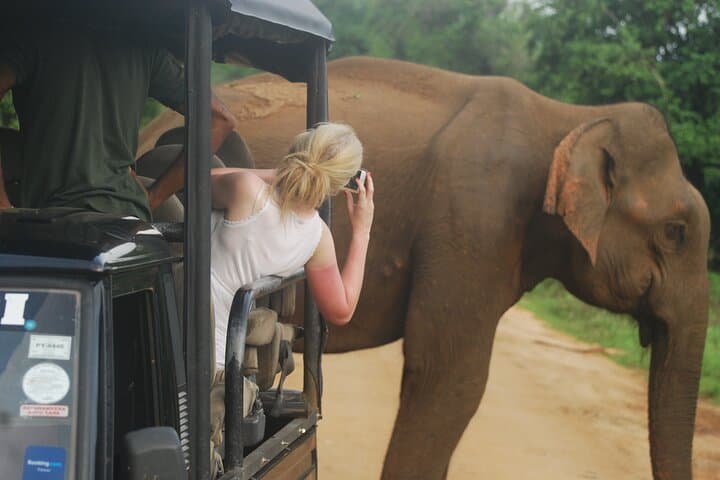
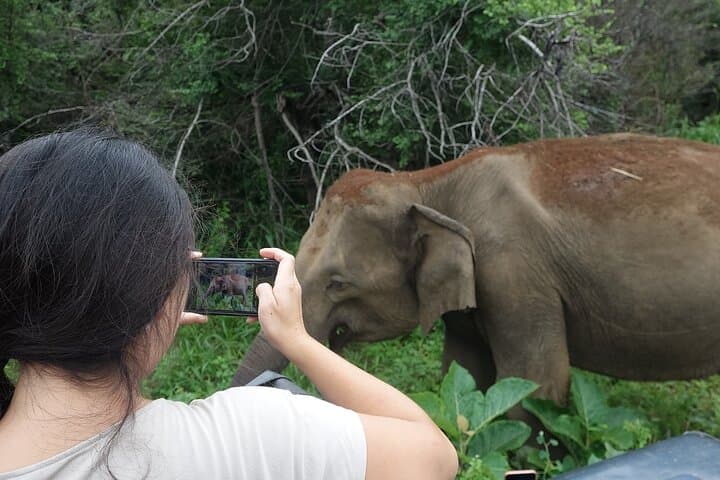
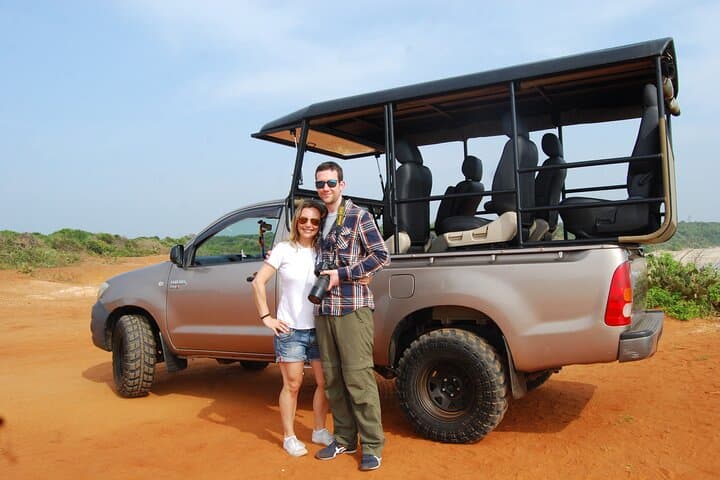
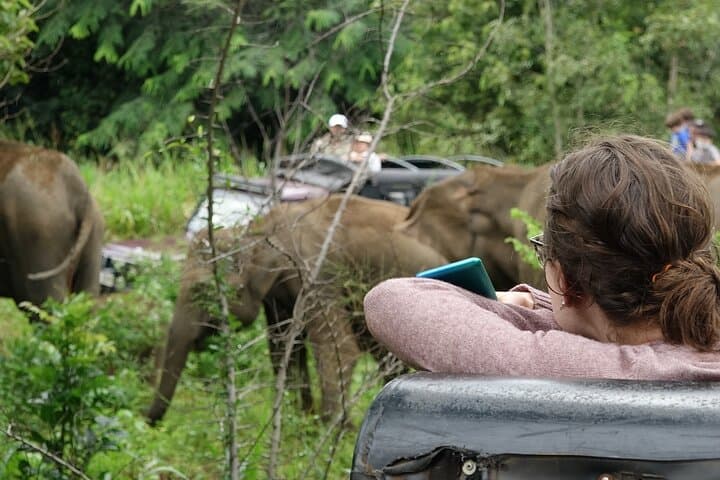
The jeep grinds along a red-earth track and the scrub opens like a stage: a line of elephants drifts across a low ridge, a flock of flamingoes punctuates the saltpan light, and a leopard silhouette haunts the acacia beyond.
The jeep grinds along a red-earth track and the scrub opens like a stage: a line of elephants drifts across a low ridge, a flock of flamingoes punctuates the saltpan light, and a leopard silhouette haunts the acacia beyond.
This half-day safari threads three of southern Sri Lanka’s most ecological contrasting parks — Bundala’s coastal lagoons, Yala’s dry woodland and leopard country, and Udawalawe’s elephant-rich plains. The geology shifts from coastal sediments and salt flats to ancient metamorphic outcrops and iron-rich laterite that color the roads. Culturally the route skirts paddy fields, small temples, and colonial-era tanks (man-made reservoirs) that have shaped local life for centuries.
Wildlife here is conspicuous and often bold; birds test the wind, elephants test your nerves, and predators test patience. Guides are licensed and familiar with animal movements and park rules; entrance fees are separate and support park management. Historic land use — from irrigation works to post-war tourism growth — informs why each park protects different communities of species today.
Practical guidance: book an early slot for cooler light and higher activity; bring binoculars and a long lens, and keep water and sun protection within reach. Sit low, avoid rapid movements, and let the guide position the vehicle for photos while respecting wildlife distances. Expect gravel roads and occasional dust; the converted safari jeeps offer raised sightlines and shade but not full suspension comfort.
In four hours you’ll see distinct ecosystems and compact, high-density wildlife viewing — a sharp, efficient taste of Sri Lanka’s southern wilds.