THE ADVENTURE COLLECTIVE® · Independent discovery and booking for outdoor travel

Spend a day outside Durban combining a three-hour game drive at Tala Game Reserve with an authentic Zulu village visit and reptile park at Phezulu. Expect close wildlife viewing, traditional dance, and straightforward logistics with hotel pickup.
Spend a day outside Durban combining a three-hour game drive at Tala Game Reserve with an authentic Zulu village visit and reptile park at Phezulu. Expect close wildlife viewing, traditional dance, and straightforward logistics with hotel pickup.
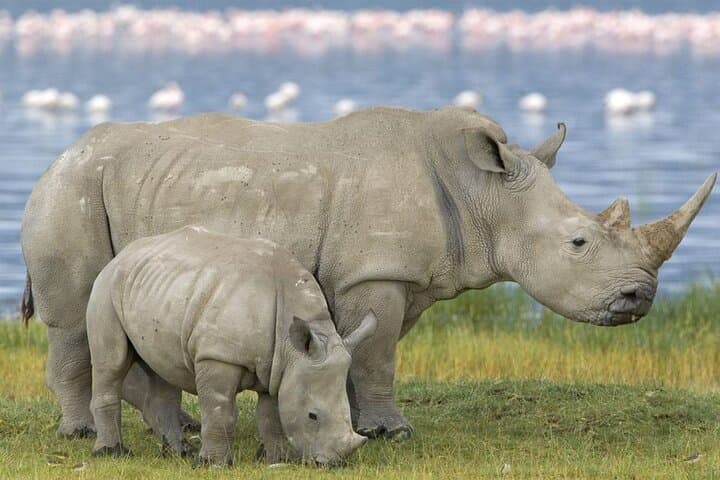
You leave Durban before dawn, the city shrinking behind you as the road climbs toward the Valley of a Thousand Hills. The air sharpens; grasslands open like pages and the reserve’s acacia silhouettes puncture the skyline. In an open vehicle you move quietly through Tala’s rolling plains—giraffes lift slow heads above the grass, zebras striping the scrub, and rhinos stand like river-worn boulders, unhurried. Birdsong threads the gaps between engine hum and guide commentary.
Verified experiences and guided adventures in the surrounding area.
Operated by African Cape Safaris · Durban, KwaZulu-Natal
You leave Durban before dawn, the city shrinking behind you as the road climbs toward the Valley of a Thousand Hills. The air sharpens; grasslands open like pages and the reserve’s acacia silhouettes puncture the skyline. In an open vehicle you move quietly through Tala’s rolling plains—giraffes lift slow heads above the grass, zebras striping the scrub, and rhinos stand like river-worn boulders, unhurried. Birdsong threads the gaps between engine hum and guide commentary.
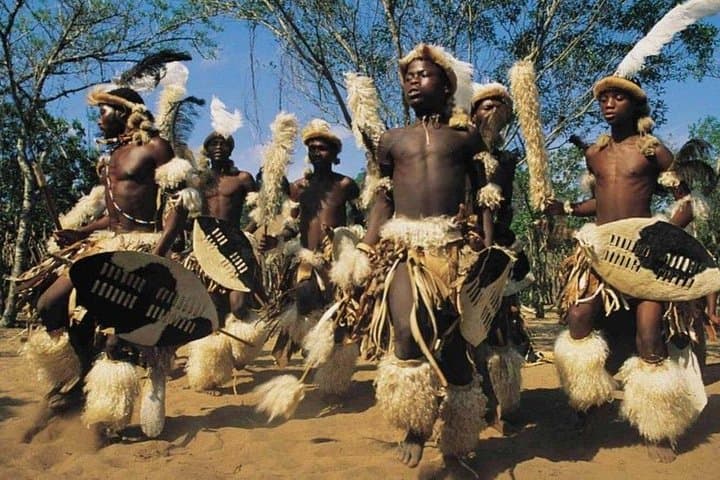
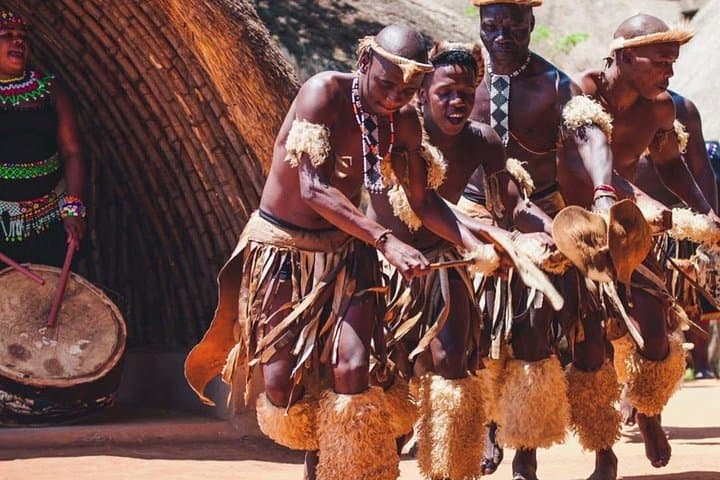
This landscape is the eastern foothills of the KwaZulu-Natal interior, formed by ancient basalt flows and later erosion that carved bowl-like valleys. Local Zulu communities have lived here for generations; Phezulu Safari Park sits on a ridge overlooking the valley and stages carefully maintained demonstrations of cultural life—traditional homesteads, rhythmic drumming, and ceremonial dance. The adjacent Reptile Park keeps regional species on display, offering context for how reptiles fit into local ecosystems.
Practical rhythm: expect a roughly 3-hour game drive followed by two 90-minute segments at Phezulu (village/dance and reptile park), all within a 7-hour day with Durban pickup and drop-off included. Wildlife sightings are frequent but never guaranteed; guides adjust routes by animal movement. Wear sturdy shoes for short walks in the village, bring binoculars and a camera with a zoom lens, and carry sun protection and water.
Respect cultural protocols—ask before photographing people—and follow guides’ instructions around wild animals. For a single day out of Durban this trip pairs accessible wildlife viewing with a compact, informative cultural immersion.
easy.
6–7 hours.
Suitable for most fitness levels; involves short walks and long periods seated in an open vehicle.
Typical duration is about 7 hours: early morning pickup from Durban, approximately 3-hour game drive at Tala (or alternate reserve), then a visit to Phezulu for the village and dance plus the Reptile Park.
No—sightings are frequent but never guaranteed; guides choose routes based on recent animal movements to maximize viewing opportunities.
Yes—transportation and site surfaces are listed as wheelchair accessible, but contact the operator about specific mobility needs when booking.
Photography is generally allowed, but you should always ask the performers or guides first and avoid intruding on private family areas.
The Valley of a Thousand Hills is a long-inhabited landscape of Zulu communities; Phezulu interprets local customs and dance traditions that have been practiced for generations.
Tala and nearby private reserves participate in regional conservation efforts focused on habitat management and anti-poaching; visitors help by following guide rules and minimizing disturbance.
African Cape Safaris operates guided outdoor trips and adventures with an emphasis on safety, stewardship, and memorable experiences.

You leave Durban before dawn, the city shrinking behind you as the road climbs toward the Valley of a Thousand Hills. The air sharpens; grasslands open like pages and the reserve’s acacia silhouettes puncture the skyline. In an open vehicle you move quietly through Tala’s rolling plains—giraffes lift slow heads above the grass, zebras striping the scrub, and rhinos stand like river-worn boulders, unhurried. Birdsong threads the gaps between engine hum and guide commentary.
You leave Durban before dawn, the city shrinking behind you as the road climbs toward the Valley of a Thousand Hills. The air sharpens; grasslands open like pages and the reserve’s acacia silhouettes puncture the skyline. In an open vehicle you move quietly through Tala’s rolling plains—giraffes lift slow heads above the grass, zebras striping the scrub, and rhinos stand like river-worn boulders, unhurried. Birdsong threads the gaps between engine hum and guide commentary.
This landscape is the eastern foothills of the KwaZulu-Natal interior, formed by ancient basalt flows and later erosion that carved bowl-like valleys. Local Zulu communities have lived here for generations; Phezulu Safari Park sits on a ridge overlooking the valley and stages carefully maintained demonstrations of cultural life—traditional homesteads, rhythmic drumming, and ceremonial dance. The adjacent Reptile Park keeps regional species on display, offering context for how reptiles fit into local ecosystems.
Practical rhythm: expect a roughly 3-hour game drive followed by two 90-minute segments at Phezulu (village/dance and reptile park), all within a 7-hour day with Durban pickup and drop-off included. Wildlife sightings are frequent but never guaranteed; guides adjust routes by animal movement. Wear sturdy shoes for short walks in the village, bring binoculars and a camera with a zoom lens, and carry sun protection and water.
Respect cultural protocols—ask before photographing people—and follow guides’ instructions around wild animals. For a single day out of Durban this trip pairs accessible wildlife viewing with a compact, informative cultural immersion.