THE ADVENTURE COLLECTIVE® · Independent discovery and booking for outdoor travel

Spend a half day on a working rice and vegetable farm just outside Luang Prabang. Try simple farm tasks, learn about local rice cultivation, and enjoy a fresh lunch with views of terraces and distant hills.
Spend a half day on a working rice and vegetable farm just outside Luang Prabang. Try simple farm tasks, learn about local rice cultivation, and enjoy a fresh lunch with views of terraces and distant hills.
You step off the shaded road and into a world of low terraces and humid air—rice paddies ripple like folded green cloth beneath the wooden stilt houses. The farmer greets you with a nod and a basket; behind him, wooded hills cut a pale blue line against the sky. This is Ban Phong Van, five kilometers from Luang Prabang, where fields and family life remain tightly stitched.
Verified experiences and guided adventures in the surrounding area.
Operated by Indochina Charm Travel (HCMC Branch) · Luang Prabang, Luang Prabang Province
You step off the shaded road and into a world of low terraces and humid air—rice paddies ripple like folded green cloth beneath the wooden stilt houses. The farmer greets you with a nod and a basket; behind him, wooded hills cut a pale blue line against the sky. This is Ban Phong Van, five kilometers from Luang Prabang, where fields and family life remain tightly stitched.
Rice has shaped this valley for centuries. Small-scale plots here reflect techniques passed down through Lao households: seasonal transplanting, rain-fed terraces and kitchen gardens that supply many of the town’s restaurants. Geologically, the region sits on gentle alluvial plains fed by tributaries of the Mekong, soils that support wet-rice agriculture and a patchwork of vegetables and herbs.
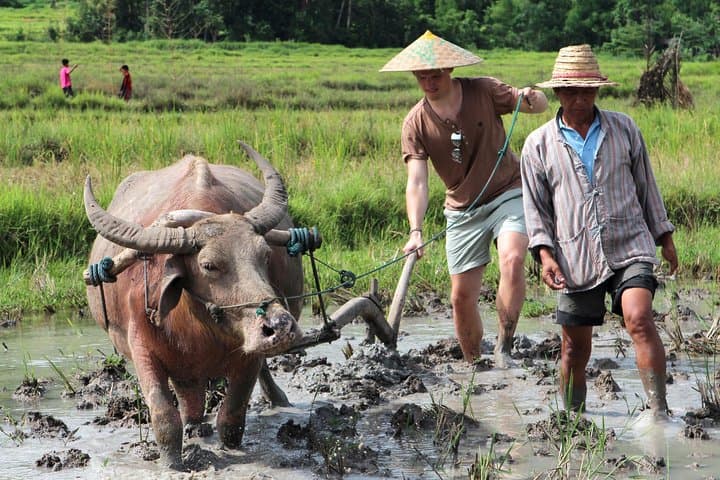
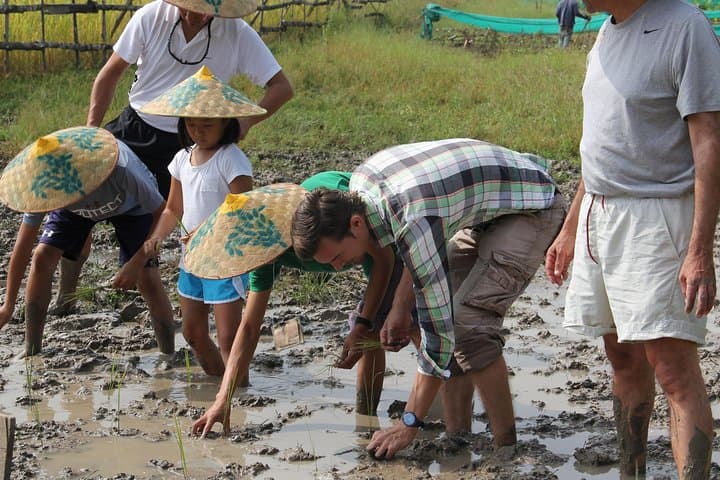
Culturally, a visit is practical—expect hands-on tasks like planting, weeding or shelling, and a chance to watch traditional drying and storage. The host family serves a midday meal of freshly prepared dishes, showcasing local herbs and rice varieties.
Practical guidance: wear closed-toe shoes you can clean, bring sun protection and insect repellent, and keep a small towel for muddy work. The experience runs about four hours including short transfers; most activity levels are easy, with brief periods of bending and walking across muddy ground. Photography is welcome but ask before photographing people closely. Restaurants in Luang Prabang often trace ingredients back to farms like this—your visit supports regenerative practices and community income.
Plan your visit in the cooler dry season for comfortable fieldwork, or expect heat and occasional rain during the wet months.
easy.
3–4 hours.
Suitable for most fitness levels; involves short periods of bending, squatting, and walking on uneven, sometimes muddy ground.
Yes—private round-trip transportation from centrally located hotels in Luang Prabang is included in the tour.
Yes—this is family-friendly, but very young children may need supervision around irrigation channels and uneven ground.
Vegetarian options are available—advise the operator at booking so the host can prepare accordingly.
The tour operates in most weather conditions; bring a light rain layer during the wet season and be prepared for muddier fields during heavy rain.
Rice cultivation has underpinned Lao village life for centuries; Luang Prabang’s surrounding farms supply local markets and a growing restaurant scene rooted in traditional varieties and techniques.
Many family farms here practice small-scale organic methods; visiting supports local livelihoods and encourages sustainable sourcing, but stick to paths and avoid trampling young crops.
Indochina Charm Travel (HCMC Branch) operates guided outdoor trips and adventures with an emphasis on safety, stewardship, and memorable experiences.

You step off the shaded road and into a world of low terraces and humid air—rice paddies ripple like folded green cloth beneath the wooden stilt houses. The farmer greets you with a nod and a basket; behind him, wooded hills cut a pale blue line against the sky. This is Ban Phong Van, five kilometers from Luang Prabang, where fields and family life remain tightly stitched.
You step off the shaded road and into a world of low terraces and humid air—rice paddies ripple like folded green cloth beneath the wooden stilt houses. The farmer greets you with a nod and a basket; behind him, wooded hills cut a pale blue line against the sky. This is Ban Phong Van, five kilometers from Luang Prabang, where fields and family life remain tightly stitched.
Rice has shaped this valley for centuries. Small-scale plots here reflect techniques passed down through Lao households: seasonal transplanting, rain-fed terraces and kitchen gardens that supply many of the town’s restaurants. Geologically, the region sits on gentle alluvial plains fed by tributaries of the Mekong, soils that support wet-rice agriculture and a patchwork of vegetables and herbs.
Culturally, a visit is practical—expect hands-on tasks like planting, weeding or shelling, and a chance to watch traditional drying and storage. The host family serves a midday meal of freshly prepared dishes, showcasing local herbs and rice varieties.
Practical guidance: wear closed-toe shoes you can clean, bring sun protection and insect repellent, and keep a small towel for muddy work. The experience runs about four hours including short transfers; most activity levels are easy, with brief periods of bending and walking across muddy ground. Photography is welcome but ask before photographing people closely. Restaurants in Luang Prabang often trace ingredients back to farms like this—your visit supports regenerative practices and community income.
Plan your visit in the cooler dry season for comfortable fieldwork, or expect heat and occasional rain during the wet months.