THE ADVENTURE COLLECTIVE® · Independent discovery and booking for outdoor travel

Step away from the Strip for a private, guided half-day of beginner-friendly climbs at Calico Basin in Red Rock Canyon. Learn movement, trust anchors, and summit short sandstone routes before midday heat sets in.
Step away from the Strip for a private, guided half-day of beginner-friendly climbs at Calico Basin in Red Rock Canyon. Learn movement, trust anchors, and summit short sandstone routes before midday heat sets in.
Daybreak in the Mojave feels like the land exhaling — cool air moving across scalloped sandstone as headlights fade into the gravel at Red Springs Trailhead. You meet the guide, Mike, and a white mini-cargo van; within minutes you’re hiking a short, sun-dappled approach to the Calico Basin cliffs. The trail is 10–20 minutes and then the rock takes over: steep, orange-buff faces that demand balance and body awareness more than brute strength.
Verified experiences and guided adventures in the surrounding area.
Operated by Mike Donaldson · Las Vegas, Nevada
Daybreak in the Mojave feels like the land exhaling — cool air moving across scalloped sandstone as headlights fade into the gravel at Red Springs Trailhead. You meet the guide, Mike, and a white mini-cargo van; within minutes you’re hiking a short, sun-dappled approach to the Calico Basin cliffs. The trail is 10–20 minutes and then the rock takes over: steep, orange-buff faces that demand balance and body awareness more than brute strength.
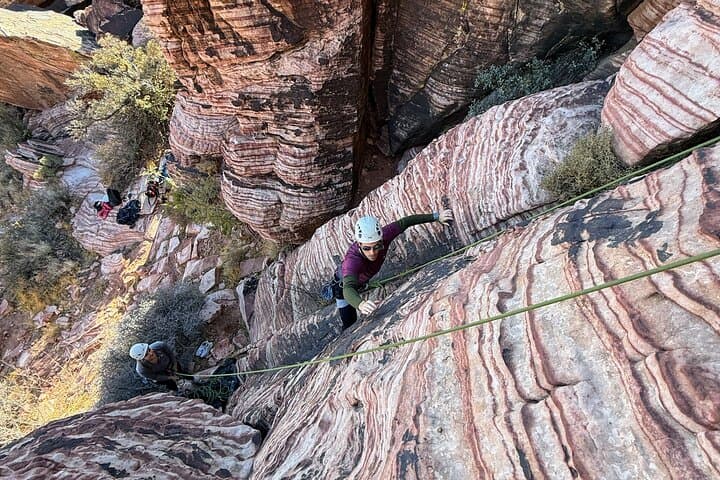
The sandstone here is Aztec Sandstone, a Jurassic relic whose wind-raked cross-bedding reads like pages of a slow-moving storm. Southern Paiute bands travelled this country long before climbers arrived; later settlers and conservationists pushed to protect the ridges and washes that form today’s Red Rock Canyon National Conservation Area. That history shows in trail names, old mining scars, and the careful permit system that keeps the routes open.
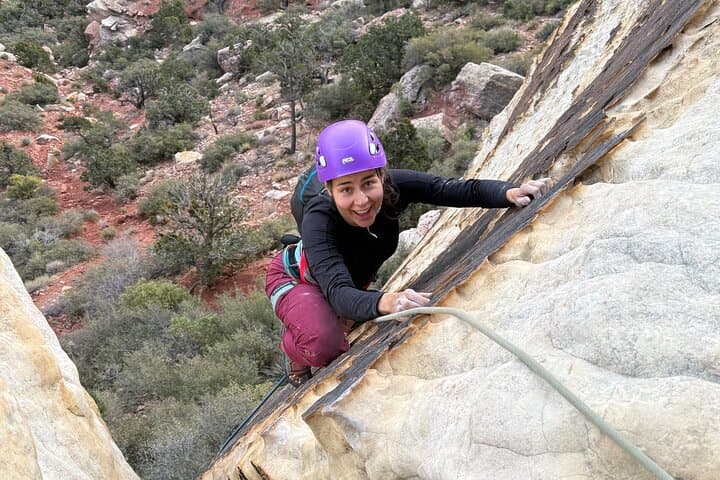
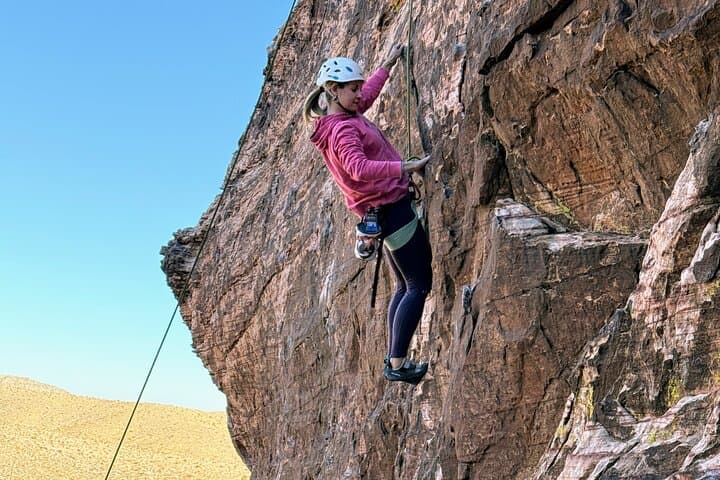
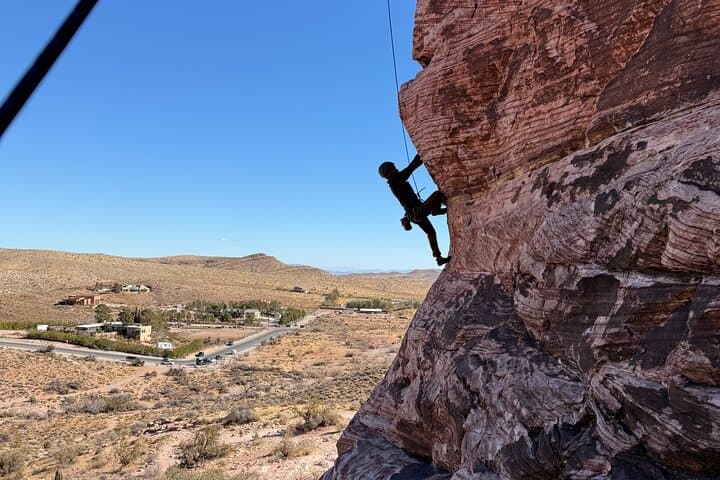
On a half-day with a private guide you try a handful of classic beginner lines — short multi-pitch approaches are rare here, so most climbs are single-pitch, 30–60 foot faces that teach you how desert sandstone feels underfoot and in your hands. The guide rigs top-rope anchors, coaches foot placement and breathing, and captures photos so you go home with proof you moved across real rock.
Between climbs the desert presses in and out: brittle creosote bushes, sun-wrinkled yucca, and a sky so wide it reframes whatever anxiety you brought from the Strip. Wind can push at your climbs, and sun will dry your fingers, so pacing and fluid motion are part of the lesson as much as knots and belays.
Practical edge: the whole program is five hours from parking to finish, and it’s designed for people with a moderate fitness baseline — expect a few short uphill approaches and standing rope time. All technical gear (shoes, harness, helmet, ropes) is supplied; bring 2–3 liters of water, sun protection, and a comfortable pair of approach shoes for the walk in. Mornings are best to avoid heat and crowds; once you’ve wrapped before midday you can return to Las Vegas with real desert climbing under your belt.
This trip is a good first step into outdoor climbing: educational, place-based, and brisk enough to fit into a busy itinerary. The rocks aren’t going anywhere, but the confidence you build in that orange light tends to stick.
moderate.
4–5 hours.
Should be comfortable with short uphill approaches, standing for climbs, and basic balance; moderate cardiovascular fitness recommended.
No — this trip is beginner friendly. Guides teach basic movement, belaying isn’t required of clients unless you choose to practice it.
Yes — harness, helmet, ropes and climbing shoes are supplied as part of the trip.
Expect a 10–20 minute, low-elevation approach over uneven desert footing from the Red Springs/Calico Basin trailhead.
Participants should have moderate fitness; the operator notes it’s not recommended for pregnant travelers or those with serious heart or spinal issues.
Trips are cancelled for adverse weather; you’ll receive a full refund if you cancel at least 24 hours in advance or if the operator cancels due to conditions.
Yes — guides often take photos, but secure electronics when climbing and use a wrist strap or keep them in a pack while on the rock.
Red Rock Canyon’s sandstone dates to the Jurassic (Aztec Sandstone) and the area is on land historically traversed by Southern Paiute peoples; its National Conservation Area status protects climbing access and desert habitat.
Minimize chalk use, stick to established approaches and anchors, and pack out everything — the fragile desert soil and cryptobiotic crust take decades to recover from disturbance.
Mike Donaldson operates guided outdoor trips and adventures with an emphasis on safety, stewardship, and memorable experiences.
Daybreak in the Mojave feels like the land exhaling — cool air moving across scalloped sandstone as headlights fade into the gravel at Red Springs Trailhead. You meet the guide, Mike, and a white mini-cargo van; within minutes you’re hiking a short, sun-dappled approach to the Calico Basin cliffs. The trail is 10–20 minutes and then the rock takes over: steep, orange-buff faces that demand balance and body awareness more than brute strength.
Daybreak in the Mojave feels like the land exhaling — cool air moving across scalloped sandstone as headlights fade into the gravel at Red Springs Trailhead. You meet the guide, Mike, and a white mini-cargo van; within minutes you’re hiking a short, sun-dappled approach to the Calico Basin cliffs. The trail is 10–20 minutes and then the rock takes over: steep, orange-buff faces that demand balance and body awareness more than brute strength.
The sandstone here is Aztec Sandstone, a Jurassic relic whose wind-raked cross-bedding reads like pages of a slow-moving storm. Southern Paiute bands travelled this country long before climbers arrived; later settlers and conservationists pushed to protect the ridges and washes that form today’s Red Rock Canyon National Conservation Area. That history shows in trail names, old mining scars, and the careful permit system that keeps the routes open.
On a half-day with a private guide you try a handful of classic beginner lines — short multi-pitch approaches are rare here, so most climbs are single-pitch, 30–60 foot faces that teach you how desert sandstone feels underfoot and in your hands. The guide rigs top-rope anchors, coaches foot placement and breathing, and captures photos so you go home with proof you moved across real rock.
Between climbs the desert presses in and out: brittle creosote bushes, sun-wrinkled yucca, and a sky so wide it reframes whatever anxiety you brought from the Strip. Wind can push at your climbs, and sun will dry your fingers, so pacing and fluid motion are part of the lesson as much as knots and belays.
Practical edge: the whole program is five hours from parking to finish, and it’s designed for people with a moderate fitness baseline — expect a few short uphill approaches and standing rope time. All technical gear (shoes, harness, helmet, ropes) is supplied; bring 2–3 liters of water, sun protection, and a comfortable pair of approach shoes for the walk in. Mornings are best to avoid heat and crowds; once you’ve wrapped before midday you can return to Las Vegas with real desert climbing under your belt.
This trip is a good first step into outdoor climbing: educational, place-based, and brisk enough to fit into a busy itinerary. The rocks aren’t going anywhere, but the confidence you build in that orange light tends to stick.