THE ADVENTURE COLLECTIVE® · Independent discovery and booking for outdoor travel

Board the ferry from Cape Town and cross to Robben Island for a moving half‑day that pairs panoramic views of Table Mountain with a guided visit to the prison where Nelson Mandela was held. This prebooked-ticket tour includes hotel transfers and first-person commentary.
Board the ferry from Cape Town and cross to Robben Island for a moving half‑day that pairs panoramic views of Table Mountain with a guided visit to the prison where Nelson Mandela was held. This prebooked-ticket tour includes hotel transfers and first-person commentary.
The ferry slips away from Cape Town's foreshore and the city shrinks into a low, jagged silhouette beneath Table Mountain. Spray cools the air and the island ahead sits flat and wind-swept: a human-made landscape of whitewashed buildings, prison walls and watch posts that confront you long before you step ashore.
Verified experiences and guided adventures in the surrounding area.
Operated by Patrick Taxi Cab · Cape Town, Western Cape
The ferry slips away from Cape Town's foreshore and the city shrinks into a low, jagged silhouette beneath Table Mountain. Spray cools the air and the island ahead sits flat and wind-swept: a human-made landscape of whitewashed buildings, prison walls and watch posts that confront you long before you step ashore.
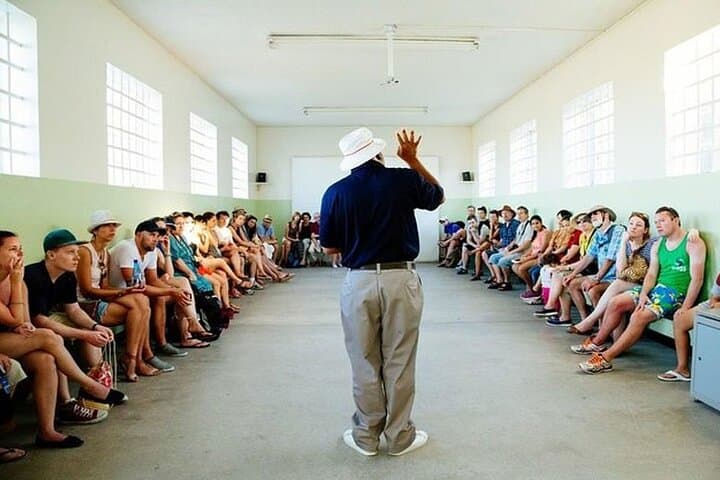
Robben Island is as much a site of memory as it is of geology and sea. Rough limestone and compacted dune soils shape a small island about 7 km offshore; its exposed shoreline and short, salt-battered scrub tell of constant wind and wave. Culturally the island is inseparable from South Africa’s anti-apartheid history — the guided prison tour centers on the cells, the quarry yards and first-hand narratives, often given by former political prisoners, that bring political history into human scale.
Expect a mix of museum spaces, guarded yards and sweeping Cape Town views. Wildlife here is coastal and hardy: seabirds wheel overhead and seals can be seen on the rocks below; photographic framing often pairs a cell block with the distant skyline.
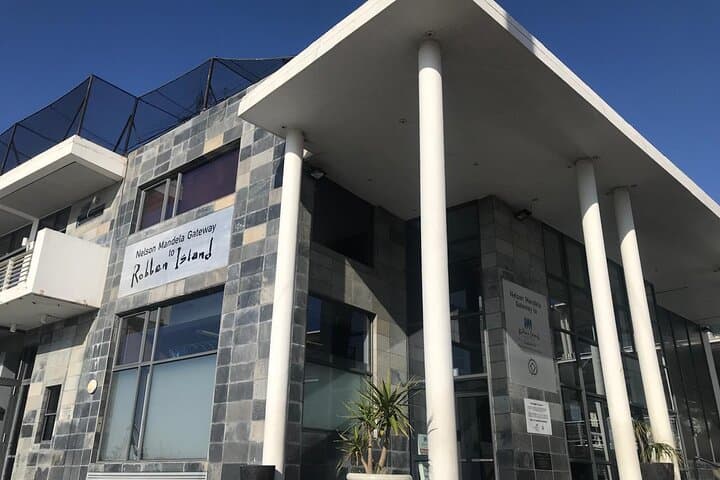
Practicalities: the experience runs about five hours including hotel transfers and scheduled ferry time slots (commonly 08:00, 10:00, 12:00). Wear windproof layers and closed walking shoes; bring ID or passport for boarding. Ferries are shared and can be choppy — consider motion-sickness medication. Accessibility is good: much of the museum and ferry loading are wheelchair-accessible, but surfaces on the island can be uneven. Book well in advance, arrive at the terminal early for security checks, and allow time to absorb the stories — the island is short on services but long on history.
easy.
5 hours.
Suitable for most fitness levels; requires short walks on uneven surfaces and the ability to board a ferry.
The total experience is about five hours, including hotel pick-up, ferry crossings and the guided island visit.
Yes — common time slots are 08:00, 10:00 and 12:00; times are fixed on your prebooked ticket so arrive early for security.
Many areas including the ferry and museum displays are wheelchair accessible, though some outdoor surfaces on the island are uneven.
Yes — passport details are collected at booking and you should bring government ID for boarding and security procedures.
Robben Island served as a political prison during apartheid and is central to South Africa’s struggle for democracy; it is also a site with earlier military and leper colony history.
Robben Island is a protected heritage site; visitors should stick to paths, avoid disturbing wildlife and follow guidelines to minimize wear on fragile historical structures.
Patrick Taxi Cab operates guided outdoor trips and adventures with an emphasis on safety, stewardship, and memorable experiences.
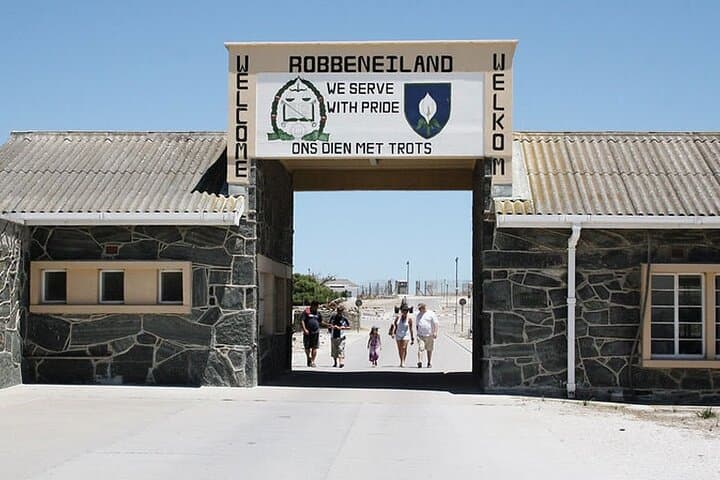
The ferry slips away from Cape Town's foreshore and the city shrinks into a low, jagged silhouette beneath Table Mountain. Spray cools the air and the island ahead sits flat and wind-swept: a human-made landscape of whitewashed buildings, prison walls and watch posts that confront you long before you step ashore.
The ferry slips away from Cape Town's foreshore and the city shrinks into a low, jagged silhouette beneath Table Mountain. Spray cools the air and the island ahead sits flat and wind-swept: a human-made landscape of whitewashed buildings, prison walls and watch posts that confront you long before you step ashore.
Robben Island is as much a site of memory as it is of geology and sea. Rough limestone and compacted dune soils shape a small island about 7 km offshore; its exposed shoreline and short, salt-battered scrub tell of constant wind and wave. Culturally the island is inseparable from South Africa’s anti-apartheid history — the guided prison tour centers on the cells, the quarry yards and first-hand narratives, often given by former political prisoners, that bring political history into human scale.
Expect a mix of museum spaces, guarded yards and sweeping Cape Town views. Wildlife here is coastal and hardy: seabirds wheel overhead and seals can be seen on the rocks below; photographic framing often pairs a cell block with the distant skyline.
Practicalities: the experience runs about five hours including hotel transfers and scheduled ferry time slots (commonly 08:00, 10:00, 12:00). Wear windproof layers and closed walking shoes; bring ID or passport for boarding. Ferries are shared and can be choppy — consider motion-sickness medication. Accessibility is good: much of the museum and ferry loading are wheelchair-accessible, but surfaces on the island can be uneven. Book well in advance, arrive at the terminal early for security checks, and allow time to absorb the stories — the island is short on services but long on history.