THE ADVENTURE COLLECTIVE® · Independent discovery and booking for outdoor travel

See Rio’s signature trio in a single private half-day: the towering Christ the Redeemer, the tiled Selarón Steps, and a sunset from Sugarloaf. This streamlined, guided loop balances history, geology and practical timing so you get the highlights without the hassle.
See Rio’s signature trio in a single private half-day: the towering Christ the Redeemer, the tiled Selarón Steps, and a sunset from Sugarloaf. This streamlined, guided loop balances history, geology and practical timing so you get the highlights without the hassle.
You step out of an air-conditioned van and the city opens: green ridgelines spill toward a glittering bay, gulls wheel above postcard beaches and the statue of Christ the Redeemer watches from 710 meters atop Corcovado. The morning light softens the city’s angles as you climb to the observation platform, then later the stair mosaic of Selarón brightens a steep lane before the cable car pulls you up Sugarloaf for a sunset that drags color across Guanabara Bay.
Verified experiences and guided adventures in the surrounding area.
Operated by Trip In Rio · Rio de Janeiro, Rio de Janeiro
You step out of an air-conditioned van and the city opens: green ridgelines spill toward a glittering bay, gulls wheel above postcard beaches and the statue of Christ the Redeemer watches from 710 meters atop Corcovado. The morning light softens the city’s angles as you climb to the observation platform, then later the stair mosaic of Selarón brightens a steep lane before the cable car pulls you up Sugarloaf for a sunset that drags color across Guanabara Bay.
Christ the Redeemer (completed 1931) is a 30-meter Art Deco monument atop a granite massif carved by ancient forces; the Corcovado ridge and Sugarloaf’s 396-meter granite monolith are part of Rio’s volcanic and tectonic history exposed by coastal erosion. Selarón’s 215 steps are a late-20th-century street-level artwork by Jorge Selarón that knit local neighborhoods—Lapa and Santa Teresa—into a colorful public gallery.
Expect guided context on history and culture, short vehicle transfers, a minibus or shuttle to Corcovado, and cable-car hops to Sugarloaf (several brief rides totaling roughly 10–15 minutes). Start early (guides often recommend a 7:20 a.m. departure to avoid lines at Corcovado) or time Sugarloaf for golden hour; admission fees apply for Corcovado and Sugarloaf.
Practical: wear comfortable walking shoes for uneven steps around Selarón, bring water and sun protection, carry small change for snacks and tips, and keep a light layer—the hilltop wind can sharpen as the sun drops. The route is largely accessible by vehicle and suitable for most fitness levels, but plan for short walks, stairs and crowded viewpoints during peak season.
easy.
5 hours.
Suitable for most fitness levels; expect short walks, stairs and standing at viewpoints.
The private tour lasts about 5 hours and covers Corcovado (Christ the Redeemer), the Selarón Steps, and Sugarloaf, with transport in an air-conditioned vehicle and a professional guide; some admission fees are extra.
The tour and transportation are described as wheelchair accessible, though some viewpoints and areas around steps may have limited access—check specific needs when booking.
Early morning is best for Corcovado (fewer crowds), midday for Selarón’s light on tiles, and late afternoon to sunset for Sugarloaf’s panoramic colors.
Admission for Christ the Redeemer and Sugarloaf is typically not included in the base price—bring local currency or card to purchase tickets if needed.
Corcovado’s statue was completed in 1931 and later named one of the New7Wonders; Selarón’s steps are an iconic folk-art project started in 1990 by Jorge Selarón.
Trails and viewpoints sit within urban forest fragments (Tijuca National Park); stick to marked paths, avoid littering, and favor local guides who support park fees and sustainable transport.
Trip In Rio operates guided outdoor trips and adventures with an emphasis on safety, stewardship, and memorable experiences.


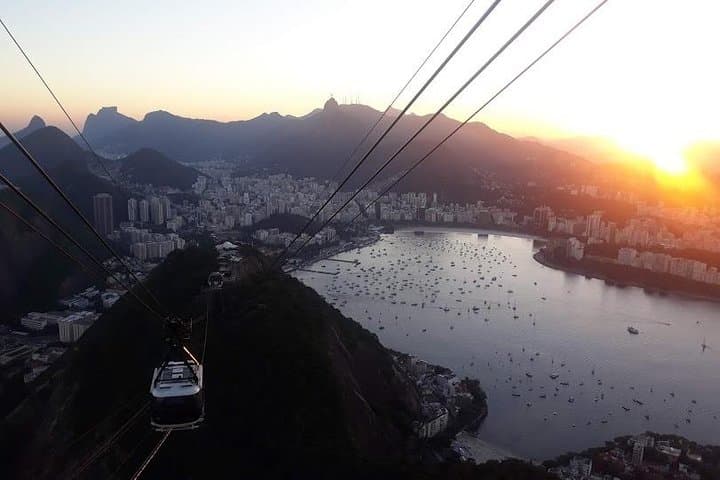

You step out of an air-conditioned van and the city opens: green ridgelines spill toward a glittering bay, gulls wheel above postcard beaches and the statue of Christ the Redeemer watches from 710 meters atop Corcovado. The morning light softens the city’s angles as you climb to the observation platform, then later the stair mosaic of Selarón brightens a steep lane before the cable car pulls you up Sugarloaf for a sunset that drags color across Guanabara Bay.
You step out of an air-conditioned van and the city opens: green ridgelines spill toward a glittering bay, gulls wheel above postcard beaches and the statue of Christ the Redeemer watches from 710 meters atop Corcovado. The morning light softens the city’s angles as you climb to the observation platform, then later the stair mosaic of Selarón brightens a steep lane before the cable car pulls you up Sugarloaf for a sunset that drags color across Guanabara Bay.
Christ the Redeemer (completed 1931) is a 30-meter Art Deco monument atop a granite massif carved by ancient forces; the Corcovado ridge and Sugarloaf’s 396-meter granite monolith are part of Rio’s volcanic and tectonic history exposed by coastal erosion. Selarón’s 215 steps are a late-20th-century street-level artwork by Jorge Selarón that knit local neighborhoods—Lapa and Santa Teresa—into a colorful public gallery.
Expect guided context on history and culture, short vehicle transfers, a minibus or shuttle to Corcovado, and cable-car hops to Sugarloaf (several brief rides totaling roughly 10–15 minutes). Start early (guides often recommend a 7:20 a.m. departure to avoid lines at Corcovado) or time Sugarloaf for golden hour; admission fees apply for Corcovado and Sugarloaf.
Practical: wear comfortable walking shoes for uneven steps around Selarón, bring water and sun protection, carry small change for snacks and tips, and keep a light layer—the hilltop wind can sharpen as the sun drops. The route is largely accessible by vehicle and suitable for most fitness levels, but plan for short walks, stairs and crowded viewpoints during peak season.