THE ADVENTURE COLLECTIVE® · Independent discovery and booking for outdoor travel

See Rio’s two signature summits in one efficient outing: an early ascent to Christ the Redeemer and cable-car rides up Sugarloaf, with hotel pickup and an English-speaking guide. Ideal for travelers short on time but hungry for panoramic views and local context.
See Rio’s two signature summits in one efficient outing: an early ascent to Christ the Redeemer and cable-car rides up Sugarloaf, with hotel pickup and an English-speaking guide. Ideal for travelers short on time but hungry for panoramic views and local context.
A dawn mist lifts off Guanabara Bay as the van eases away from Copacabana, the city unfolding in tiers of beach, forest and granite. In five hours a small group moves from shoreline boulevards through Tijuca’s green folds up to Corcovado’s 710 m summit, then down to the cable cars that climb Urca (220 m) and Sugarloaf (396 m). The landscape pushes and pauses — surf urging the shore, wind raking the granite — while the city’s icons watch from above.
Verified experiences and guided adventures in the surrounding area.
Operated by Carioca Tropical Tour Operator · Rio de Janeiro, Rio de Janeiro
A dawn mist lifts off Guanabara Bay as the van eases away from Copacabana, the city unfolding in tiers of beach, forest and granite. In five hours a small group moves from shoreline boulevards through Tijuca’s green folds up to Corcovado’s 710 m summit, then down to the cable cars that climb Urca (220 m) and Sugarloaf (396 m). The landscape pushes and pauses — surf urging the shore, wind raking the granite — while the city’s icons watch from above.
Corcovado’s 38 m statue, clad in soapstone, sits atop a late-19th-century volcanic dome carved into the Atlantic Forest; views here frame Rio’s colonial port, the Rodrigo de Freitas lagoon and the sweep of beaches born of coastal geology. Sugarloaf’s twin-car cable system, installed in the early 20th century, offers a quick ascent across the mouth of the bay, where naval history and urban growth meet the sea.
The tour blends history and practical sightseeing: a bilingual guide, hotel pickup from Leblon to Leme, and the option to include or buy entrance tickets on site. Expect stairs at both viewpoints, short walks on uneven stone, and possible waits for official park shuttles to Corcovado. In high season (Dec–Mar) allow extra time — itineraries sometimes stretch to 7–8 hours.
Practical essentials: carry sun protection, water, and a compact rain layer; plan morning departures for the clearest views; bring ID for discounts at Sugarloaf. With thoughtful timing this half-day condenses Rio’s topography, culture and skyline into a single, efficient outing.
easy.
5 hours.
Suitable for most fitness levels; able-bodied mobility for short stair climbs and uneven surfaces recommended
The tour can be booked with or without tickets included; if not included the guide can assist with purchasing tickets on site.
Pickup is offered from selected hotels in Leblon, Ipanema, Copacabana and Leme between 7:00–7:30am or 1:30–2:00pm; outside the area meet at Hilton Copacabana.
The operator lists wheelchair-accessible transportation and assistance, though access to some viewpoint platforms may involve steps—contact the provider to confirm specifics.
If Corcovado summit is fogged in, the itinerary may stop at Mirante Dona Marta for alternate views that still frame the city and bay.
Corcovado and Sugarloaf have played roles in Rio’s urban identity since the early 20th century—Corcovado’s statue was completed in 1931 and Sugarloaf’s cable car opened in 1912.
Both viewpoints sit adjacent to protected Atlantic Forest remnants; visitors are asked to stay on paths, avoid feeding wildlife, and carry out trash to limit human impact.
Carioca Tropical Tour Operator operates guided outdoor trips and adventures with an emphasis on safety, stewardship, and memorable experiences.
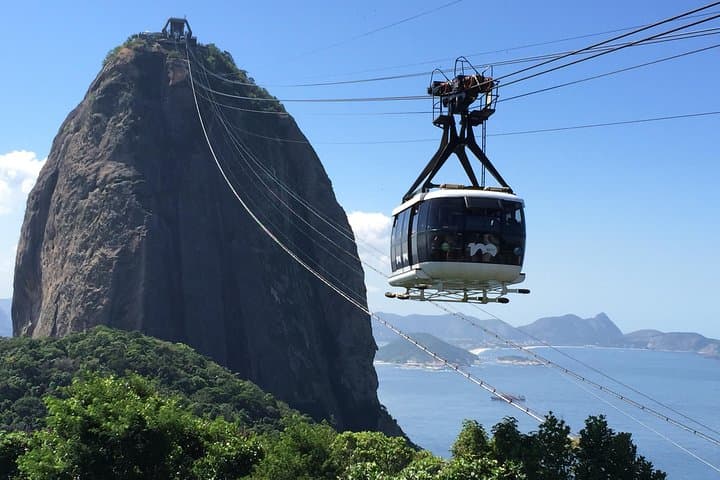



A dawn mist lifts off Guanabara Bay as the van eases away from Copacabana, the city unfolding in tiers of beach, forest and granite. In five hours a small group moves from shoreline boulevards through Tijuca’s green folds up to Corcovado’s 710 m summit, then down to the cable cars that climb Urca (220 m) and Sugarloaf (396 m). The landscape pushes and pauses — surf urging the shore, wind raking the granite — while the city’s icons watch from above.
A dawn mist lifts off Guanabara Bay as the van eases away from Copacabana, the city unfolding in tiers of beach, forest and granite. In five hours a small group moves from shoreline boulevards through Tijuca’s green folds up to Corcovado’s 710 m summit, then down to the cable cars that climb Urca (220 m) and Sugarloaf (396 m). The landscape pushes and pauses — surf urging the shore, wind raking the granite — while the city’s icons watch from above.
Corcovado’s 38 m statue, clad in soapstone, sits atop a late-19th-century volcanic dome carved into the Atlantic Forest; views here frame Rio’s colonial port, the Rodrigo de Freitas lagoon and the sweep of beaches born of coastal geology. Sugarloaf’s twin-car cable system, installed in the early 20th century, offers a quick ascent across the mouth of the bay, where naval history and urban growth meet the sea.
The tour blends history and practical sightseeing: a bilingual guide, hotel pickup from Leblon to Leme, and the option to include or buy entrance tickets on site. Expect stairs at both viewpoints, short walks on uneven stone, and possible waits for official park shuttles to Corcovado. In high season (Dec–Mar) allow extra time — itineraries sometimes stretch to 7–8 hours.
Practical essentials: carry sun protection, water, and a compact rain layer; plan morning departures for the clearest views; bring ID for discounts at Sugarloaf. With thoughtful timing this half-day condenses Rio’s topography, culture and skyline into a single, efficient outing.