THE ADVENTURE COLLECTIVE® · Independent discovery and booking for outdoor travel

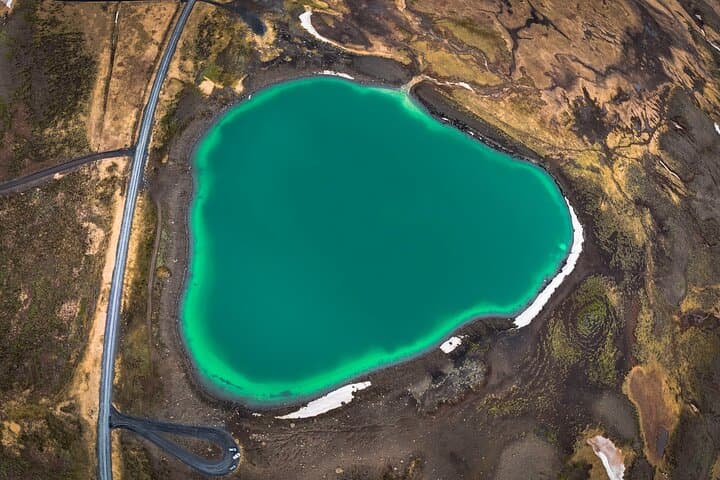
Explore Reykjanes’s raw volcanic coast on a half-day minibus tour from Reykjavík. Expect steaming geothermal fields, emerald crater lakes, recent lava flows, and short hikes to dramatic viewpoints.
Explore Reykjanes’s raw volcanic coast on a half-day minibus tour from Reykjavík. Expect steaming geothermal fields, emerald crater lakes, recent lava flows, and short hikes to dramatic viewpoints.
You step off the minibus and the air changes: sulfur tang, wind that pushes you toward the horizon, and a field of black rock that seems to keep moving even when it’s frozen. The Reykjanes Peninsula feels newly formed—rough, loud, and visible in every fissure and steaming vent.
Verified experiences and guided adventures in the surrounding area.
Operated by Arctic Adventures · Grindavík, Southern Peninsula
You step off the minibus and the air changes: sulfur tang, wind that pushes you toward the horizon, and a field of black rock that seems to keep moving even when it’s frozen. The Reykjanes Peninsula feels newly formed—rough, loud, and visible in every fissure and steaming vent.
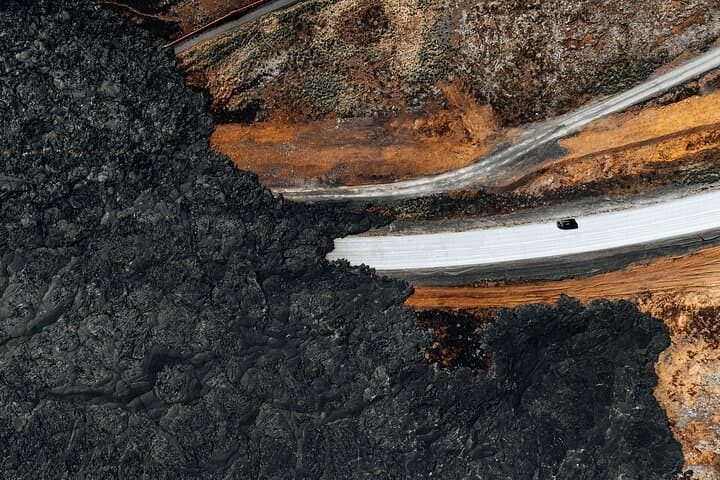
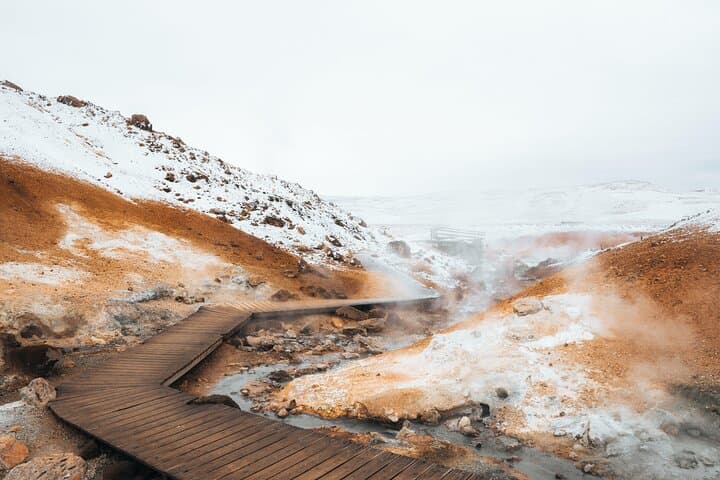
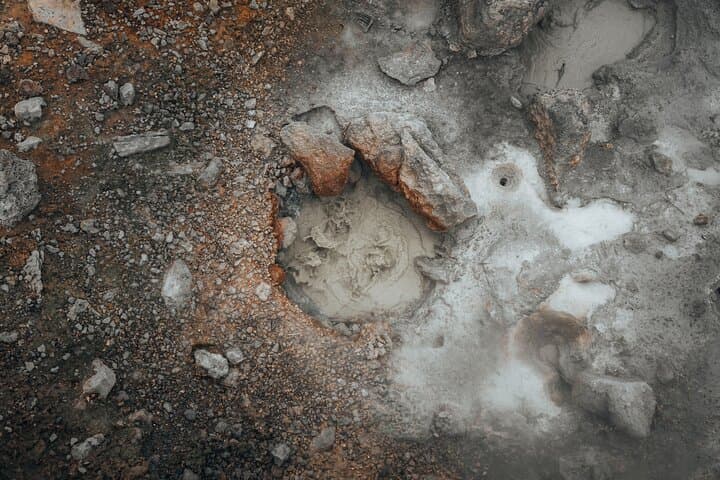
This coastline has been remade repeatedly by volcanic fire. Kleifarvatn’s dark, deep water sits in a basin carved by tectonic rifts; nearby Seltún (Krýsuvík) reveals active hydrothermal alteration where minerals stain the earth red, yellow, and grey. The 2021–2024 eruptions around Fagradalsfjall and the recent Sundhnúkagígar flows are living geology: fresh lava, cooling crusts, and cracked roads near Grindavík that tell a raw human story of adaptation and evacuation.
Culturally, the area bridges fishing-community grit and Iceland’s long relationship with fire and ice—guides often mix local folklore, like Kleifarvatn’s rumored creature, with clear safety briefings about unstable ground and steam vents.
Practical guidance: dress in windproof, waterproof layers and sturdy boots; expect short walks on uneven, sometimes sharp lava and boardwalks at geothermal sites. Bring water, a charged camera, and a face covering if sulfur fumes bother you. Restrooms and shelter are limited between stops; plan accordingly. Follow your guide’s route and avoid stepping off marked paths—new lava and steam vents remain unpredictable. Tours run about 5–6 hours with pickup in Reykjavík, returning by early evening—ideal for sightseers who want a compact but immersive encounter with Iceland’s active landscape.
moderate.
5–6 hours.
Suitable for people who can stand and walk short distances on uneven terrain; not technically demanding but requires sure footing.
Pickup and drop-off are provided in Reykjavík; choose your preferred pickup point when booking.
Walks are short (10–60 minutes at stops) but over uneven ground—comfortable shoes and basic mobility are required.
Yes when you follow guide instructions and stay on marked paths; steam vents and new lava can be unstable and hot.
Yes—local authorities can close areas for safety, and the operator reserves the right to cancel or reroute the tour if conditions change.
The Reykjanes Peninsula sits on the Mid-Atlantic Ridge; repeated eruptions and geothermal activity have shaped local settlements and modern infrastructure.
Stay on paths to protect fragile lichen and hydrothermal crusts; avoid leaving waste and heed guide advice to minimize impact.
Arctic Adventures operates guided outdoor trips and adventures with an emphasis on safety, stewardship, and memorable experiences.
You step off the minibus and the air changes: sulfur tang, wind that pushes you toward the horizon, and a field of black rock that seems to keep moving even when it’s frozen. The Reykjanes Peninsula feels newly formed—rough, loud, and visible in every fissure and steaming vent.
You step off the minibus and the air changes: sulfur tang, wind that pushes you toward the horizon, and a field of black rock that seems to keep moving even when it’s frozen. The Reykjanes Peninsula feels newly formed—rough, loud, and visible in every fissure and steaming vent.
This coastline has been remade repeatedly by volcanic fire. Kleifarvatn’s dark, deep water sits in a basin carved by tectonic rifts; nearby Seltún (Krýsuvík) reveals active hydrothermal alteration where minerals stain the earth red, yellow, and grey. The 2021–2024 eruptions around Fagradalsfjall and the recent Sundhnúkagígar flows are living geology: fresh lava, cooling crusts, and cracked roads near Grindavík that tell a raw human story of adaptation and evacuation.
Culturally, the area bridges fishing-community grit and Iceland’s long relationship with fire and ice—guides often mix local folklore, like Kleifarvatn’s rumored creature, with clear safety briefings about unstable ground and steam vents.
Practical guidance: dress in windproof, waterproof layers and sturdy boots; expect short walks on uneven, sometimes sharp lava and boardwalks at geothermal sites. Bring water, a charged camera, and a face covering if sulfur fumes bother you. Restrooms and shelter are limited between stops; plan accordingly. Follow your guide’s route and avoid stepping off marked paths—new lava and steam vents remain unpredictable. Tours run about 5–6 hours with pickup in Reykjavík, returning by early evening—ideal for sightseers who want a compact but immersive encounter with Iceland’s active landscape.